

In this article
What is face yoga?
You train your arms, core, and legs to keep them strong. Face yoga applies the same idea to the muscles beneath your facial skin. Through deliberate contractions, holds, stretches, and gentle massage, the practice tones and stimulates the muscles, skin, and lymphatic system of the face. Because facial muscles are small, delicate, and often attached directly to the skin, the results of training them show up on the surface in a way that feels almost immediate.
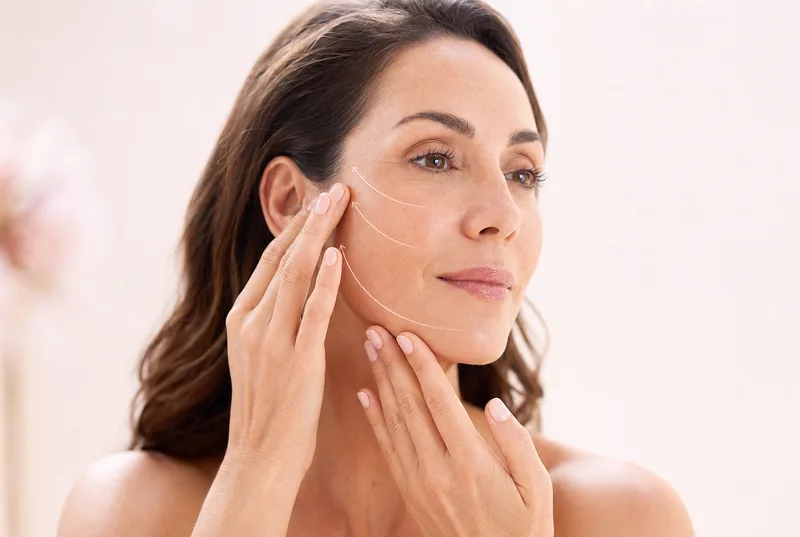
The method differs from regular exercise in one important way. Most workouts build large muscle groups through repetitive, high-resistance movement. Face yoga uses gentle, precise engagement instead. You are not trying to build bulk. You are restoring tone to muscles that have weakened from disuse and releasing muscles that have tightened from habitual tension, two sides of the same problem that our introduction to face yoga covers in depth.
As you age, your face and neck change through a gradual loss of elasticity and shifts in the deeper soft tissues. Years of habitual expressions, especially under stress, also condition certain muscles and pull the face into set patterns. Face yoga offers a natural way to counter both, which is why it has become the foundation of many people’s beginner routines.
How face yoga works
Most muscles in the body attach to two bones and move a joint. Facial muscles are unusual: many attach to bone on one end and directly to skin on the other. A slight contraction pulls the skin into a smile, a frown, a raised eyebrow. It also means the condition of these muscles directly shapes how your face looks. When they lose tone, the skin above them loses its underlying scaffold and begins to sag. When they carry chronic tension, they pull the skin into patterns that eventually become lines.
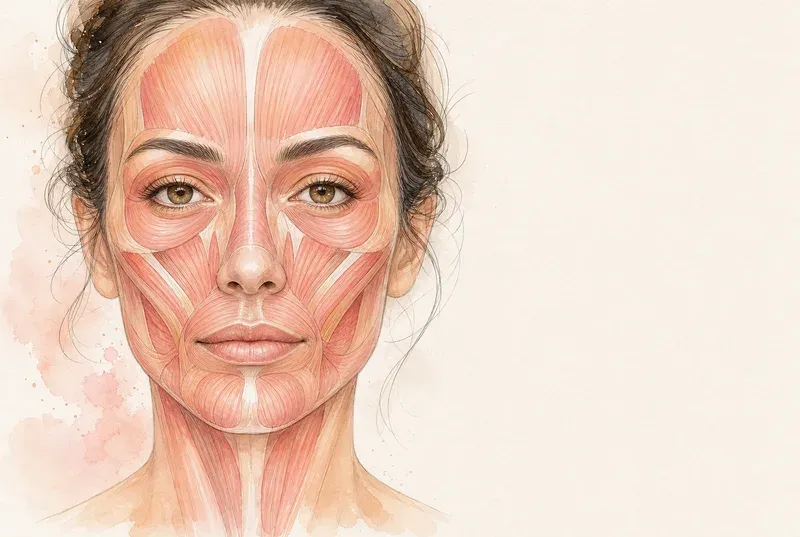
Face yoga works on three levels at once.
- Muscle tone. Muscles that are regularly engaged keep their volume and firmness. Toned cheek muscles create a lifted midface, and a strengthened jawline reduces sagging along the lower face.
- Circulation. Exercising a facial muscle increases blood flow to that area, carrying oxygen and nutrients to the skin cells above. Over time this supports collagen production and more efficient cell turnover.
- Lymphatic drainage. Light tapping and sweeping movements encourage fluid to move away from areas where it pools, which is why the practice helps with morning puffiness around the eyes.
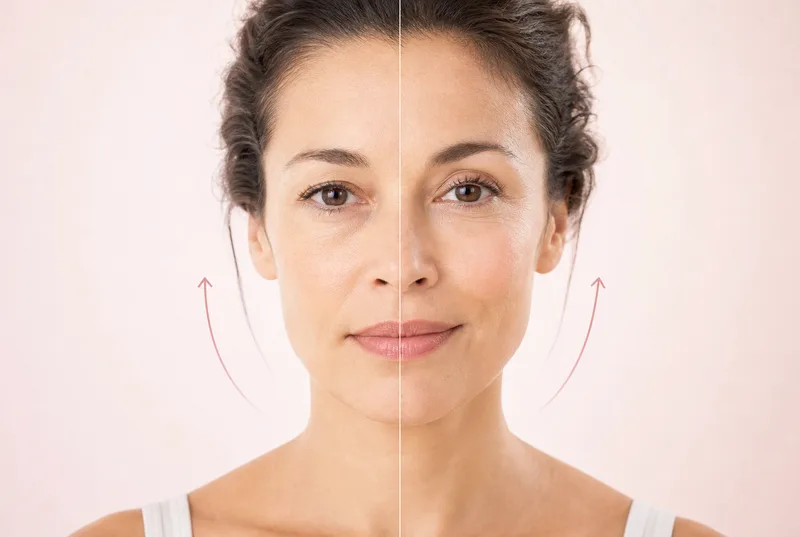
Different areas respond at different speeds. The cheeks and jawline usually improve first because their muscles, like the zygomaticus and masseter, are relatively large and easy to isolate. The eye area and forehead take a little longer, and the neck, governed by the broad, thin platysma, asks for the most patience while producing some of the most striking long-term change. Our guide to understanding your facial muscles maps each group in plain language.
The benefits of face yoga
The changes people notice fall into three groups: what you see in the mirror, what you feel in your body, and how the daily ritual affects your mind. We cover all of them in our full benefits article; these are the ones practitioners mention most.
A more lifted, defined face
The muscles beneath your cheekbones respond quickly to targeted exercise, creating visible lift in the midface within the first weeks. Strengthening the muscles along the jaw and neck sharpens the contour of the lower face over time.
Softer fine lines
Many fine lines come from chronic muscle tension rather than skin aging. Releasing that tension softens lines from underneath, particularly around the forehead, the mouth, and the nasolabial folds.
Brighter, healthier-looking skin
Every session draws fresh blood flow to the face, delivering oxygen and nutrients to skin cells. Over time this improved circulation supports collagen production and gives the complexion a warmth that topical products cannot fully replicate.
More balanced features
Regular practice can gradually even out facial asymmetries by strengthening weaker muscles, helping the eyes, mouth, and cheeks look more harmonious.
Less jaw tension, fewer headaches
If you clench or grind your teeth, releasing the masseter is one of the most immediately rewarding parts of the practice. Exercises for the cheeks, neck, and jawline also engage the upper spine, easing posture-related tension headaches.
A softer, more rested expression
Years of habitual expressions condition certain muscles and pull the face into set patterns. Releasing those patterns through mindful relaxation makes your features appear softer and more peaceful.
Calmer breathing and steadier mood
The slow, deliberate breathing woven through each session activates the parasympathetic nervous system, producing a relaxation response similar to meditation. Research on programs combining facial exercise with yogic breathing has noted improvements in mood and well-being.
A daily ritual you can keep
Five to ten minutes a day is enough. Because the practice is free, portable, and pleasant, it becomes a grounding moment of self-care rather than another obligation.
What the research says
The best-known evidence comes from a 2018 study published in JAMA Dermatology. Women aged 40 to 65 performed facial exercises for 30 minutes a day over 20 weeks. By the end, dermatologists rated the participants as looking nearly three years younger on average, upper and lower cheek fullness improved noticeably, and the women themselves reported high satisfaction with the program.
Other studies have measured where facial exercise helps most. The cheeks, jawline, and upper lip region respond particularly well, with documented improvements in volume, skin texture, and overall symmetry. Researchers have also recorded increased facial muscle thickness and improved skin elasticity in participants following regular programs, and programs that combine stretching, massage, and yogic breathing have shown benefits for facial expression, mood, and mental well-being.
An honest caveat belongs here: the existing studies are small, and larger trials are still needed to confirm long-term effects. The reasonable conclusion is not that face yoga replaces skincare or professional treatments, but that it adds a structural dimension none of them address on their own. We walk through the research on whether face yoga works in more detail, including what the studies did and did not measure.
How to start face yoga
Your first session needs nothing more than a clean face and a mirror. These five steps distill our first-session guide and the grounding advice we give every beginner.
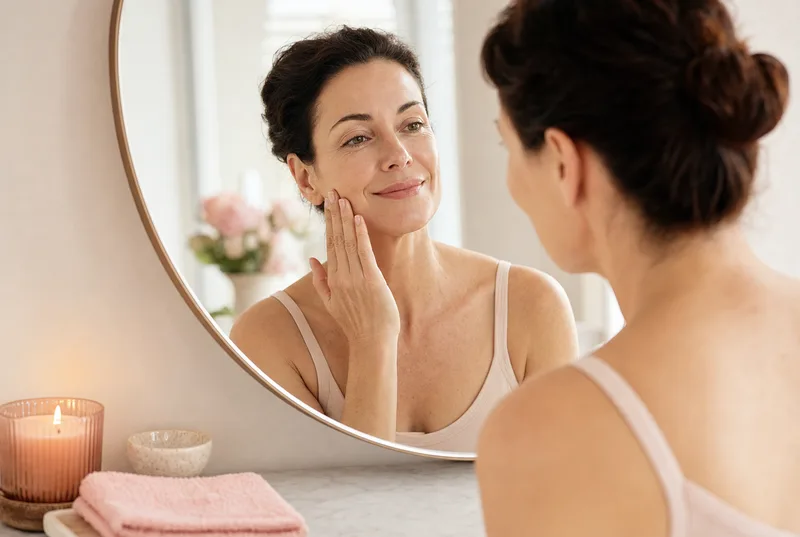
- Set up your space. All you need is a mirror and enough quiet to focus. Choose a spot with bright, even light, since good lighting lets you see the subtle muscle movements that confirm your form is right.
- Prep your skin. Practice on clean skin and remove heavy makeup first. A thin layer of serum or facial oil helps your fingers glide without pulling during exercises that involve touch.
- Warm up for two minutes. Take five slow breaths in through the nose, tap lightly all over your face with your fingertips for about 30 seconds, then open and close your jaw a few times to release the masseter.
- Learn a few foundation moves. Start with the cheeks and jawline, the areas that respond fastest, and add the eyes, forehead, and neck as your technique improves. Focus on feeling the right muscle engage rather than pushing for intensity.
- Keep it short and consistent. Five to ten minutes a day, or at least five sessions a week. Take weekly progress photos under the same light and judge your results over weeks, not single sessions.
When you are ready for specific movements, our step-by-step face yoga exercises guide covers every facial area, from forehead to neck, with numbered instructions for each exercise.
Face yoga vs. injectables
Injectables and cosmetic procedures act quickly by relaxing a muscle or filling a crease from the outside. Face yoga takes the slower road: it strengthens the structure beneath the skin so the results build and last. Neither approach is the other in disguise, and the practical differences are easy to lay side by side.
| Face yoga | Injectables & surgery | |
|---|---|---|
| Time | About 10 minutes a day, anywhere | Clinic appointments, travel, waiting rooms |
| Cost | Little to nothing | $500–$2,000+ per session, repeated over time |
| Invasiveness | Non-invasive, nothing enters the skin | Needles or surgery |
| Side effects | None when practiced gently | Bruising, swelling, and numbness are common |
| Results | Cumulative, building over months | Temporary, fading in 3–6 months |
| Downtime | None, continue your day immediately | Days of recovery after some treatments |
| Personalization | Routines adapt to your goals | The same procedure for everyone |
The two are not mutually exclusive. If you have had injectables recently, wait for full healing before resuming your practice; most practitioners recommend at least two weeks and a quick check with your provider. Face yoga also pairs naturally with topical skincare, a combination we cover in combining face yoga with skincare.
Safety and who it’s for
“Discomfort is a signal, not a goal.”
Face yoga is gentle by nature, and the guiding principle is simple: discomfort is a signal, not a goal. You should feel the targeted muscle working, and mild fatigue after a set is normal. Sharp pain, tingling, burning, or strain anywhere else means ease up or adjust your form. Use clean hands, practice in front of a mirror, and keep your breathing steady throughout.
A few situations call for a pause or a modified approach.
- Active skin infections, open wounds, or severe acne flare-ups. Wait for the acute phase to settle before resuming.
- Recent facial surgery or injectable treatments. Allow full healing and ask your provider when it is safe to restart.
- TMJ disorders with acute pain. Gentle release work may help, but avoid exercises that load the joint during flare-ups.
- Bell’s palsy or other facial nerve conditions. Work with your healthcare provider to decide which exercises, if any, suit your situation.
Outside those cases, the practice is open to almost anyone. It requires no equipment, no experience, and no particular fitness level, and it scales to whatever time you can give it. Our full guide to safety, precautions, and when to pause covers the warning signs that your face needs rest, and building your weekly practice shows how to schedule sessions so you progress without overworking any one area. For realistic timelines, see the benefits you can expect and our advice on tracking progress with weekly photos.
Frequently asked questions
Does face yoga actually work?
The evidence so far is encouraging. In a 2018 study published in JAMA Dermatology, women aged 40 to 65 who did daily facial exercises for 20 weeks were rated as looking almost three years younger on average, with fuller cheeks and high satisfaction. Smaller studies have documented increased facial muscle thickness and improved skin elasticity, though larger trials are still needed to confirm long-term effects.
How long does it take to see results from face yoga?
Most people feel warmth and relaxation after the very first session. Early changes in muscle tone and skin texture tend to appear after two to four weeks of consistent practice, and the most rewarding structural changes show up around months two to three. Judge your progress over weeks, not single sessions.
How often should I do face yoga?
Daily practice of five to ten minutes produces the best results. If every day is not realistic, aim for at least five sessions per week. Consistency matters far more than session length, and a short daily practice will outperform a long occasional one.
Can face yoga replace Botox or fillers?
They work in different ways. Injectables act quickly and wear off within roughly three to six months, while face yoga builds muscle tone gradually and its results are cumulative. Face yoga cannot inject volume, but it strengthens the structure beneath your skin naturally, with no needles, side effects, or downtime.
Can face yoga cause wrinkles?
Done incorrectly, some exercises can crease the skin instead of engaging the muscle beneath it. That is why practicing in front of a mirror matters, especially at the start. Keep pressure light, engage muscles smoothly, and stop if you see the skin bunching.
What age should you start face yoga?
There is no required age or fitness level. The practice needs no equipment or prior experience, and it supports muscle tone and circulation at any stage. Because results are cumulative, the habit pays off the longer you keep it.
Do I need any equipment for face yoga?
No. A mirror, clean hands, and a few quiet minutes are enough. A light serum or facial oil is optional but helpful, since it lets your fingers glide without pulling the skin during exercises that involve touch.
Is face yoga safe for everyone?
For most people, yes, as long as you keep the pressure gentle and stop at any sharp pain. Pause the practice during active skin infections or severe acne flare-ups, after recent facial surgery or injectables, and during acute TMJ pain. If you have Bell’s palsy or another facial nerve condition, work with your healthcare provider first.
Ready to practice? Continue to the complete face yoga exercises guide for step-by-step instructions, area by area.