Face Yoga
Safety, Precautions, and When to Pause
Important guidelines for practicing face yoga safely, including contraindications, common mistakes, and signs that you should take a break.
Face yoga is gentle by nature, but like any physical practice, it works best when approached with awareness and respect for your body's signals. Understanding the safety guidelines and common mistakes helps you get the most from your practice while avoiding the few situations where caution is warranted.
General Safety Principles
The most important principle in face yoga is that discomfort is a signal, not a goal. You should feel the targeted muscles working, and mild fatigue after a set of repetitions is normal and expected. What you should never feel is sharp pain, tingling, burning, or strain in areas you are not intentionally targeting.
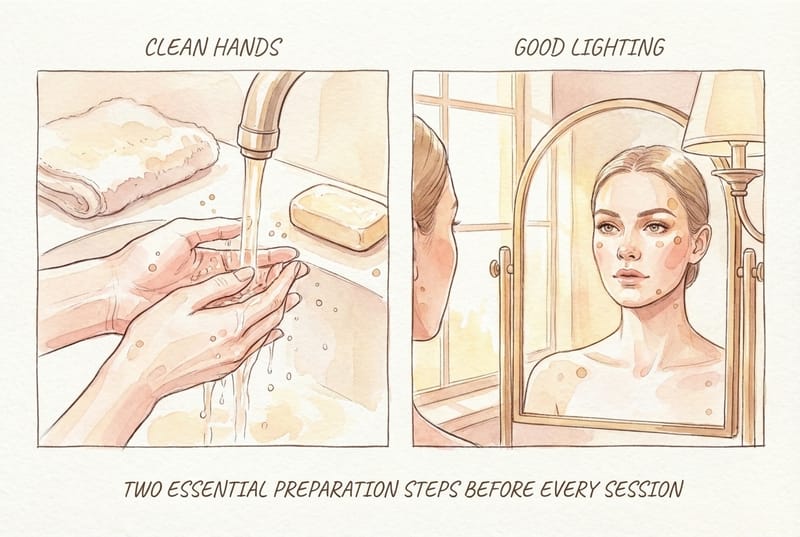
Use clean hands whenever you touch your face during exercises. Apply a light serum or moisturizer for slip if the exercises involve finger placement on the skin. And always practice in front of a mirror, especially as a beginner, so you can verify that you are engaging the correct muscles.
When Not to Practice
There are specific situations where face yoga should be paused or modified. These are uncommon, but knowing them in advance is important.
- Active skin infections, open wounds, or severe acne flare-ups on the face. Wait until the acute phase resolves before resuming practice to avoid irritation or spreading bacteria.
- Recent facial surgery or injectable treatments like Botox or fillers. Wait for full healing and consult your provider about when it is safe to resume. Most practitioners recommend at least two weeks after injectables.
- Temporomandibular joint (TMJ) disorders with acute pain. Gentle jaw release exercises may actually help, but strengthening exercises that load the joint should be avoided during flare-ups.
- Bell's palsy or other conditions affecting facial nerve function. Work with your healthcare provider to determine which exercises, if any, are appropriate for your situation.
Common Mistakes
Most face yoga mistakes come from enthusiasm rather than carelessness. Knowing the most frequent errors helps you catch them before they become habits.
- Pressing too hard. More pressure does not mean more results. The muscles you are targeting are small and respond to gentle, precise engagement.
- Holding your breath. This creates tension throughout the face and body. Maintain steady, relaxed breathing through every exercise.
- Overworking one area. If you focus exclusively on your jawline or forehead, you risk creating imbalance. A full-face routine with extra attention to priority areas is the right approach.
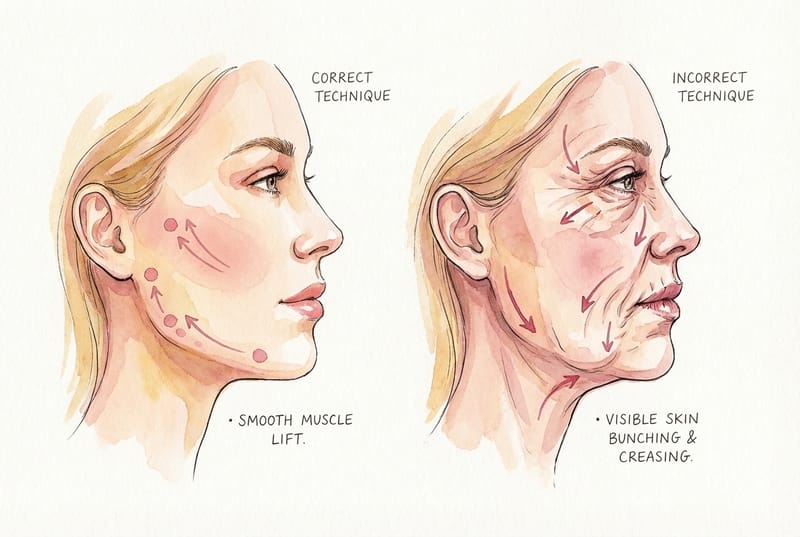
- Creating new wrinkles. Some exercises can inadvertently crease the skin if done incorrectly. This is why mirror practice is essential, so you can see if you are bunching the skin rather than smoothly engaging the muscle beneath.
Signs to Take a Break
Even with proper technique, there are times when your face needs rest rather than more work. Listen for these signals.
- Persistent muscle soreness that does not resolve within a day. This suggests overwork rather than productive fatigue.
- Increased tension or tightness in the jaw, forehead, or around the eyes. If face yoga is adding tension rather than relieving it, scale back the intensity.
- Skin irritation from repeated touch or product application during practice. Give the skin a few days to recover.