Face Yoga
Building Your Weekly Practice
How often to practice, how long each session should last, when to rest, and how to progress from beginner to advanced face yoga.
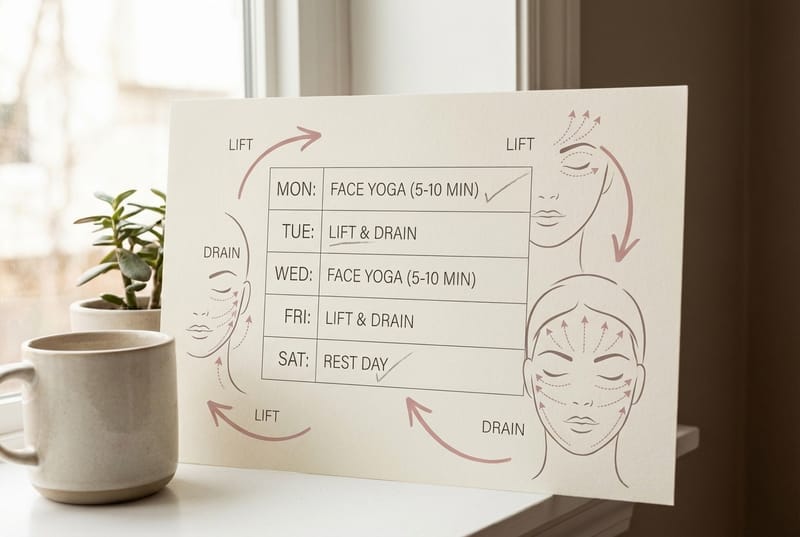
Face yoga works through consistency, not intensity. A short daily session will always outperform a long occasional one. This article helps you design a weekly practice schedule that fits your life, supports steady progress, and avoids the most common mistake new practitioners make: doing too much too soon.
How Often to Practice
For most people, daily practice produces the best results. Five to ten minutes per day is enough to maintain muscle tone, improve circulation, and support the structural changes that make face yoga worthwhile. If daily practice is not realistic for your schedule, aim for at least five sessions per week. Fewer than that, and the muscles do not get enough consistent stimulus to adapt.
Think of face yoga the way you think of brushing your teeth. It is a small daily investment that prevents bigger problems down the line. The cumulative effect of showing up every day far outweighs the impact of any single session, no matter how long.
Session Length
Beginners should start with five to seven minutes per session. This is enough time to complete a warm-up and several targeted exercises without fatiguing the muscles or losing focus. As your muscles strengthen and your technique improves, you can gradually extend sessions to 10 or 15 minutes.
Longer is not always better. Overworking facial muscles can lead to tension rather than tone, especially in areas like the jaw and forehead that are already prone to tightness. Quality of engagement matters more than time spent.
Rest Days and Recovery
Facial muscles recover quickly because they are small and have excellent blood supply. Most practitioners do not need dedicated rest days in the way that bodybuilders do. However, if you notice persistent soreness, tightness, or fatigue in a particular area, take a day off from exercises targeting that zone and focus on gentle stretching and release work instead.
- One full rest day per week is a reasonable default for beginners during the first month.
- After the first month, you can practice daily as long as each session includes release exercises alongside strengthening ones.
- If jaw tension increases rather than decreases, add more release work and reduce the intensity of jaw-strengthening exercises.
Progressing Over Time
Progression in face yoga comes from increased hold times, additional repetitions, and more precise muscle isolation. It does not come from pressing harder or adding resistance. Here is a general progression framework.
- Weeks 1 to 2: Foundation. Focus on learning the exercises correctly. Use short holds of three to five seconds and lower repetitions. Prioritize feeling the right muscles engage.
- Weeks 3 to 4: Building endurance. Increase hold times to five to eight seconds. Add one or two extra repetitions per exercise. You should feel mild fatigue by the end of each set.
- Month 2 onward: Refinement. Hold for eight to ten seconds. Focus on isolating individual muscles without compensating with surrounding areas. Add exercises that target weaker zones.

The key to building a sustainable weekly practice is making it small enough to never skip and enjoyable enough to look forward to. Start conservatively, progress gradually, and trust the cumulative effect of daily consistency.