Skin Care
Why Your Skin Gets Red
The science behind facial redness: how blood flow, inflammation, and barrier disruption produce the redness you see, and why understanding the mechanism matters.
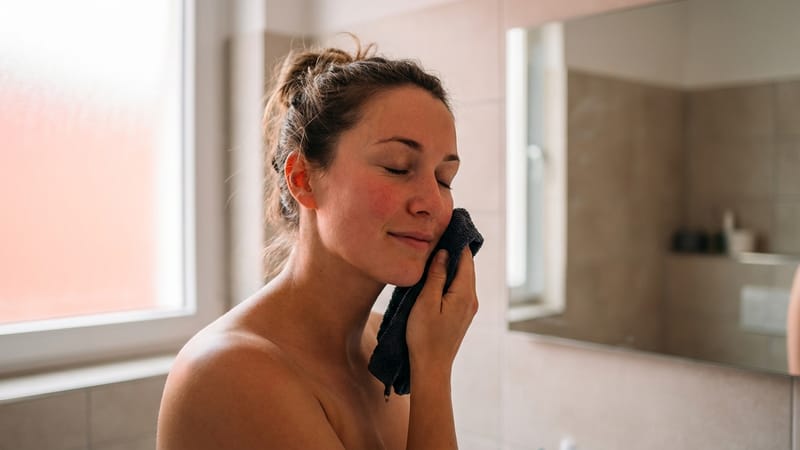
Facial redness is one of the most common and most misunderstood skin concerns. It can be a brief flush that fades in minutes or a persistent condition that shapes your daily routine and confidence. Understanding why your skin turns red in the first place is the essential first step toward managing it effectively, because not all redness has the same cause, and the right response depends entirely on what is driving it.
The Blood Flow Connection
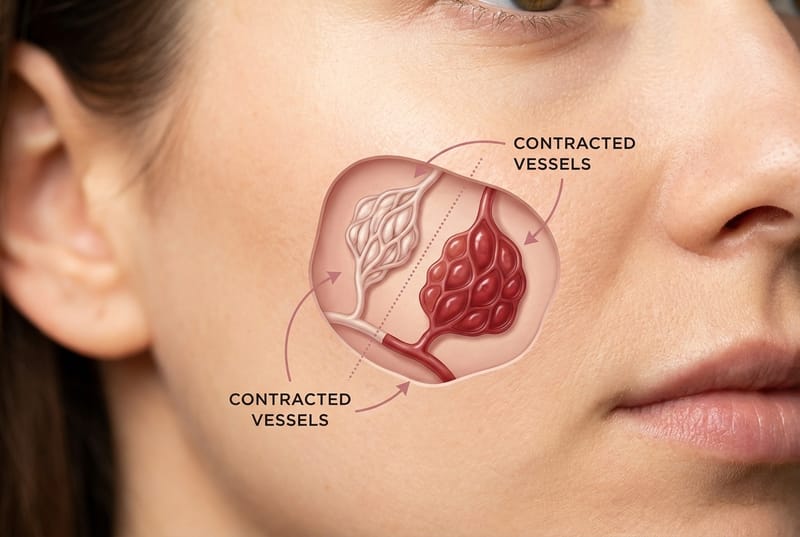
All facial redness involves blood. Your face contains an unusually dense network of blood vessels close to the skin surface. When these vessels dilate, more blood flows through them and the redness becomes visible from outside. This is the mechanism behind blushing, flushing from heat or exercise, and the temporary redness you see after a hot shower.
In healthy skin, this dilation is temporary. The vessels expand in response to a trigger and contract again when the trigger passes. The problem arises when vessels lose their ability to contract fully, staying dilated for longer periods or permanently. This is the progression from occasional flushing to persistent redness, and it is the pathway that conditions like rosacea follow.
Inflammation and Redness
Inflammation is the immune system's response to perceived threats: bacteria, irritants, allergens, UV damage, or physical injury. When inflammatory cells activate, they release chemicals that dilate blood vessels and increase blood flow to the area, which is why inflamed skin looks red. Acne, eczema, contact dermatitis, and rosacea all involve inflammation as a core driver of visible redness.
The distinction between vascular redness (from dilated vessels) and inflammatory redness (from immune activation) matters because they respond to different treatments. Vascular redness needs approaches that strengthen vessel walls and reduce dilation. Inflammatory redness needs ingredients and habits that calm the immune response.
Barrier Disruption
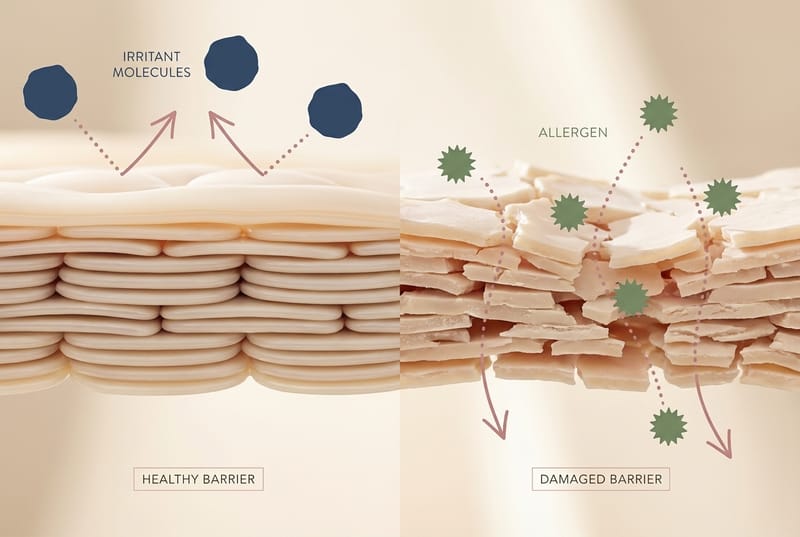
When the skin's moisture barrier is compromised, irritants penetrate more easily and trigger inflammatory responses that manifest as redness. Over-cleansing, using too many active ingredients, physical abrasion, and environmental extremes can all damage the barrier and create a state of chronic low-grade redness that feels like sensitive skin but is actually damaged skin.
This type of redness often responds surprisingly well to the simplest intervention: stop doing what is causing the damage. Simplify the routine, repair the barrier with gentle products, and the redness often resolves on its own within a few weeks.
Genetic and Structural Factors
Some people are simply more prone to visible redness due to genetics. Fair skin with less melanin to mask the underlying blood vessels shows redness more readily than darker skin tones. People of Celtic, Northern European, and East Asian descent tend to have higher rates of rosacea and flushing-prone skin.
Skin thickness also plays a role. Thin skin, particularly around the eyes and nose, shows vascular activity more visibly. As skin naturally thins with age, redness that was never an issue in younger years can become more apparent.
Why Understanding Matters
Redness that stems from barrier damage needs barrier repair. Redness from inflammation needs calming ingredients. Redness from vascular issues may need professional treatment. Applying the wrong approach wastes time and money and can make the situation worse. The articles that follow help you identify your specific pattern and build a targeted response.
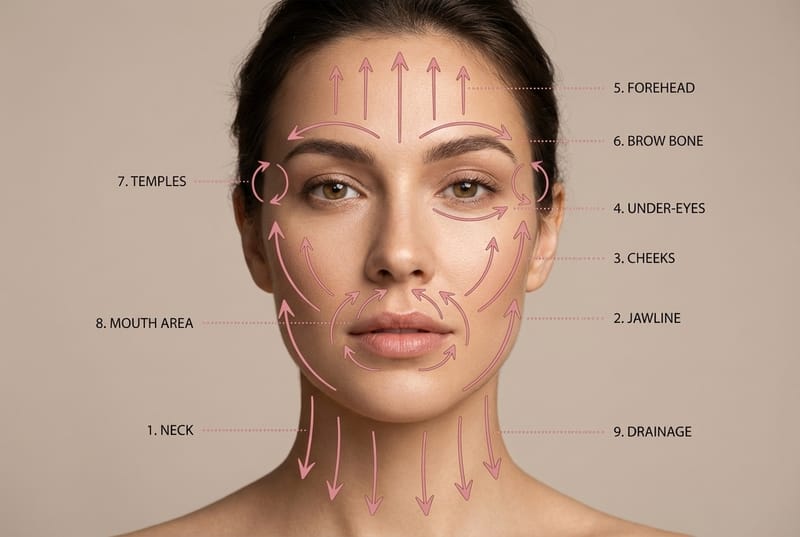
Yasmine face yoga, performed gently and consistently, supports healthy vascular function and lymphatic drainage in the face. The controlled increase in circulation during face yoga is different from the uncontrolled flushing that triggers redness, and over time it can help train the blood vessels to respond more proportionally.