Wellness
Why Hair Falls Out: The Basics
Understanding the hair growth cycle, why shedding happens, and the most common causes of hair loss for both men and women.
Losing some hair every day is completely normal. The average person sheds 50 to 100 hairs daily as part of the natural growth cycle, and each one is replaced by a new strand growing from the same follicle. Hair loss becomes a concern when the balance tips: when more hair falls than grows back, or when the new hair that does grow is thinner and weaker than what it replaced. Understanding why this happens is the first step toward addressing it effectively.
The Hair Growth Cycle
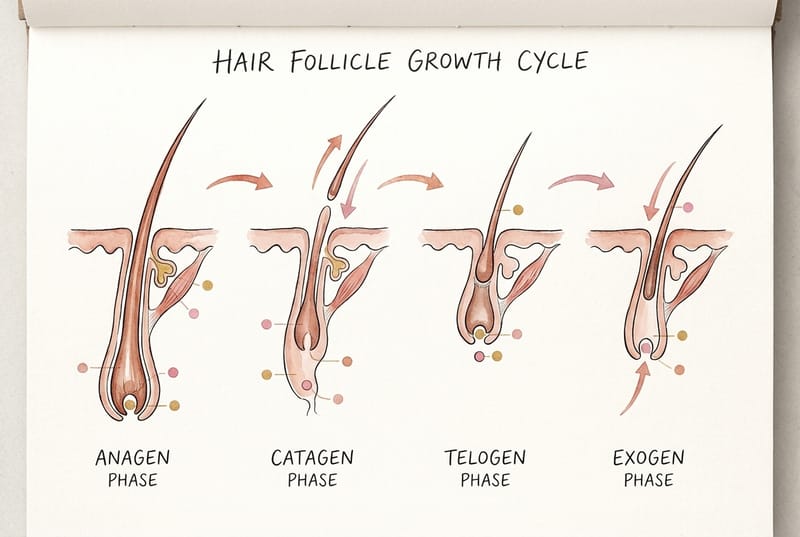
Every hair on your head follows a four-phase cycle, and at any given time, different hairs are at different stages. Understanding this cycle explains why hair loss is rarely instant and why treatments take time to show results.
- Anagen (growth phase) lasts two to seven years and determines the maximum length your hair can reach. About 85 to 90 percent of your hair is in this phase at any time.
- Catagen (transition phase) lasts about two weeks. The hair follicle shrinks and detaches from its blood supply, signaling the end of active growth.
- Telogen (resting phase) lasts about three months. The hair remains in the follicle but is no longer growing. A new anagen hair begins forming beneath it.
- Exogen (shedding phase) is when the old hair falls out, pushed by the new hair growing underneath. This is the normal daily shedding you see in your brush or shower drain.
When Shedding Becomes Loss
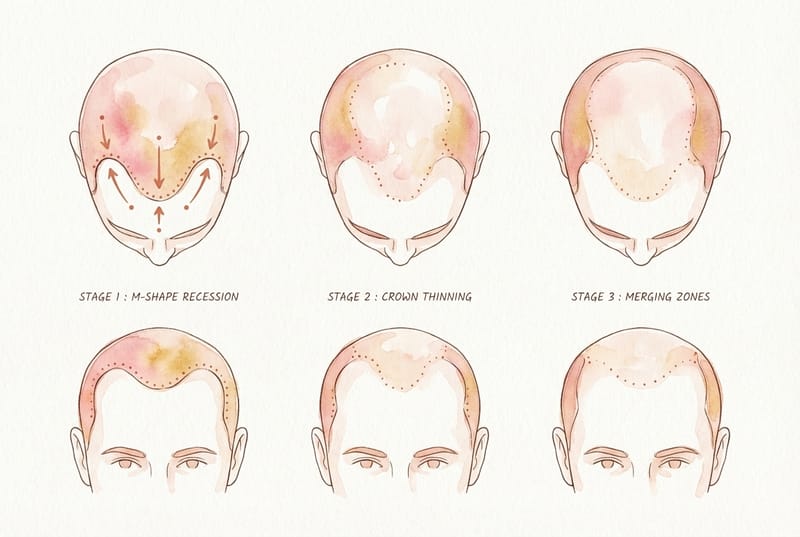
Normal shedding maintains a stable density because each shed hair is replaced by a new one. Hair loss occurs through two main mechanisms: either more hairs than normal enter the shedding phase simultaneously, or the follicles themselves miniaturize, producing progressively thinner, shorter hairs until they stop producing visible hair altogether.
The first mechanism is often temporary and reversible. The second, called miniaturization, is the hallmark of pattern hair loss and is more challenging to reverse, though early intervention can slow or stop its progression significantly.
Common Causes
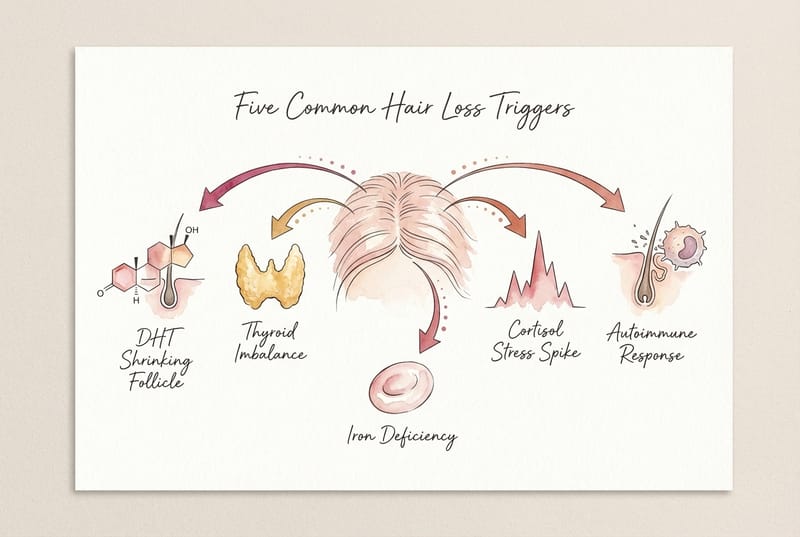
Hair loss has many potential causes, and identifying yours is essential for choosing the right response.
- Genetics: Androgenetic alopecia, or pattern hair loss, is the most common cause and affects both men and women. It is driven by a genetic sensitivity to dihydrotestosterone (DHT), which causes follicle miniaturization.
- Hormonal changes: Pregnancy, postpartum, menopause, thyroid imbalances, and polycystic ovary syndrome can all trigger temporary or ongoing hair loss.
- Nutritional deficiencies: Iron, zinc, biotin, vitamin D, and protein deficiencies can impair hair growth and increase shedding.
- Stress: Physical or emotional stress can push a large number of hairs into the shedding phase simultaneously, a condition called telogen effluvium. This is usually temporary.
- Medical conditions: Autoimmune diseases like alopecia areata, scalp infections, and certain medications can cause hair loss that requires medical treatment.
Why Early Action Matters
Hair follicles that have miniaturized are harder to revive the longer they remain dormant. In pattern hair loss, the progression from thinning to complete follicle shutdown can take years, and the window for effective intervention narrows over time. This does not mean you should panic, but it does mean that sooner is better when it comes to addressing noticeable thinning.
Face yoga with Yasmine includes exercises that promote scalp circulation and release tension in the muscles of the forehead and temples. While face yoga is not a hair loss treatment, improved scalp blood flow supports the follicles that are still active and complements other approaches you may be using.