Wellness
Daily Habits That Protect Your Hair
The everyday habits that either support or sabotage your hair: heat styling, tight styles, washing frequency, stress management, and more.
While genetics and hormones drive the most significant forms of hair loss, daily habits determine how much additional damage your hair and follicles endure. Small, repeated stressors accumulate over time, and changing even a few habits can make a noticeable difference in hair thickness, strength, and retention. This article covers the most impactful daily practices you can adjust.
Heat Damage
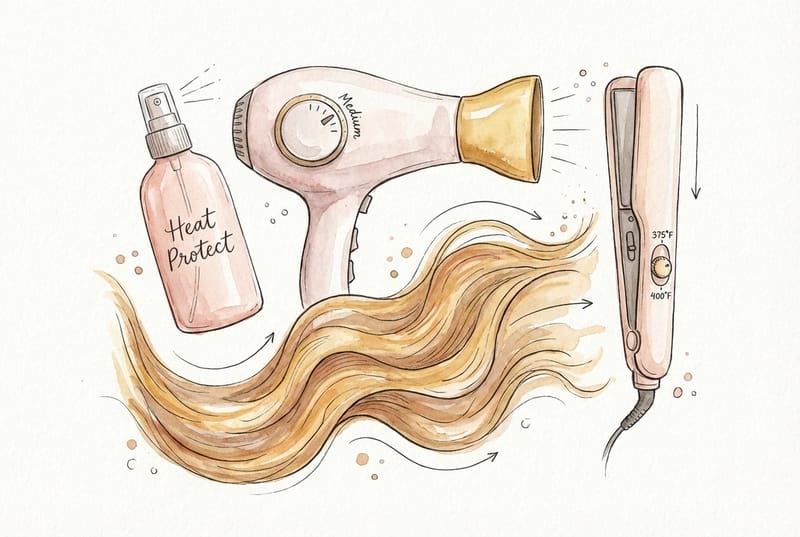
Blow dryers, flat irons, and curling tools expose hair to temperatures that can exceed 200 degrees Celsius. At these temperatures, the protein structure of the hair shaft is permanently altered, causing brittleness, breakage, and dullness. Heat damage does not cause follicle-level hair loss, but it causes the hair you have to break off shorter and thinner, which creates the appearance of less hair.
- Use the lowest effective heat setting. Most styling can be achieved at medium temperatures with slightly more time.
- Always apply a heat protectant spray before using any hot tool. These products form a barrier that reduces thermal damage by up to 50 percent.
- Air dry when possible. Even partially air drying before using a blow dryer reduces heat exposure significantly.
Tight Hairstyles and Traction
Tight ponytails, buns, braids, and extensions create sustained tension on the hair follicles. Over time, this repeated pulling can damage the follicles permanently, leading to traction alopecia. The hairline and temples are most vulnerable because the follicles in these areas are naturally finer and more susceptible to tension damage.
Vary your hairstyles to distribute tension across different areas. Use soft, fabric-covered hair ties instead of rubber bands. Loosen braids and ponytails whenever possible, and give your hair regular breaks from any style that creates constant pull. If you wear extensions, ensure they are not too heavy and give your natural hair rest periods between applications.
Washing Frequency
There is no universally correct washing frequency. The right schedule depends on your scalp type, activity level, and styling products. Over-washing can strip the scalp of necessary oils and cause irritation. Under-washing allows buildup that clogs follicles and creates an inflammatory environment.
As a starting point, oily scalps benefit from daily or every-other-day washing. Normal scalps do well with every two to three days. Dry scalps may only need washing once or twice a week. Adjust based on how your scalp feels and looks, and always use a gentle, sulfate-free shampoo that cleans without stripping.
Stress and Hair
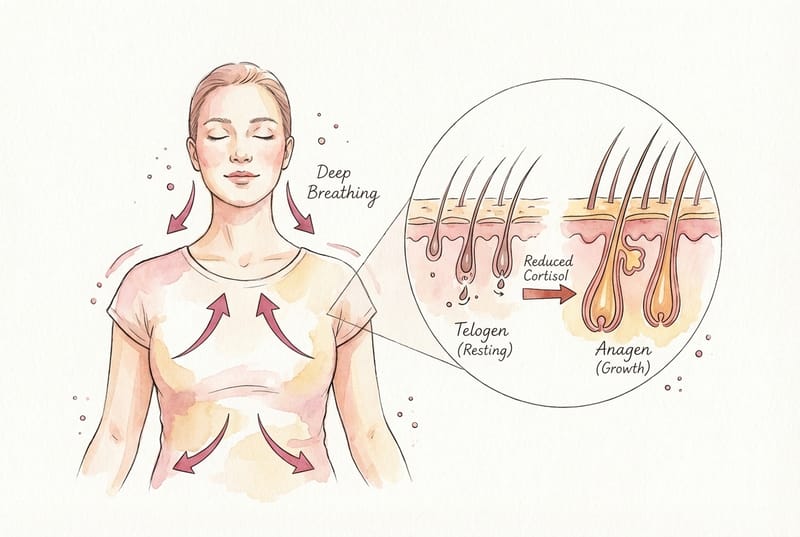
Chronic stress elevates cortisol levels, which disrupts the hair growth cycle and can push a significant percentage of hairs into the shedding phase simultaneously. This stress-related shedding, telogen effluvium, typically appears two to three months after the stressful period and can be alarming in its intensity.
Managing stress is not just a wellness recommendation. For your hair, it is a practical treatment strategy. Regular exercise, adequate sleep, social connection, and stress-reduction practices like deep breathing or meditation all lower cortisol levels and support a healthy growth cycle.
Gentle Handling
- Detangle wet hair with a wide-tooth comb, starting from the ends and working upward. Wet hair is at its most fragile and susceptible to breakage.
- Avoid brushing hair aggressively or when dry if your hair is curly or textured, as this causes breakage and frizz.
- Sleep on a silk or satin pillowcase. The smooth surface reduces friction and prevents the tangling and breakage that cotton pillowcases can cause.
- Pat hair dry with a soft towel or cotton t-shirt instead of rubbing vigorously. Rough drying creates friction damage.
Yasmine face yoga provides a daily stress-management ritual that directly counteracts one of the most common hair loss triggers. The focused breathing and intentional movement in each session help lower cortisol levels, supporting both your overall well-being and the health of your hair growth cycle.