Anti-Aging
Why Do I Look Older Than My Age? Appearance Age, Explained
Feel like you look older than your age? What appearance age means, the habits that push it up, and the levers that visibly bring it back down.
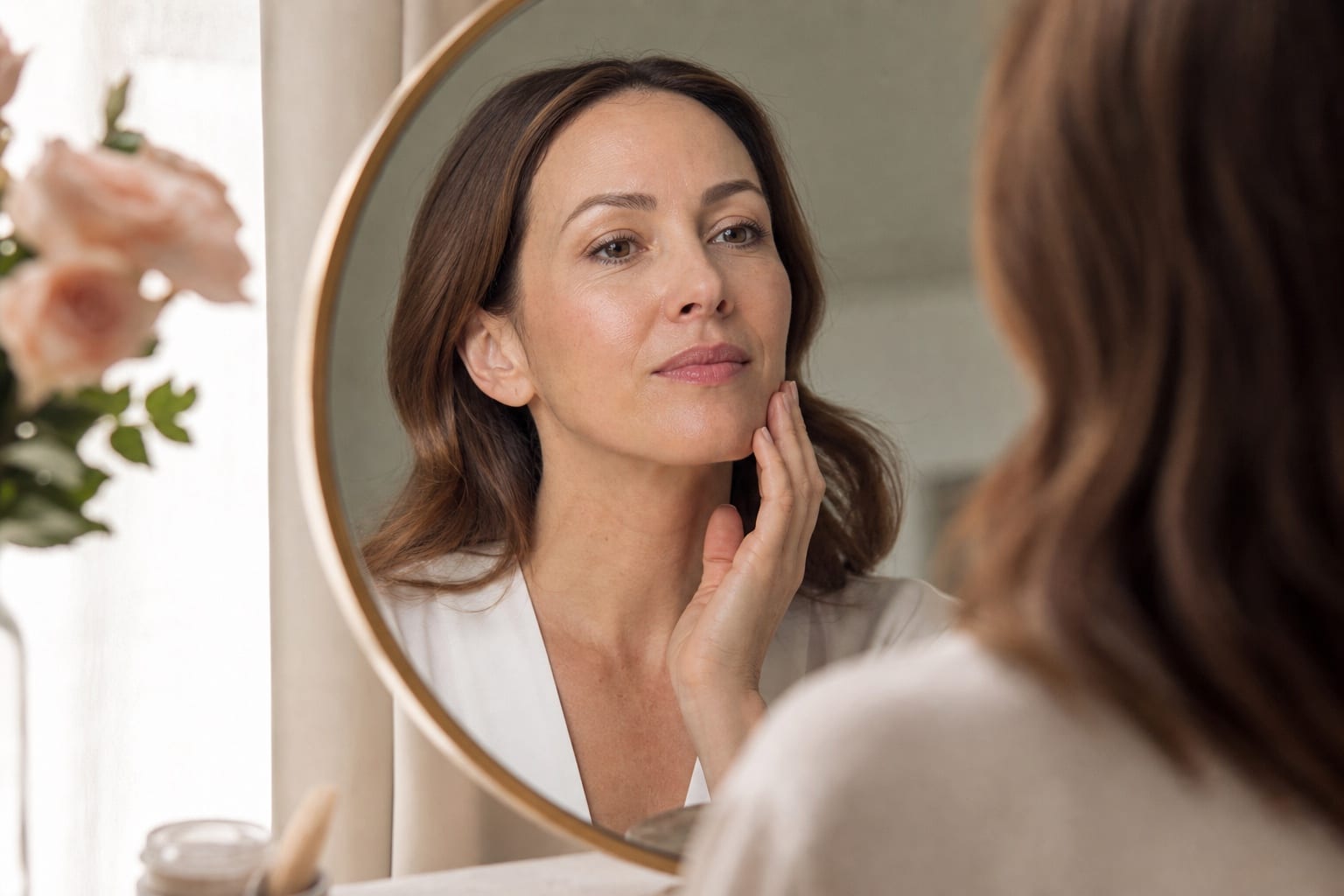
If the mirror keeps reading a few years ahead of your birth certificate, you're not imagining a mystery — and it isn't permanent. Two people at the same birthday party can both be turning forty-five while strangers would guess one at thirty-eight and the other at fifty-two. The gap between those guesses and the candles on the cake has a name: appearance age, the age your face visually presents to the world. Unlike the number on your passport, it isn't fixed, and unlike the aging happening inside your cells, you can watch it change. That combination is what makes it worth understanding on its own terms.
Three Ways of Having an Age
Chronological age is the simple one: time elapsed since birth. It advances at exactly one year per year, cares nothing about your habits, and is the age that medicine, law, and birthday cards all use. Nothing you do changes it.
Biological age describes how far your body's aging processes have actually progressed. Two sixty-year-olds can differ meaningfully here, with one carrying the physiology of a person years younger thanks to genetics, activity, and decades of accumulated habits. Researchers estimate it through laboratory measures of cellular and metabolic function, and it drifts slowly in response to how you live.
Appearance age is the third measure, and the most social one: the age other people assign you on sight. It emerges from your skin, your facial contours, your hair, and your habitual expression, and it's the version of age that operates in every first impression, job interview, and profile photo. It's also the only one of the three you can observe directly, without a lab, which is part of why researchers started taking it seriously.
The three usually travel together, but they can diverge widely. Years of sun exposure can leave the skin of a forty-year-old presenting a decade older while their bloodwork looks unremarkable, and a well-rested fifty-five-year-old can read as mid-forties. The size and direction of that divergence is personal, and it's shaped far more by environment and habit than most people assume.
Why Perceived Age Is More Than Vanity
Aging researchers have treated perceived age as a meaningful signal for decades. Physicians have long noted whether a patient "looks older than stated age," treating the observation as clinically relevant rather than cosmetic. Research on aging populations has repeatedly found that how old a person looks tracks with how their body is aging, not perfectly, but consistently enough that perceived age serves as a practical stand-in for deeper measures in settings where laboratory testing isn't available.
Comparisons of identical twins make the logic vivid. Twins share both their chronological age and their genes, so when one looks notably older, the difference points at what their lives did differently: sun exposure, smoking, stress, sleep. The face keeps a visible record of the exposures a body accumulates. Appearance age is that record, read at a glance.
What Your Face Is Reporting
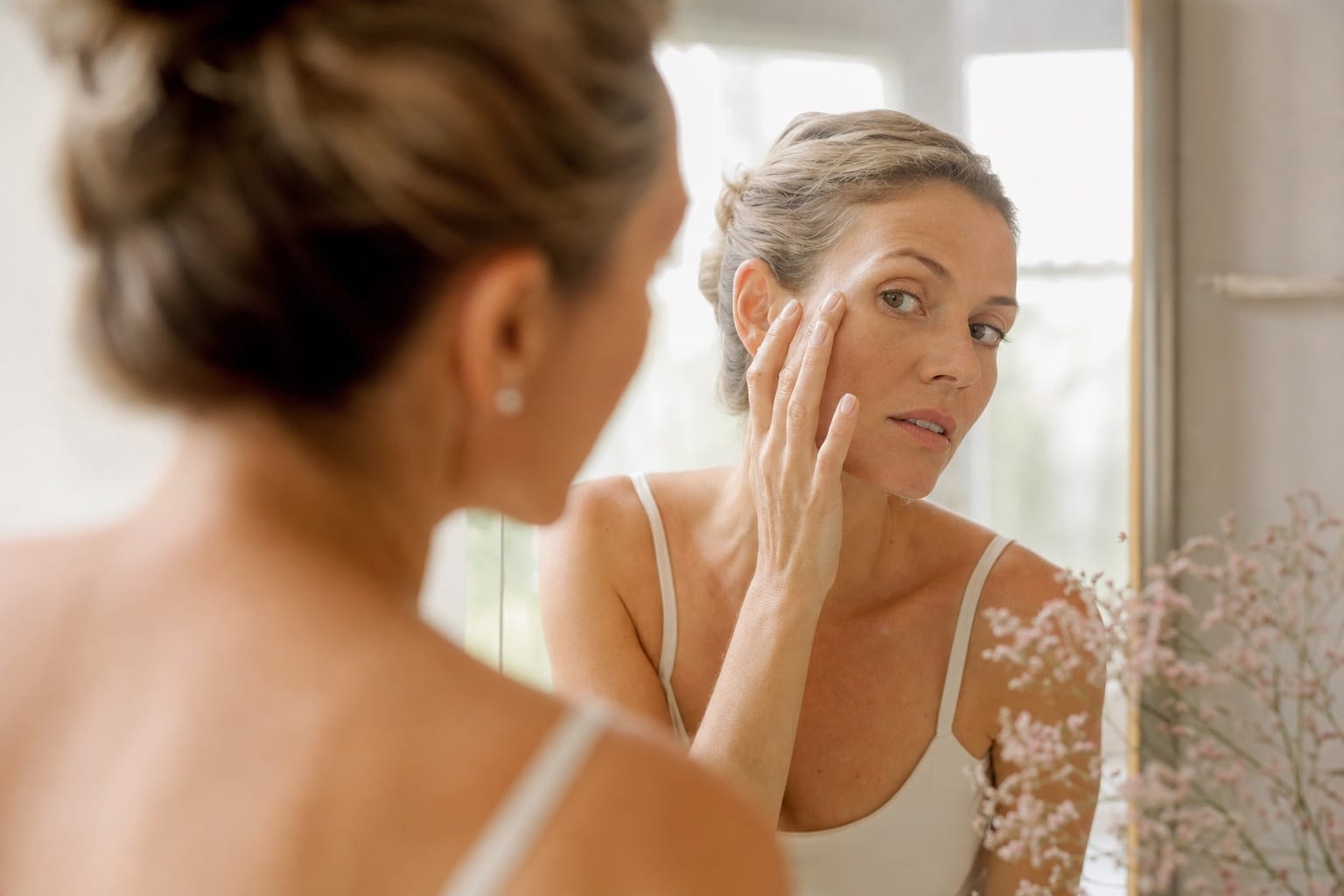
An observer, human or algorithmic, builds an age estimate from a handful of visible inputs. Each one ages on its own schedule, and each responds to different things, which is why understanding them separately is more useful than thinking about "looking older" as a single process. Two faces can arrive at the same appearance age through completely different inputs, and the input driving yours determines which changes would actually show.
- Skin surface: evenness of tone, texture, pigment spots, and how light reflects off the skin. This input changes fastest of all, in both directions.
- Volume and contours: the fullness of the cheeks and under-eye area and the definition of the jawline, shaped by fat pads, bone, fluid, and the tissue that supports them.
- Muscle tone: the resting firmness of the face and neck beneath the skin, which influences how lifted or heavy the lower face appears.
- Hair and framing: density, color, hairline, and brows, which set the context before anyone looks closely at skin at all.
- Habitual expression: the lines that repeated expressions gradually settle into the skin, plus the resting expression your face defaults to, tense or at ease.
How AI Estimates Appearance Age
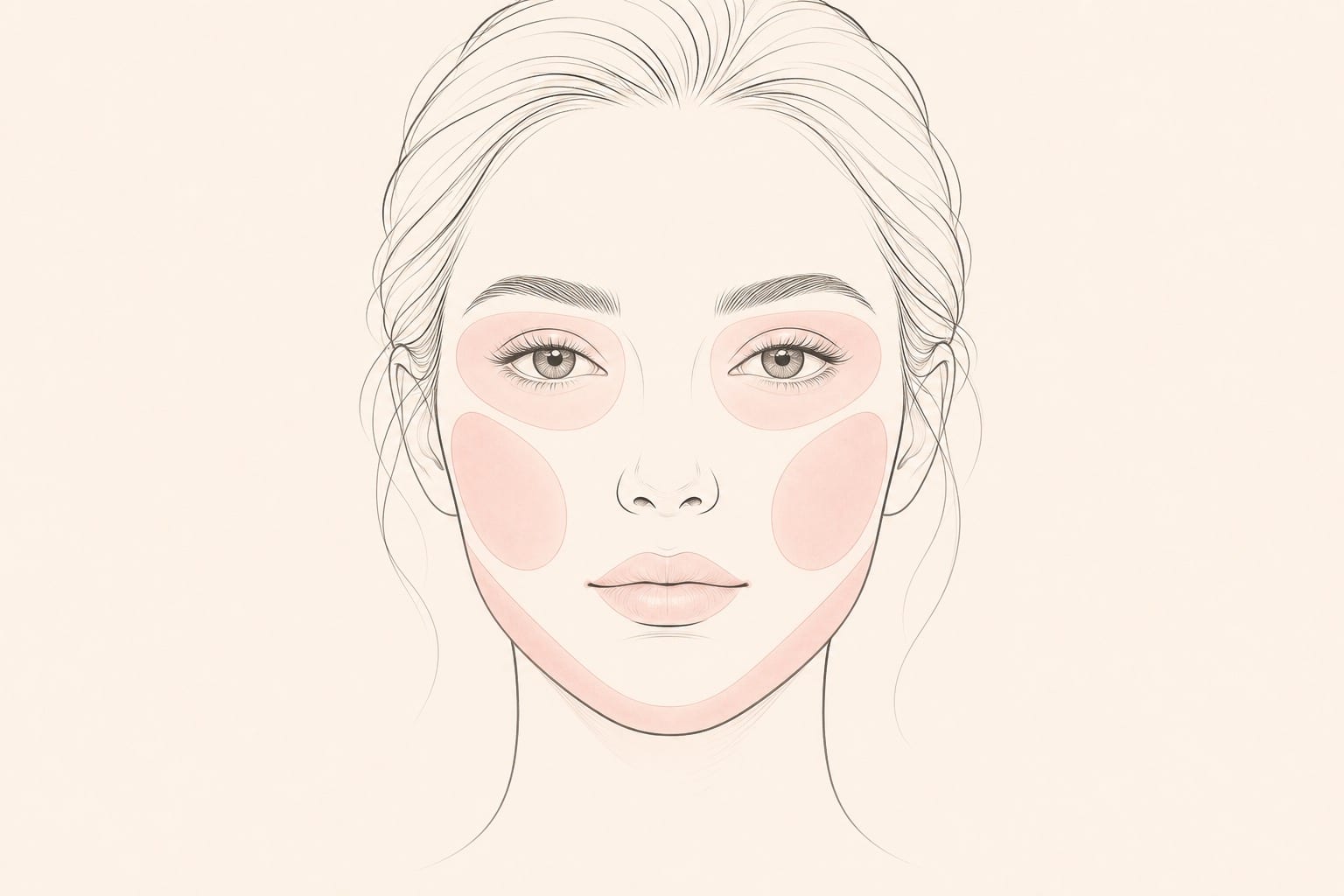
Modern appearance-age estimators are neural networks trained on large sets of face photos labeled with real ages. From those examples, a model learns which combinations of features tend to appear at which ages: the density and depth of fine lines, evenness of skin tone, texture down to the pore level, the softness of contours along the jaw and cheeks. Given a new photo, it reports the age those features collectively suggest. The Yasmine app's AI face scanner applies this approach, estimating your appearance age from a single photo.
An Estimate, Not a Verdict
Any single estimate reflects the photo as much as the face. Lighting, camera angle, makeup, and image quality all move the result, so readings are most meaningful when conditions stay constant and you compare them over months rather than reacting to one number. If you'd like a starting point that skips the camera entirely, our free skin age test at yasmineapp.com/skin-age-test estimates skin age from ten questions about habits like sun, sleep, and skincare, and takes about two minutes.
The Levers That Move Appearance Age
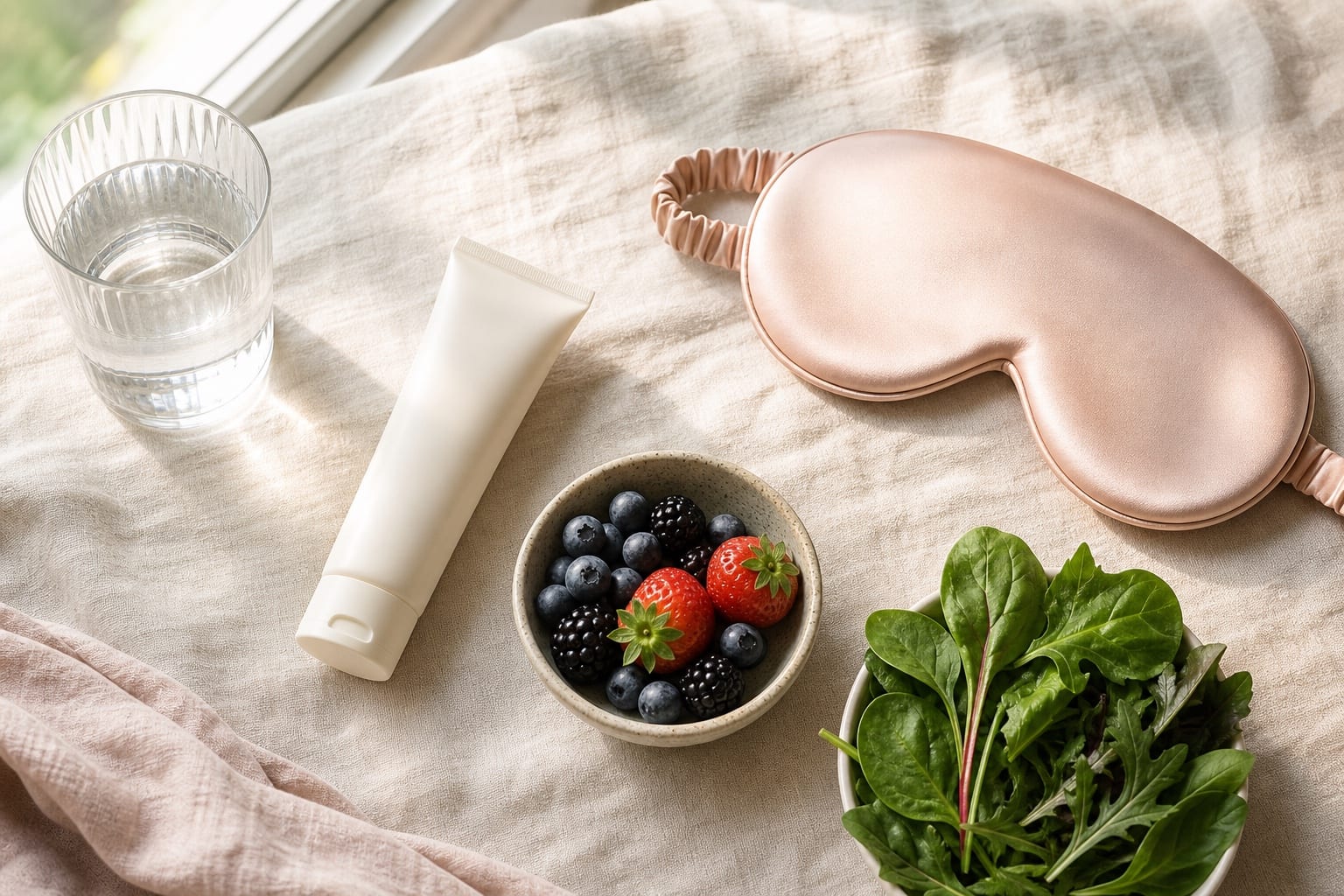
Of the three ages, appearance age is the most movable on a human timescale. Chronological age only climbs. Biological age drifts slowly. Appearance age can respond to habit changes within months, because its fastest-changing input, skin quality, is also the one daily behavior touches most directly. Five levers do most of the work.
- Wear broad-spectrum sunscreen daily. Dermatology research consistently identifies ultraviolet exposure as the largest controllable driver of visible skin aging, and daily protection lets tone and texture gradually improve instead of accumulating further damage.
- Protect your sleep. Short nights show up quickly as puffiness, dullness, and darker under-eyes, and skin does much of its repair work during deep sleep. Of all the levers, this one shows results fastest.
- Don't smoke, and if you do, stop. Smoking narrows the small blood vessels that feed the skin and degrades the fibers that keep it firm. In twin comparisons it's among the most visible single differences between faces, and circulation begins recovering after quitting.
- Keep a skincare routine you'll actually repeat. A simple sequence of gentle cleansing, moisturizer, and sunscreen practiced daily for six months does more than a shelf of sophisticated products used sporadically. Consistency is the active ingredient.
- Train facial muscle tone. The muscles beneath facial skin respond to regular training like any others, and their resting tone shapes the contours observers read as age. A few minutes of face yoga daily, the practice Yasmine is built around, works on this layer directly.
Expect changes in a particular order. Hydration and overall tone respond first, often within weeks. Texture and evenness follow over two to three months. Shifts in resting lines and contour firmness take longer, closer to six months of consistent practice, and structural change is slower still. Anyone promising a transformed face in a week is describing lighting.
Honest Limits
Some inputs won't move. Bone structure is set. Genetics deal every face a different hand for pigment, oil production, and how visibly skin stores sun damage. Decades of accumulated change don't erase, and no routine substitutes for medical care when skin actually needs it. It also pays to be wary of anyone quoting precise promises, since individual faces respond at individual rates. The realistic win from consistent habits isn't a dramatic rewind; it's a face that reads rested and cared for, and a trend that flattens or gently reverses instead of climbing.
That's a better goal anyway. Appearance age was never really about hitting a number. It's a running summary of how you've lived and how you're living now, which means it stays partly in your hands for as long as you keep making deposits. Measure it if you're curious, change the habits that feed it, and check back in a season. The number will do what the habits did.