Anti-Aging
How Old Do I Look? What Face Age Tests Really Measure
Why you can't judge your own facial age, what a face age test actually measures, how lighting and angles skew results, and how to read your number wisely.
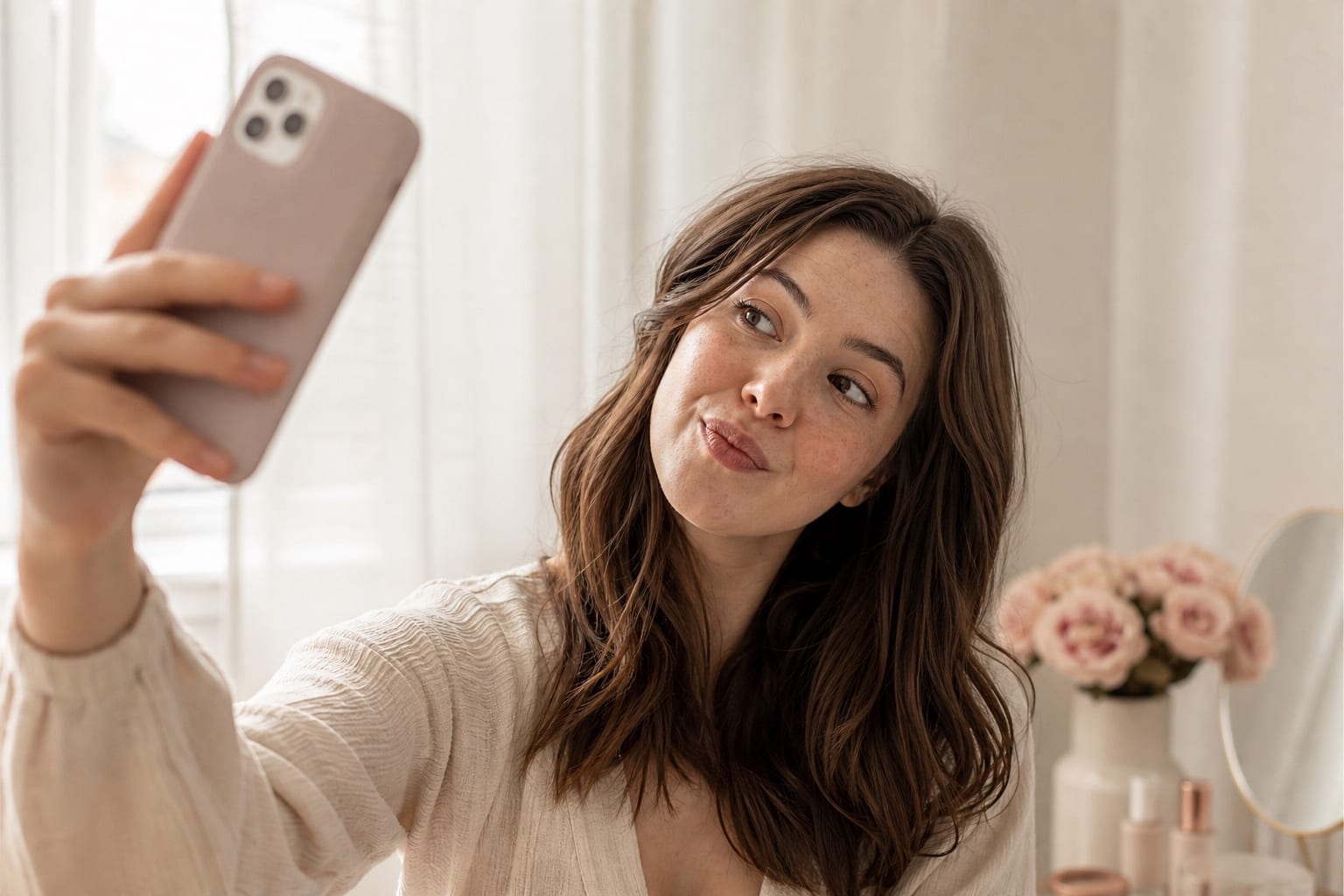
Type "how old do I look" into a search bar and you'll find photo apps, quizzes, and forum threads where strangers rate each other's selfies. The question sounds vain, but it isn't trivial. Perceived age is one of the first things people register about a face, and it colors their assumptions about health, energy, and lifestyle before you've said a word. The strange part is that of all the people who could answer the question, the least reliable judge is you.
That isn't false modesty. Estimating your own facial age is genuinely hard, and the reasons have more to do with how perception works than with vanity or denial. They're worth understanding before you put weight on any answer — a friend's guess, a mirror, or an app's estimate — because they explain why those answers so often contradict each other.
Why You're a Poor Judge of Your Own Face
You see your face more often than anyone else does, and that's precisely the problem. Gradual change doesn't register. A line that deepens over three years never gets a before-and-after moment, because your brain keeps updating its reference image of what you look like. Old photos feel jarring for exactly this reason: they present the accumulated gap all at once, without the thousands of intermediate mirror checks that smoothed it over.
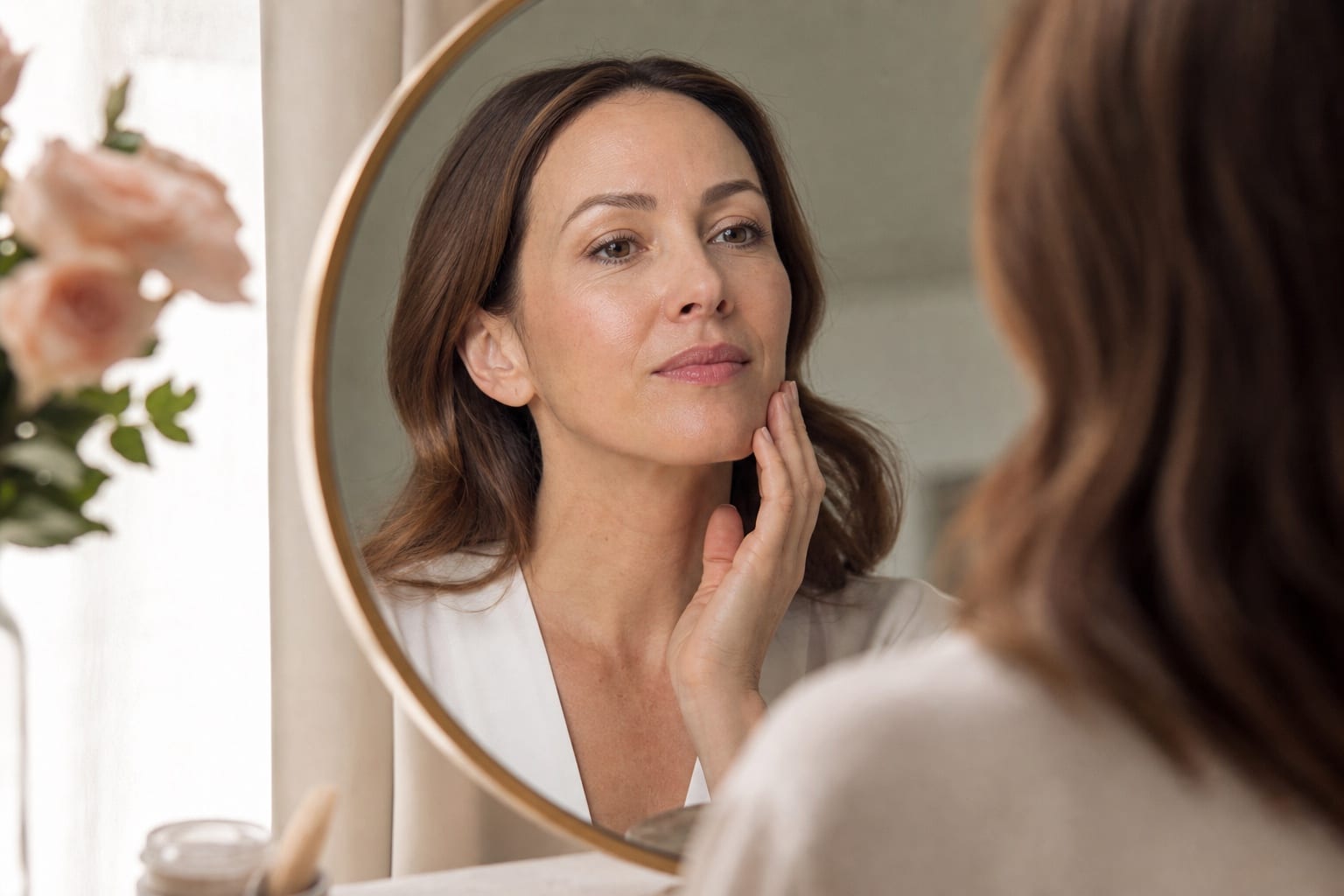
Mirrors add their own distortion. The face you know best is a reversed image, studied under the same bathroom lighting, usually wearing a familiar, slightly composed expression, the one you automatically adopt when you know you're looking at yourself. Cameras flip you back to the orientation everyone else sees, freeze you mid-expression, and add lens distortion when held close. This is why so many people insist they don't look like their photos. Neither version is the full truth. Other people watch a moving, three-dimensional face animated by conversation, and that reads differently from any frozen frame.
What Other People Actually Read as Age
When someone estimates your age, they aren't counting wrinkles. Perception research and dermatology literature consistently point to a cluster of cues that observers weigh together, mostly without realizing it, and some of them are not the ones people obsess over in the mirror.
- Skin quality carries more weight than most people expect. Even tone and smooth, light-reflecting texture read as young; blotchiness, dullness, and rough texture read as older, even on a face with relatively few lines.
- Expression lines that remain visible at rest, especially between the brows and across the forehead, push estimates upward because observers read them as years of accumulated movement.
- The eye area gets scrutinized first in most face-to-face interactions, so hollowness, puffiness, or crepey skin there shifts an age estimate more than the same change anywhere else on the face.
- Contours matter as much as surface. Full cheeks and a defined jawline read younger, while flattening in the midface and softening along the jaw read older.
- Hair, grooming, and posture frame the whole impression. Hair density and color, brow shape, and how you carry your head all feed into the estimate before skin even comes into it.
None of these cues works alone. A face with soft lines but even, luminous skin often reads younger than a smoother face with patchy tone. That's worth knowing, because skin quality responds to daily habits far faster than deep lines do, which means the cue observers weigh most heavily is also the one you can move soonest.
How AI Face Age Tests Work
Photo-based age estimators have moved from research labs to everyone's phone in about a decade. Under the hood, they're trained on large collections of face photos labeled with real ages. Across millions of examples, a model learns which visual patterns tend to appear at which ages: the density of fine lines around the eyes, surface texture, evenness of tone, the softness of contours, shadows beneath the eyes. Show it a new photo and it returns the age those patterns suggest. The Yasmine app's AI face scanner works this way, estimating your appearance age from a single photo.
The value of an algorithmic estimate isn't superhuman insight. It's consistency. A model applies the same criteria every time, without the politeness of a friend or the harshness of your own worst mood. Scan yourself under the same conditions in January and again in June and you get two directly comparable readings, which is something no human observer can offer you.
What the Number Can't Tell You
A face age test measures appearance and nothing deeper. It doesn't assess your health, your cellular aging, or anything about your future. Two people can receive the same estimate for entirely different reasons, one from years of sun exposure, the other from genetics or a brutal month of short sleep. The estimate itself carries real uncertainty, too; even human observers guessing an unfamiliar face routinely miss by several years in either direction. Treat the output as an informed impression, not a measurement in the way a scale measures weight.
Why Your Result Can Swing by Years
Ask anyone who has tried several face age tests and you'll hear the same complaint: the numbers jump around. One app says thirty-one, another says thirty-eight, and the same app gives a different answer on a different evening. Most of that variance comes from the photo, not from the face in it.
- Lighting is the biggest factor. Harsh overhead light throws shadows under the eyes and deepens the folds around the mouth, adding years in an instant. Soft, indirect daylight facing you does the opposite.
- Angle changes the geometry. A camera held below chin level exaggerates the jaw and neck, while a slightly raised angle tightens the same features.
- Makeup, filters, and beauty modes smooth texture and even out tone, which are exactly the cues a model reads. A result from an edited or made-up photo describes the makeup, not the skin underneath.
- Expression and distance matter too. A wide smile creases the eye area, a phone held close distorts proportions, and blurry or low-resolution images hide the texture detail the estimate depends on.
How to Get an Answer You Can Actually Use
A single reading satisfies curiosity. A repeatable routine answers the better question, which is whether your face is changing and in which direction. The approach is the same one that makes a bathroom scale useful: control the conditions, then watch the trend instead of any single number.
- Photograph yourself in consistent conditions: the same spot near a window with indirect daylight, no makeup, hair pulled back, a relaxed neutral expression, and the camera front-facing at eye level about an arm's length away.
- Repeat every four to six weeks rather than every day. Faces shift with sleep, hydration, salt, and hormones, and daily testing mostly measures that day-to-day noise.
- Keep each result and compare across months. The direction of the line is the finding; any single reading is weather.
- Connect the trend to your habits. If you started daily sunscreen or a consistent evening routine in spring, the readings a few months later tell you whether it's showing up on your face.
If you'd rather start without a camera at all, our free skin age test at yasmineapp.com/skin-age-test takes the habit route instead: ten quick questions about sun, sleep, smoking, and skincare, and about two minutes to an estimate of your skin's age, with no photo or sign-up involved. It's a useful complement to a photo-based reading, because it looks at the inputs rather than the outcome.
The Number Matters Less Than the Trend
Whatever estimate you get today is a snapshot of decades of genetics, environment, and habit, and you can't relitigate any of it. What you can influence is the direction from here. The cues that estimators and human observers weigh most heavily, even tone, smooth texture, the depth of resting lines, are also the ones that respond to consistent daily care over months rather than years.
So take the test, note the number, and set it down. Ask again in three months, under the same light, after ninety days of whatever routine you've committed to. The second reading is the one worth paying attention to.