Anti-Aging
Skin Age vs. Real Age: Why the Two Numbers Drift Apart
Skin age measures how old your skin looks and behaves, not how many birthdays you have had. Here is why the two numbers drift apart and what the gap tells you.

There are two ages you carry. One sits on your passport and increases by exactly one each year, no exceptions. The other is written on your skin, in its texture, its tone, the way it catches light, and how quickly it recovers from a rough week. This second number follows no calendar. Two people born the same month can plausibly look a decade apart by their forties. That difference is what the concept of skin age tries to capture, and understanding it turns a vague worry about aging into something you can actually work with.
The underlying biology, how genes set a baseline pace while environment and habits layer extra change on top, is a story we tell in full elsewhere. The short version: intrinsic aging is the slow built-in timeline, and extrinsic aging is everything your life adds to it. This article is about the practical consequence of that split. Why do your skin's apparent age and your chronological age drift apart, how is that drift estimated in practice, and what should you do with the answer?
What Skin Age Actually Means
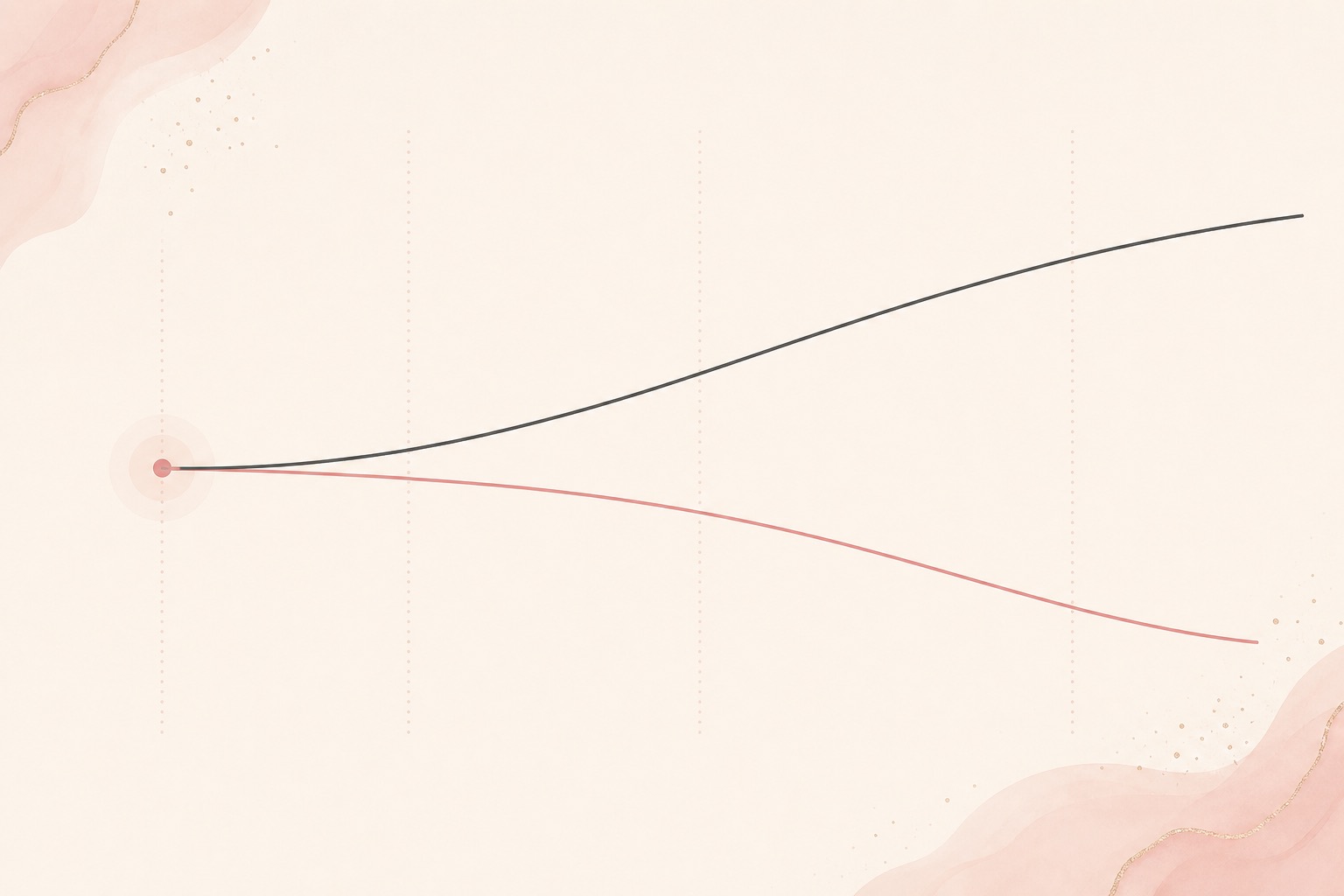
Skin age is an estimate of how old your skin looks and behaves, expressed in years so it can be compared against your birthday count. It is not one property but a bundle of signals: the depth and density of fine lines, evenness of tone and pigment, surface texture, firmness along the cheeks and jawline, how hydrated and plump the surface appears, and how readily skin springs back from pressure and expression. Read together, these signals place a face somewhere on the spectrum of what skin typically looks like across the decades.
Two things make this a useful number rather than a vanity metric. First, it is responsive. Unlike chronological age it can move in both directions, because part of what reads as older is accumulated and partly reversible surface change, such as dehydration, rough texture, and uneven tone, rather than permanent structural loss. Second, it is honest about the present in a way your birth year is not. Your skin does not know when you were born; it only knows what it has been through, and it reports that history whether you ask or not.
Why the Two Numbers Drift Apart
If everyone lived identically, skin age would track real age closely and the concept would be pointless. The numbers diverge because exposure diverges. Dermatology research consistently shows that most visible skin aging is extrinsic, driven by environment and habit rather than the calendar, and the drivers are far from equal. Ranked roughly by how much drift each one typically creates:
- Sun exposure sits far above everything else. Ultraviolet light breaks down collagen and elastin and drives uneven pigment, and the damage is cumulative: every unprotected hour counts, sunny or overcast
- Smoking is the clearest second place. It restricts blood flow to the skin, degrades its supporting fibers, and adds thousands of repetitions of pursing and squinting around the mouth and eyes
- Sleep debt shortchanges the overnight window in which skin does much of its repair. It shows quickly as dullness and puffiness, and over years as slower recovery and deeper-set lines
- Chronic stress keeps stress hormones elevated, which interferes with barrier function and repair, and it adds a held physical layer: a set jaw, a furrowed brow, tension the skin records
- Alcohol dehydrates the skin, dilates surface blood vessels, and fragments deep sleep, so its effects compound with sleep debt rather than simply adding to it
- Diet matters at the margins. A pattern chronically heavy in sugar works against collagen through glycation, while adequate protein and antioxidant-rich produce supply the raw materials for repair
These drivers stack. Someone who commutes in strong sun without protection, sleeps six broken hours, and unwinds with wine and cigarettes is not collecting four small penalties; each habit amplifies the others, because damaged skin repairs itself more slowly, and that repair depends on sleep and circulation. This is why gaps of many years in either direction are entirely plausible, and why the drivers at the top of the list deserve most of your attention.
How Skin Age Is Estimated in Practice
No one can measure skin age directly the way a scale measures weight. Every method is an estimate built from either what your skin shows or what your habits predict, and the two main approaches see genuinely different things.
Habit Questionnaires
Questionnaire-based tests ask about the drivers themselves: how much sun you get and whether you protect against it, whether you smoke, how you sleep, what you drink, how stressed a normal week feels. From those answers they estimate the pace your skin is likely aging at. Their strength is trajectory, because habits predict where your skin is heading. Their blind spot is that they never see your face, so they cannot detect the head start favorable genes gave you or the damage an earlier, less careful decade already banked.
Photo and AI Analysis
Photo-based analysis works from the evidence itself. An algorithm trained on many faces examines a photo for the signals that shift with age, including line depth and distribution, texture, tone evenness, and firmness cues, then estimates the age that pattern most resembles. The Yasmine app's AI face scanner works this way, estimating your appearance age from a single photo. The strength is the mirror image of the questionnaire's: it sees your current state, including everything already accumulated. What it cannot see is the cause, or where you are heading next.
The two approaches are complements, not rivals, and the fullest picture comes from taking both. A questionnaire describes the road; a photo describes the car. Neither number is a verdict, and any single reading carries noise from lighting, makeup, or one bad night. Treat skin age the way you would treat a bathroom scale: a single honest data point, most useful when collected the same way over time.
What a Gap Tells You
If your skin age comes back higher than your real age, the useful reading is not that your skin is ruined. It is a pointer at accumulated, mostly extrinsic change, which is exactly the kind that responds to habit. Run down the ranked list above and ask which entries describe your last ten years; the gap most likely came from the top of that list, and it will close fastest from there too. Surface contributors such as dehydration and rough texture can improve within weeks, while firmness and lines move on the scale of months to years.
A skin age below your real age is confirmation, not immunity. It usually reflects some mix of favorable genetics and protective habits, often more of the latter than people assume. The mistake to avoid is reading a good number as permission to coast. Sun damage in particular accumulates silently for years before it surfaces, so the habits that created a favorable gap are the same ones that keep it.
Closing a Bad Gap
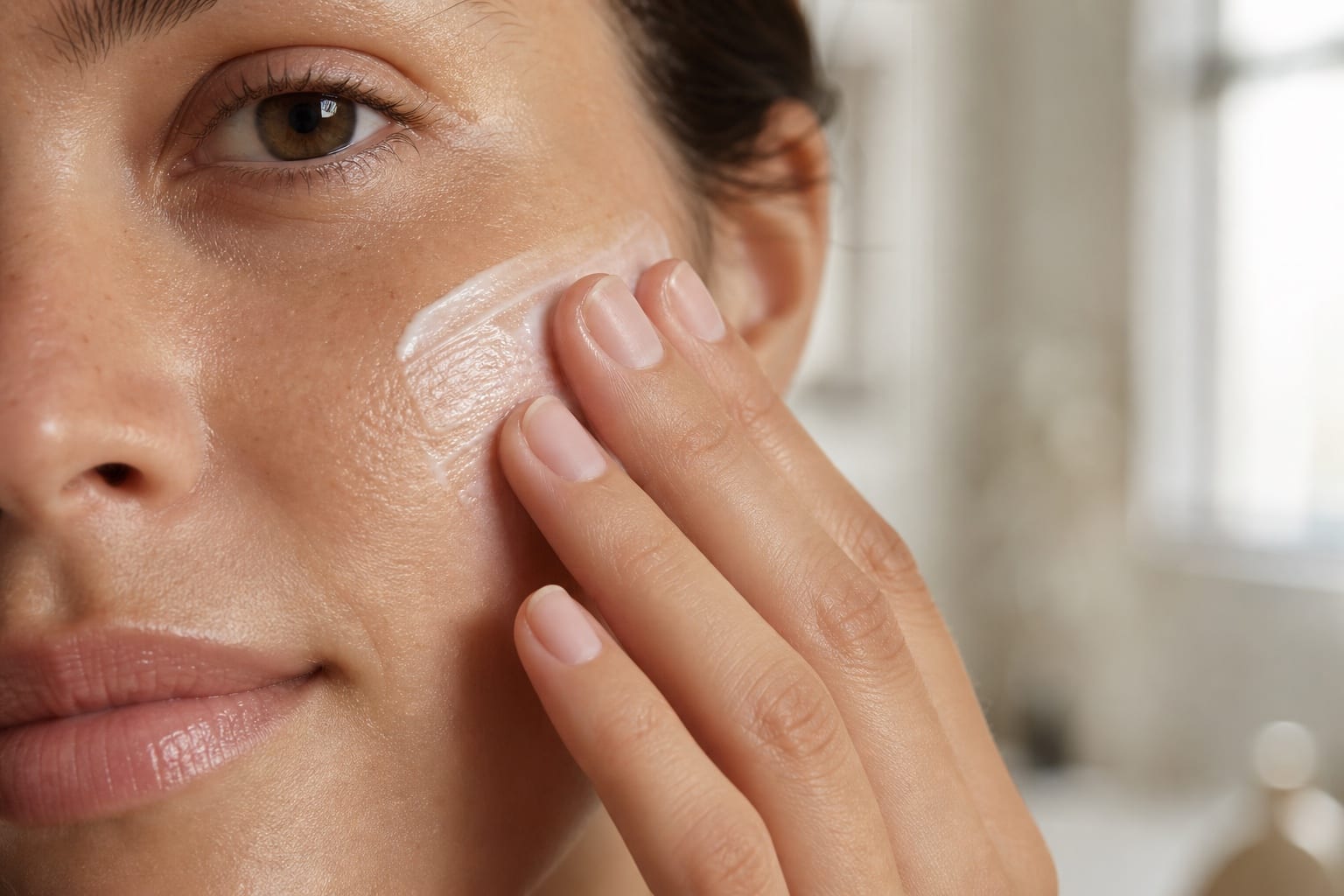
The gap closes in the same order it opened. Daily broad-spectrum sun protection stops the largest driver from compounding and offers the most improvement per unit of effort of any change you can make. Then comes consistent sleep, then subtracting smoking and heavy alcohol, then managing stress, then diet, with a simple, steady skincare routine protecting the barrier while the deeper habits do their work. Supporting the structure beneath the skin helps as well: facial muscle tone influences how firm and lifted the surface appears, which is where consistent face yoga practice earns its place.
Finally, measure your starting point. Our free skin age test takes a few minutes and gives you a number to work against. Retest under similar conditions every few months rather than every few days, because skin changes on the timescale of its own renewal cycles, and chasing daily fluctuation mostly measures lighting and sleep. The gap between your two ages was built slowly, out of years of small exposures. Watching it narrow works the same way: slowly, then noticeably.