Anti-Aging
How to Lower Your Skin Age Naturally: What Actually Works
A ranked, realistic guide to reducing skin age naturally: daily sunscreen, better sleep, less stress, face yoga, and how to track genuine change over months.
Search for ways to make your skin look younger and you will drown in product lists. Rank the options by how much they actually move the age your skin appears to be, though, and the top of the list is almost embarrassingly unglamorous: sunscreen, sleep, and the things you stop doing. This guide orders the levers by leverage, following what dermatology research most consistently supports, and ends with a way to start this week and to know, months from now, whether it is working.
One scope note before the ranking. Why skin ages at all, and how the built-in timeline differs from the change your environment adds, is covered in our article on how skin ages and what you can influence. Here we take that split as given and focus on one question: of the part you can influence, which habits pay off most, and in what order should you adopt them? This is also not a routine-by-decade guide. The levers below apply whether you are twenty-five or sixty-five.
Daily Sunscreen: The Highest-Leverage Habit
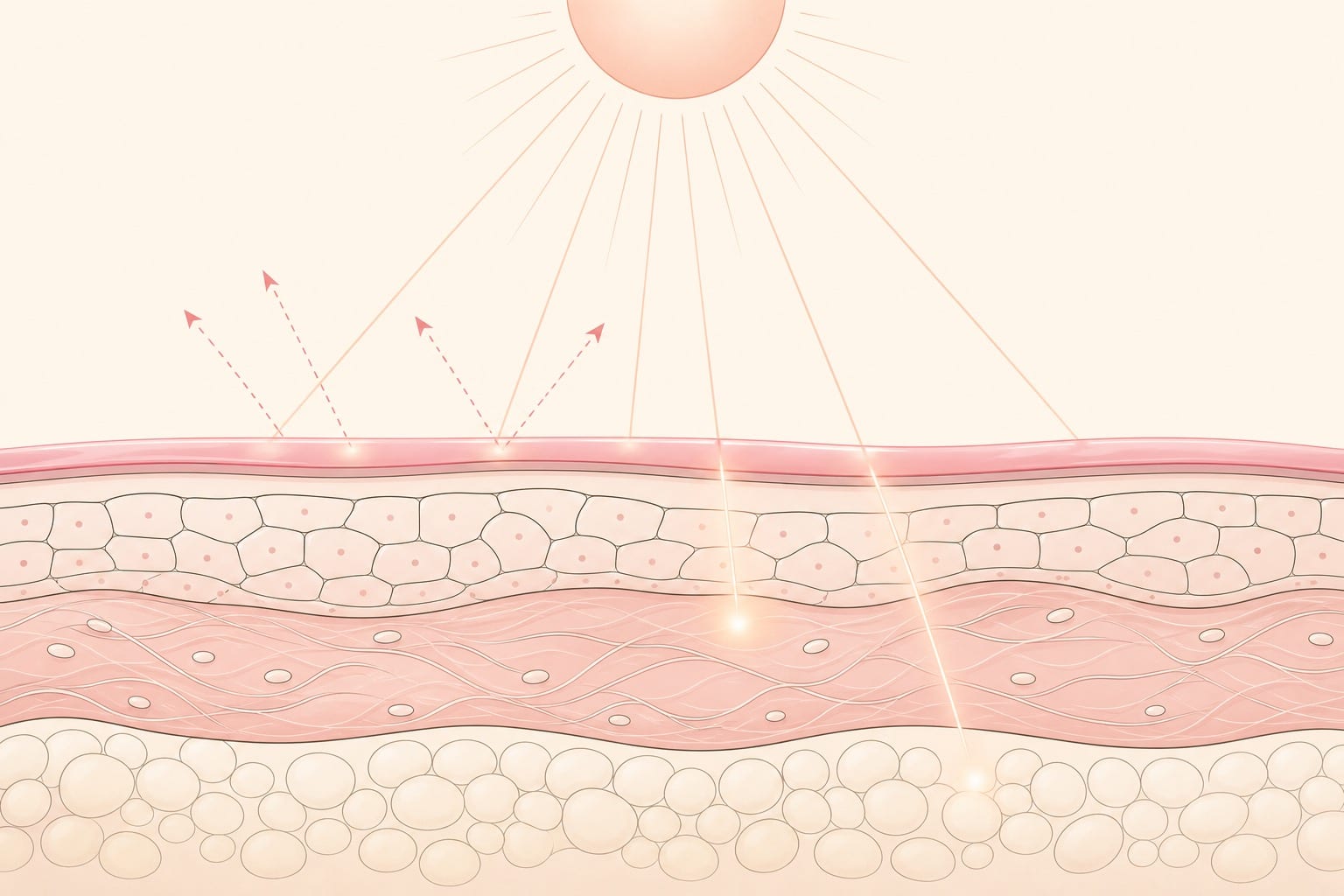
If you change one thing, make it this one. Ultraviolet exposure is the largest single driver of visible skin aging, and its damage is cumulative and mostly silent; the tan fades while the collagen damage stays. That argues for broad-spectrum protection every morning, on every exposed area, in every season. The UVA rays most responsible for photoaging pass through clouds and window glass, so an office day or an overcast sky does not grant a day off. The incidental exposure of ordinary life, from commutes to lunchtime walks to a desk near a window, is exactly what accumulates.
The real battle is adherence, not product selection. Any broad-spectrum sunscreen you will genuinely wear every day beats a technically superior one you skip. Keep it next to your toothbrush, pick a texture you do not resent, and make it the fixed last step of your morning routine rather than a daily decision. Nothing else in this guide compounds the way this habit does.
Sleep: Guard the Overnight Repair Window

Skin does a disproportionate share of its maintenance at night, when cell turnover and barrier repair run without interruption from sun, makeup, and expression. Chronic sleep debt taxes that window, and it shows on the face early: dullness, puffiness, and shadowed under-eyes first, then slower recovery from every other insult over time. Dermatology research consistently links persistently poor sleep with faster visible aging, which reframes a boring bedtime as genuine skincare.
Aim for a full night on a consistent schedule, because regularity matters alongside duration. Side and stomach sleepers can note one mechanical detail as well: pressing the same cheek into a pillow for hours every night leaves its own creases, and sleeping on your back or switching to a smoother pillowcase removes that one input entirely.
Subtract Before You Add: Smoking, Alcohol, Stress
Smoking
No serum outperforms quitting smoking. Smoking narrows the blood vessels that feed the skin, degrades collagen and elastin, and adds thousands of daily repetitions of pursing and squinting. The resulting pattern of accentuated lines around the mouth and a dull, uneven tone is distinctive enough that clinicians recognize it on sight. The encouraging part is that circulation and tone begin improving after quitting at any age, and the benefit grows the longer you stay stopped.
Alcohol and Chronic Stress
Alcohol works against skin on several fronts at once: it dehydrates, it dilates surface blood vessels, and it fragments exactly the deep sleep the previous section asked you to protect. You do not need to give it up entirely to see a difference; frequency and dose both count. Chronic stress is the quieter member of this trio. Persistently elevated stress hormones interfere with barrier repair and collagen maintenance, and stress adds a physical layer too, in the clenched jaw and furrowed brow held for hours. The specific practice matters less than repetition, so choose a downshift you will actually do: walks, slow breathing, or a protected screen-free hour before bed.
A Boring Routine You Repeat Beats a Clever One You Abandon
Skincare helps most when it is consistent and least when it is elaborate. A gentle cleanser, a moisturizer suited to your skin, and morning sunscreen already cover most of what skin needs from the outside: an intact barrier, adequate hydration, and protection. Proven actives such as retinoids and vitamin C can be layered in gradually once that base is automatic, one new product at a time so your skin can adapt and you can tell what is doing what. What sabotages results is rarely a missing exotic ingredient; it is the cycle of adopting a ten-step routine, keeping it up for three weeks, and abandoning the whole thing.
Hydration and Diet: The Unglamorous Foundation
No food reverses wrinkles, but skin is built and repaired from what you eat. Adequate protein supplies the raw material for collagen. Colorful fruits and vegetables provide antioxidants that help offset daily environmental stress. Omega-rich foods such as fatty fish, walnuts, and seeds support the lipid barrier that keeps moisture in. On the subtraction side, a diet chronically heavy in sugar works against collagen through glycation, in which excess sugar binds to proteins and stiffens them. As for water, think of it as a floor rather than a lever: staying properly hydrated matters, but drinking far beyond thirst will not subtract years.
The Layer Creams Cannot Reach: Facial Muscle Tone
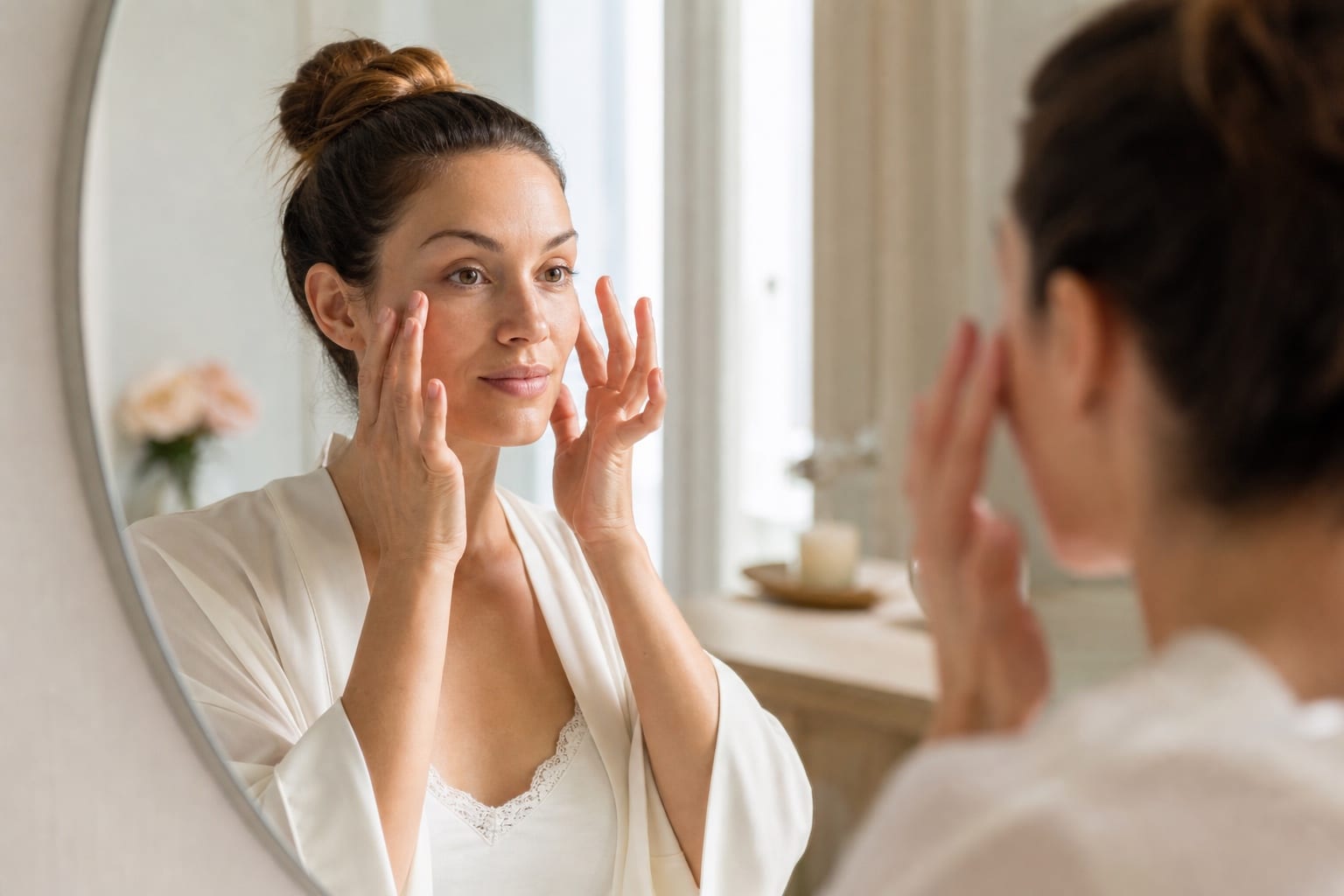
Everything above acts on the skin itself. The face's appearance also depends on what sits underneath: dozens of small muscles whose tone influences how lifted and firm the surface looks, much as posture changes how a shirt hangs. Like any muscles, they respond to training. Regular face yoga, meaning deliberate resistance and lifting exercises done with proper form, is the natural tool for this layer, along with massage that supports circulation and lymphatic drainage. This is the layer the Yasmine app is built around, with short guided daily sessions, because for facial muscles, as with any training, frequency beats intensity.
Start This Week: One Change a Day
- Day 1: capture a baseline. Take a bare-faced photo in indirect daylight with a neutral expression and your hair pulled back. Note the spot and time of day so you can repeat it exactly.
- Day 2: remove sunscreen friction. Put a broad-spectrum sunscreen next to your toothbrush and wear it the next morning, and every morning after, regardless of the weather.
- Day 3: set a sleep anchor. Pick a lights-out time that gives you a full night and set an alarm for going to bed, not just for waking up.
- Day 4: simplify your shelf. Cut your routine back to cleanser, moisturizer, and morning sunscreen. Anything else earns its way back later, one product at a time.
- Day 5: first face yoga session. Do five minutes of facial exercises and attach them to an existing habit, such as right after your evening cleanse.
- Day 6: pick one subtraction. Swap tonight's drink for something alcohol-free, skip the day's last cigarette, or protect one screen-free hour before bed. One is enough to start.
- Day 7: put a number on it. Take our free skin age test to establish your starting point. You will retest against it in a few months, not a few days.
How to Track Change Honestly
Skin improves on the timescale of its own renewal cycles: weeks for hydration and texture, months for tone, longer still for lines and firmness. Judge progress in months, and control your measurement conditions, because a change in lighting, angle, or time of day can swing how skin looks more than a month of genuine progress can. Repeat your baseline photo monthly under identical conditions. If you use the Yasmine app, its AI face scanner estimates your appearance age from a photo, and the same rule applies there: consistent conditions keep readings comparable.
Set expectations honestly, too. None of this makes a fifty-year-old face read as twenty-five, and anything promising that is selling something. What this stack reliably does is stop the avoidable share of aging from compounding and recover the portion that is reversible: the drift, not the baseline. Hydration and texture usually respond first, so bank that early win as evidence the approach works. And the levers are ranked for a reason. If the whole list feels like too much, do the top of it. Sunscreen tomorrow morning is worth more than a perfect plan next month.