Skin Care
When Skin Loses Color
Understanding hypopigmentation: what causes skin to lose color, when it is temporary versus permanent, and when to seek professional evaluation.
Most conversations about pigmentation focus on skin that has become too dark, but the opposite can happen too. Hypopigmentation is the loss of skin color, resulting in patches or areas that are lighter than the surrounding skin. While less commonly discussed, it affects many people and can be equally concerning. Understanding the causes helps you know when to wait, when to act, and when to seek professional advice.
What Causes Hypopigmentation
Hypopigmentation occurs when melanocytes either produce less melanin than normal, stop producing melanin entirely, or are destroyed. The specific cause determines whether the loss is temporary or permanent.
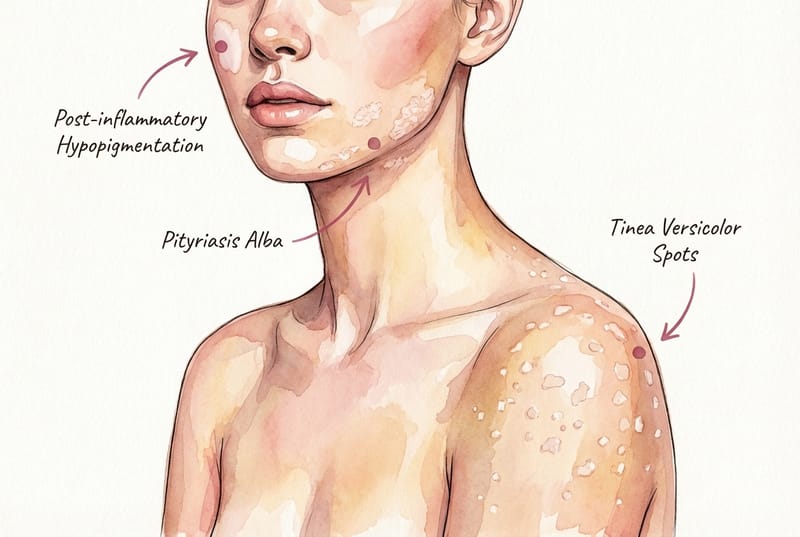
- Post-inflammatory hypopigmentation occurs after skin injuries, burns, or inflammatory conditions heal. The melanocytes in the affected area temporarily reduce their output. In many cases, color gradually returns over months to years.
- Pityriasis alba is a common, harmless condition that causes pale, slightly scaly patches, usually on the face of children and young adults. It is associated with dry skin and often resolves on its own.
- Tinea versicolor is a fungal infection that prevents melanin production in affected areas. It responds well to antifungal treatment, and color typically returns after the infection clears.
Vitiligo
Vitiligo is an autoimmune condition in which the immune system attacks and destroys melanocytes, creating well-defined patches of completely depigmented skin. It can affect any area of the body and any skin tone, though it is most visible on darker skin. Vitiligo is not contagious, not caused by anything you did, and not a sign of poor health.
Treatment options for vitiligo include topical corticosteroids, calcineurin inhibitors, phototherapy, and in some cases surgical melanocyte transplantation. Early treatment often produces better results because it is easier to halt melanocyte destruction than to restore lost melanocytes. A dermatologist specializing in pigmentation disorders can recommend the most appropriate approach.
When Hypopigmentation Is Temporary
Many forms of hypopigmentation resolve on their own as the skin heals and melanocytes resume normal function. Post-inflammatory hypopigmentation, pityriasis alba, and color loss after treated fungal infections all tend to improve with time, though the timeline can be long, sometimes a year or more.
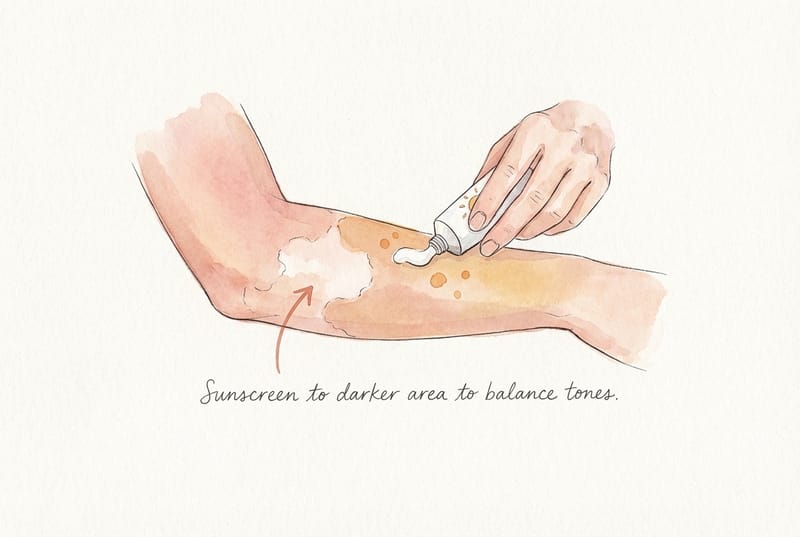
During this recovery period, gentle skincare and consistent sun protection help. Sunscreen prevents the surrounding skin from darkening further, which would increase the visible contrast with the lighter patches. Keeping the skin well-moisturized supports the healing process.
When to Seek Professional Evaluation
Certain patterns of hypopigmentation warrant a visit to a dermatologist for proper diagnosis and, if needed, treatment.
- New patches of complete depigmentation that are spreading or increasing in number. This may indicate vitiligo, which responds better to early treatment.
- Light patches accompanied by itching, scaling, or other textural changes. These may indicate a fungal infection or other treatable condition.
- Hypopigmentation that develops after a skin treatment like a chemical peel or laser procedure. Your provider should evaluate whether the changes are temporary or require intervention.
Yasmine face yoga supports overall skin health through improved circulation, which benefits melanocyte function and the skin's natural healing processes. While face yoga is not a treatment for pigmentation disorders, it contributes to the general skin wellness that supports recovery and resilience.