Skin Care
What Is Hyperpigmentation?
A clear introduction to melanin, how pigmentation forms, and the different types of dark spots you might see on your skin.
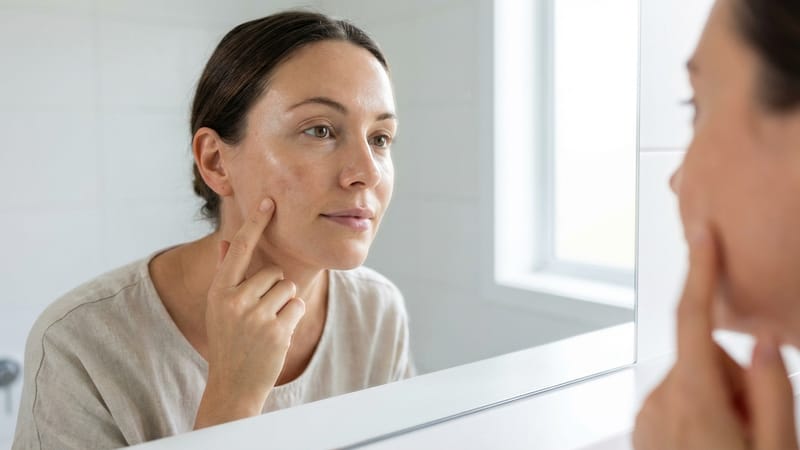
Hyperpigmentation is any area of skin that appears darker than the surrounding tissue. It is one of the most common skin concerns worldwide, affecting people of every skin tone, age, and background. Understanding what causes it, starting at the cellular level, transforms your approach from frustrated guessing to targeted, effective treatment.
How Melanin Works
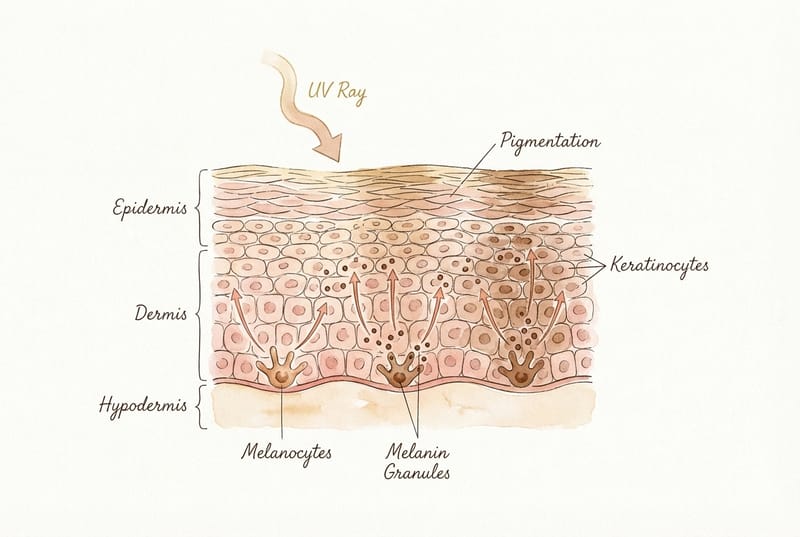
Melanin is the pigment that gives your skin, hair, and eyes their color. It is produced by specialized cells called melanocytes that sit in the bottom layer of the epidermis. When melanocytes receive signals, usually from UV exposure, hormones, or inflammation, they produce melanin and distribute it to the surrounding skin cells. This is your body's protective response: melanin absorbs UV radiation to prevent DNA damage in the cells beneath.
In healthy, evenly pigmented skin, melanin production is relatively uniform. Hyperpigmentation occurs when melanocytes in certain areas overproduce melanin, or when melanin is deposited unevenly in response to a specific trigger. The result is a patch or spot that is visibly darker than the skin around it.
Types of Hyperpigmentation
Not all dark spots are the same. The type you are dealing with determines the best treatment approach and the timeline for improvement.
- Sun spots and age spots are flat, brown marks caused by cumulative UV exposure. They tend to appear on areas that receive the most sun: face, hands, chest, and shoulders.
- Melasma is a hormonal form of hyperpigmentation that creates larger, symmetric patches, often on the cheeks, forehead, and upper lip. It is more complex to treat because hormones continue to drive it.
- Post-inflammatory hyperpigmentation (PIH) is darkening that occurs after skin injury or inflammation, such as acne, burns, or eczema. It is the skin's response to the healing process.
- Freckles are small, genetically determined spots that darken with sun exposure and lighten without it. They are a natural variation, not a disorder.
Who Gets It
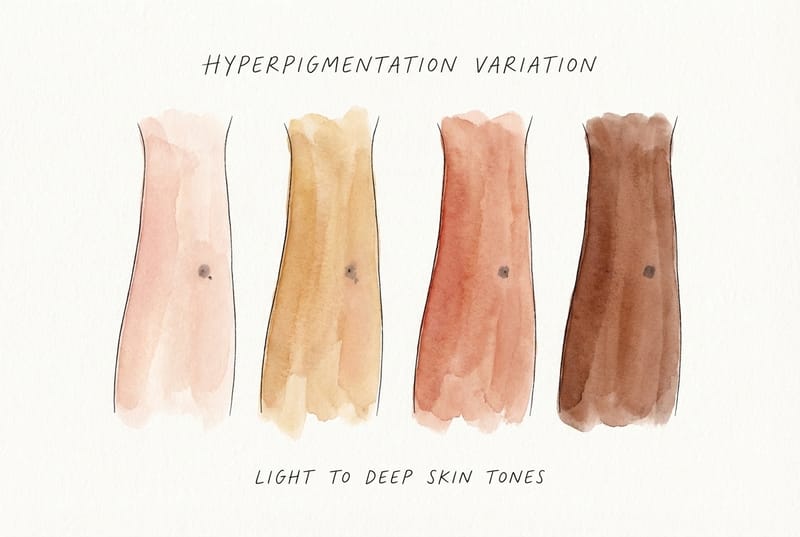
Everyone can develop hyperpigmentation, but it is more common and often more visible in people with medium to deep skin tones. This is because melanocytes in darker skin are more responsive to the triggers that cause excess pigment production. The same inflammatory event that might leave no mark on lighter skin can produce a visible dark spot on deeper skin that takes months to fade.
This does not mean lighter skin tones are immune. Sun spots, melasma, and PIH affect all skin tones, just with different degrees of visibility and different treatment timelines.
Why It Matters to Understand the Cause
Many people make the mistake of treating all dark spots the same way. But a sun spot, a melasma patch, and a post-acne mark each have different triggers and respond to different treatments. A brightening serum might fade a sun spot beautifully while doing nothing for melasma, which is driven by hormones rather than UV damage alone.
The articles that follow break down each type individually, explore the most effective ingredients and routines for brightening, and address the prevention strategies that keep new spots from forming. With the right knowledge, hyperpigmentation is one of the most treatable skin concerns you can face.
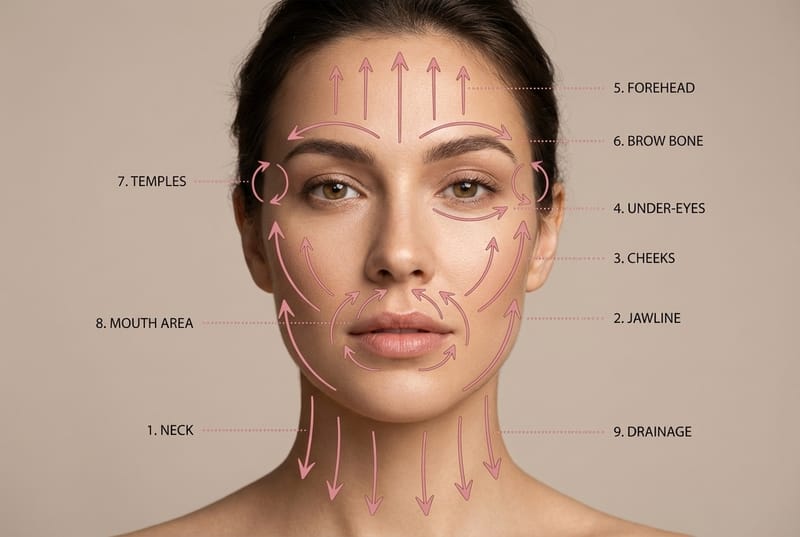
Face yoga with Yasmine supports an even complexion by improving blood flow and encouraging healthy cell turnover. Better circulation delivers more oxygen and nutrients to the skin cells involved in pigment regulation, which supports the effectiveness of any topical brightening treatment you use.