Skin Care
Sun Spots and Age Spots
Understanding UV-driven pigmentation: how sun spots form, how to prevent new ones, and the most effective treatments for fading existing marks.
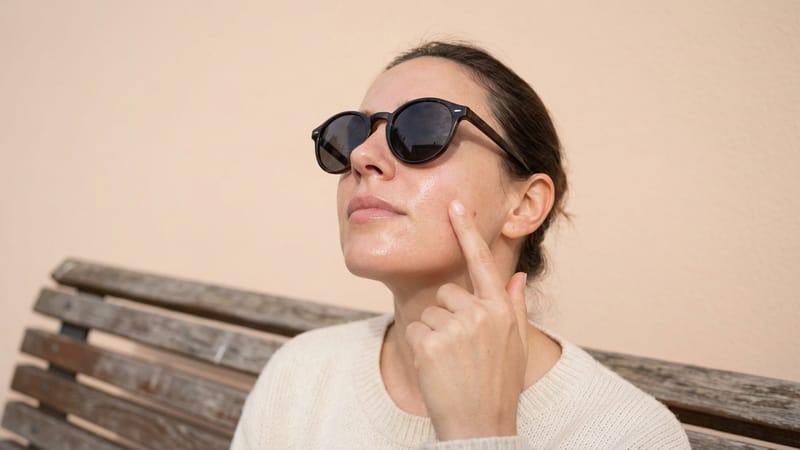
Sun spots, also called age spots or solar lentigines, are flat, brown or tan marks that develop on skin with a history of sun exposure. They are the visible record of cumulative UV damage, appearing most often on the face, hands, forearms, and chest. Despite their common name, age spots are not actually caused by aging itself. They are caused by years of UV exposure, which is why they tend to become more numerous over time.
How Sun Spots Form
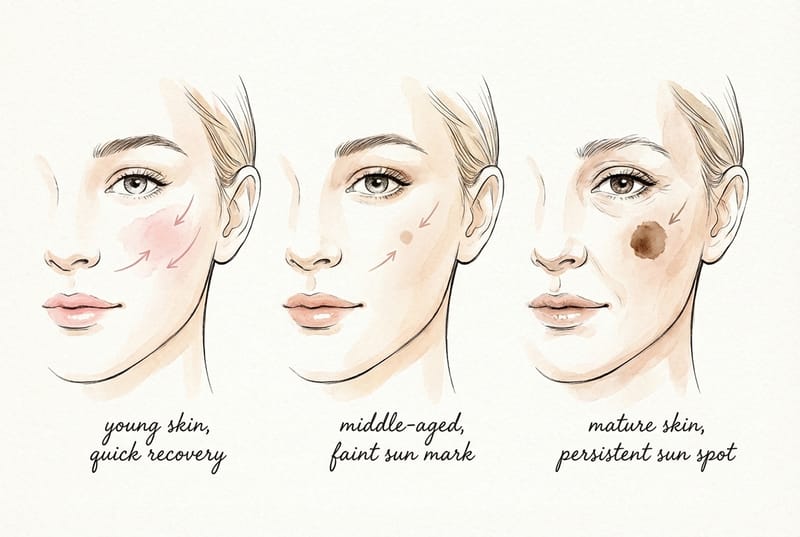
Every time UV radiation hits your skin, it signals melanocytes to produce extra melanin as a protective response. In younger skin with less cumulative damage, this pigment fades relatively quickly once the UV exposure stops. Over years of repeated exposure, some melanocytes become permanently overactive, producing excess melanin in a concentrated area even without new sun exposure. The result is a persistent dark spot.
Sun spots typically appear after age 30 or 40, though they can develop earlier in people with significant sun exposure history or lighter skin tones. They are not dangerous and do not develop into skin cancer, but any spot that changes shape, color, or size should be evaluated by a dermatologist to rule out other conditions.
Prevention Is the Priority
Treating existing sun spots is possible, but preventing new ones is far easier and more effective. Since UV exposure is the sole cause, sun protection is the cornerstone of prevention.
- Wear broad-spectrum SPF 30 or higher on all exposed skin, every day, including cloudy days and days spent mostly indoors near windows.
- Reapply sunscreen every two hours during prolonged outdoor exposure. A morning application alone does not provide all-day protection.
- Use physical barriers when possible: wide-brimmed hats, sunglasses, and UPF-rated clothing provide protection that does not wash off or degrade.
- Seek shade during peak UV hours, typically between 10 AM and 4 PM, when the sun's rays are strongest.
Ingredients That Fade Sun Spots
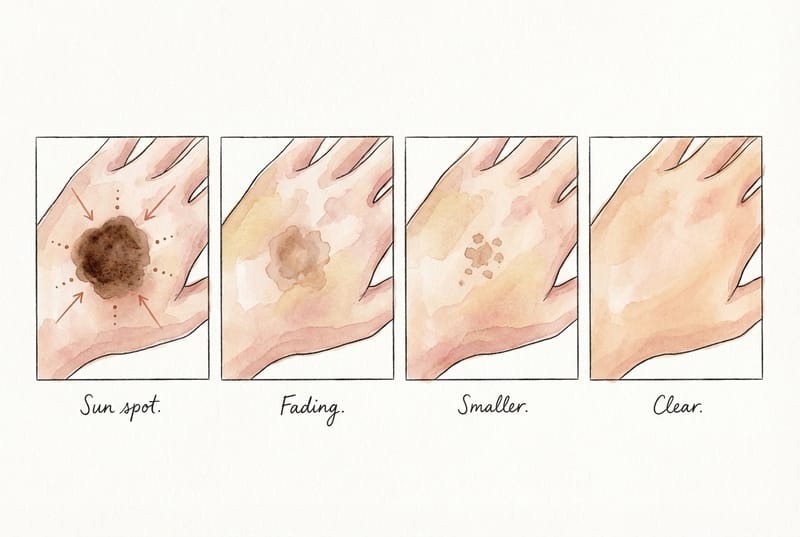
Several well-researched ingredients can lighten existing sun spots when used consistently over weeks to months. The key word is consistently. No ingredient provides overnight results, but steady use produces measurable fading.
- Vitamin C is an antioxidant that inhibits the enzyme tyrosinase, which is essential for melanin production. Daily use gradually lightens spots while protecting against further UV-driven damage.
- Alpha arbutin is a gentle tyrosinase inhibitor that slowly reduces pigment production in the targeted area. It is well-tolerated by most skin types.
- Niacinamide blocks the transfer of melanin from melanocytes to surrounding skin cells, reducing the visibility of spots over time.
- Azelaic acid both inhibits melanin production and gently exfoliates, helping to fade spots while smoothing overall skin texture.
Professional Treatment Options
For stubborn sun spots that do not respond adequately to topical treatment, professional procedures can provide more dramatic results. Chemical peels, intense pulsed light (IPL), and laser treatments can target and break up concentrated pigment. These treatments are typically performed by a dermatologist and may require multiple sessions. Always ensure that your sun protection is excellent before and after any professional pigment treatment, as UV exposure can cause treated spots to return.
Yasmine face yoga supports spot-fading by improving the circulation that delivers brightening ingredients to the skin cells where they work. The combination of topical treatment, sun protection, and consistent face yoga gives you the most comprehensive approach to clearing and preventing sun damage.