Skin Care
Your Skin Barrier and Why It Matters
How the skin barrier works, why damage to it triggers breakouts, and how to repair and protect this critical defense layer.

If there is one concept that transforms how you approach acne-prone skin, it is understanding your skin barrier. This thin outer layer is your skin's first line of defense against the outside world, and its condition determines whether your skin stays calm or spirals into reactive, breakout-prone chaos. Many people with acne unknowingly damage their barrier through aggressive treatment, creating a vicious cycle that makes everything worse.
What the Skin Barrier Actually Is
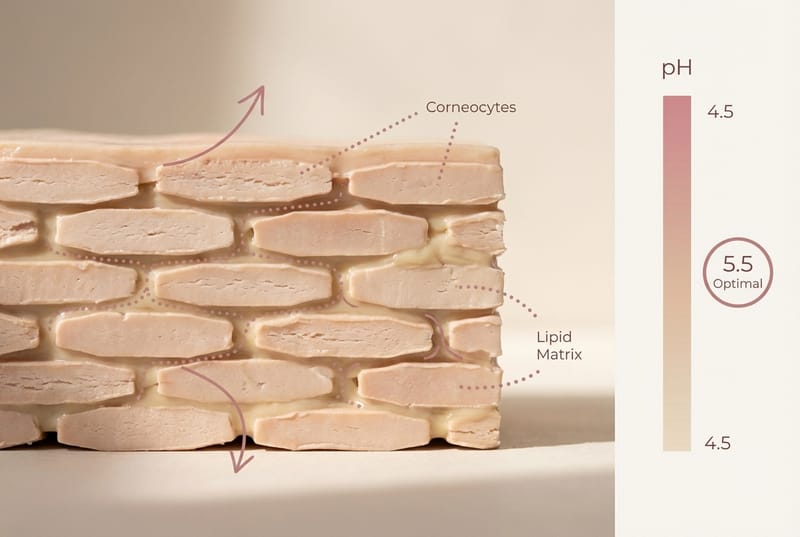
Your skin barrier, also called the moisture barrier or acid mantle, is the outermost layer of the epidermis. It consists of skin cells held together by a matrix of lipids, primarily ceramides, cholesterol, and fatty acids. Think of it as a brick wall: the skin cells are the bricks and the lipids are the mortar. When the mortar is intact, the wall keeps moisture in and irritants out. When the mortar is damaged, everything leaks.
A healthy barrier maintains a slightly acidic pH between 4.5 and 5.5. This acidity is not accidental. It inhibits the growth of harmful bacteria, supports the enzymes that keep skin cells turning over at the right pace, and helps the skin retain water. Disrupting this pH disrupts every downstream process.
How Barrier Damage Triggers Breakouts
When the barrier is compromised, two things happen that directly promote acne. First, the skin loses moisture faster, which triggers the sebaceous glands to produce more oil as a compensatory response. You end up with skin that is simultaneously dry and oily, a confusing combination that leads many people to strip their skin even further.
Second, a damaged barrier lets irritants, pollutants, and bacteria penetrate more easily. The immune system responds with inflammation, which is exactly the environment in which acne thrives. Many persistent breakout patterns are actually barrier damage masquerading as acne, and they will not resolve until the barrier is repaired.
Common Causes of Barrier Damage
- Over-cleansing with harsh, high-pH, or sulfate-heavy cleansers that strip the skin's natural oils.
- Overusing active ingredients like benzoyl peroxide, salicylic acid, or retinoids, especially when layering multiple actives at once.
- Physical over-exfoliation from scrubs, rough washcloths, or abrasive tools.
- Skipping moisturizer because oily skin feels like it does not need it. It does.
- Environmental stressors like wind, cold, dry indoor heating, and prolonged sun exposure without protection.
How to Repair Your Barrier
Barrier repair is not complicated, but it requires patience and a temporary shift in approach. The goal is to give the skin everything it needs to rebuild while removing everything that is causing further damage.
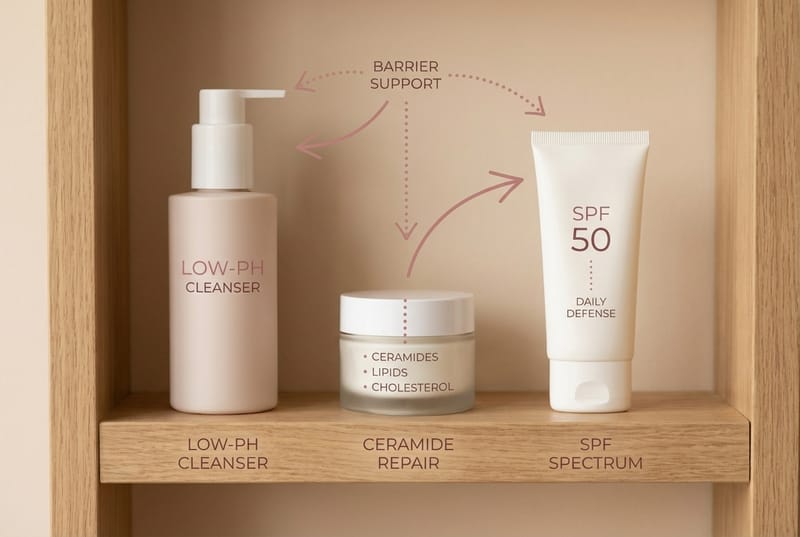
- Simplify your routine. Strip back to cleanser, moisturizer, and sunscreen. Remove all actives, exfoliants, and treatment products until the barrier stabilizes.
- Switch to a gentle, low-pH cleanser. Avoid foaming formulas if they leave your skin feeling tight. A cream or gel cleanser with a pH around 5.5 is ideal.
- Use a ceramide-rich moisturizer. Look for ceramides, fatty acids, and cholesterol in the ingredient list. These directly replenish the lipid mortar of your barrier.
- Reintroduce actives slowly. Once the barrier feels stable, which usually takes two to four weeks, add back one active ingredient at a time at reduced frequency.
Gentle face yoga with Yasmine supports barrier repair by improving circulation to the skin without any of the friction or chemical stress that caused the damage in the first place. The increased blood flow delivers nutrients and oxygen that accelerate the skin's natural rebuilding process.