Skin Care
Sheet Masks and Special Treatments
Get more from sheet masks with better technique, learn about sleeping packs and wash-off masks, and try simple DIY options.
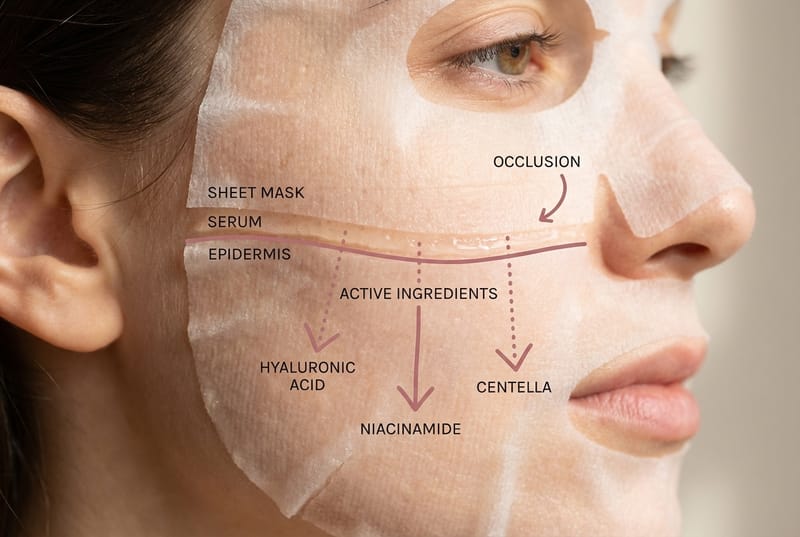
Sheet masks are one of the most recognizable elements of Korean skincare, and for good reason. They deliver a concentrated burst of ingredients directly to the skin in a way that regular products cannot replicate. But sheet masks are just one part of a broader category of special treatments in K-beauty that includes sleeping packs, wash-off masks, and even simple kitchen-based options.
Why Sheet Masks Work
A sheet mask creates a physical barrier between your skin and the air. This occlusion prevents the serum from evaporating and forces the active ingredients to absorb more deeply into the skin than they would if applied openly. The effect is immediate and visible: plumper, more hydrated, more luminous skin after a single use.
Different sheet masks target different needs. Hydrating masks use hyaluronic acid or aloe to replenish moisture. Brightening masks rely on vitamin C or niacinamide to improve radiance. Soothing masks feature centella or green tea to calm irritation. Firming masks often contain collagen or peptides to temporarily improve skin elasticity.
Getting the Most from a Sheet Mask
How you use a sheet mask matters as much as which one you choose. A few small adjustments to your technique can significantly improve the results you see.
- Apply after toner. Sheet masks work best on skin that is already slightly hydrated. Apply your toner first, then unfold the mask and smooth it onto your face, pressing out any air bubbles.
- Leave on for 15 to 20 minutes. This is the optimal window. Leaving a mask on longer can actually reverse the effect, as the drying sheet begins to pull moisture back out of your skin.
- Pat in the remaining serum. After removing the mask, do not rinse. Gently pat any excess serum into your skin, then follow with your moisturizer to seal it in.
Sleeping Packs and Wash-Off Masks
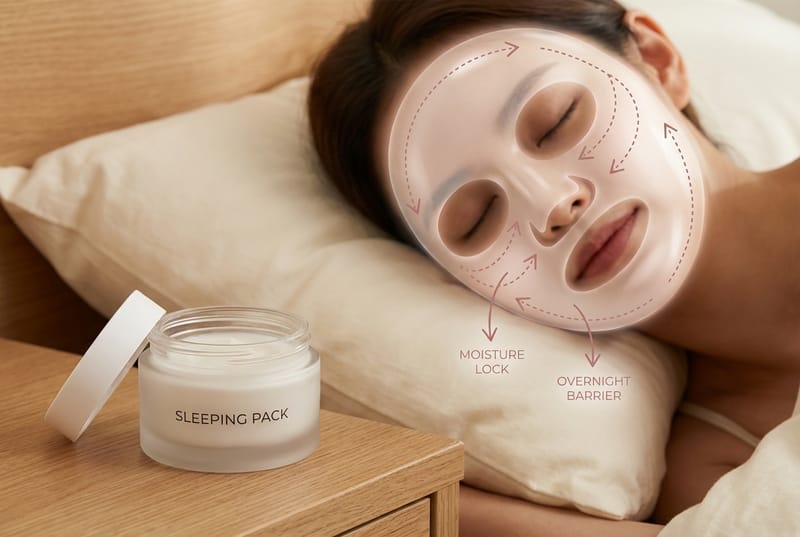
Sleeping packs are overnight masks that form a thin, breathable layer over your entire routine. They lock in moisture while you sleep and are especially useful during dry seasons or after a long flight. Apply a thin layer as the very last step of your evening routine and rinse off in the morning.
Wash-off masks offer more targeted treatment. Clay masks draw out impurities and are useful for oily or congestion-prone skin once or twice a week. Cream masks deliver deep nourishment and work well for dry or dehydrated skin. Apply, leave on for the recommended time, and rinse before continuing with the rest of your routine.
Simple DIY Options
K-beauty culture has a long tradition of using simple kitchen ingredients for skin treatments. These are not replacements for well-formulated products, but they can be enjoyable additions to a weekly self-care ritual.
- Rice water rinse: soak uncooked rice in water for 15 minutes, strain, and use the milky water as a gentle brightening rinse after cleansing.
- Honey mask: apply a thin layer of raw honey to clean skin for 10 minutes. Honey is naturally antibacterial and deeply hydrating.
- Green tea compress: brew green tea, let it cool, soak a cloth, and press it onto your face for five minutes. The antioxidants help soothe redness and calm irritation.
Whether you use sheet masks, sleeping packs, or simple DIY treatments, these extras work best as complements to your daily routine. A brief Yasmine face yoga session before masking helps boost circulation, priming your skin to absorb the treatment more effectively.