Skin Care
Serums and Active Ingredients Worth Knowing
A clear guide to the most effective active ingredients in skincare: retinol, vitamin C, niacinamide, and acids, with honest advice on how to use them.
Serums are the workhorses of a skincare routine. They deliver concentrated active ingredients in lightweight formulas that penetrate deeper than cleansers or moisturizers. A well-chosen serum can address specific concerns like fine lines, dark spots, dullness, or texture in ways that your basic routine cannot. The key is knowing which ingredients do what and how to use them without overwhelming your skin.
Retinol and Retinoids
Retinol is a derivative of vitamin A and the closest thing to a universal anti-aging ingredient that skincare offers. It works by accelerating skin cell turnover, which smooths texture, fades dark spots, reduces fine lines, and even helps unclog pores. With consistent use over months, retinol produces measurable improvements in skin thickness, collagen density, and overall tone.
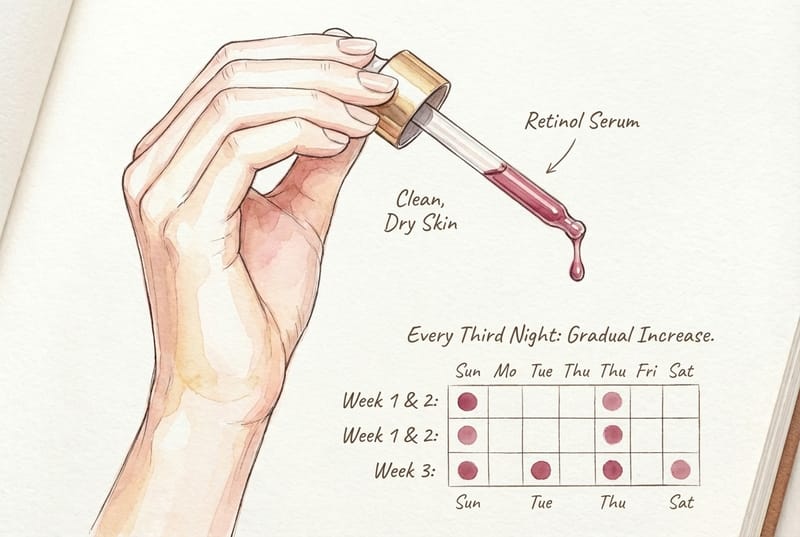
The adjustment period is real. Most people experience dryness, flaking, and mild irritation when they first introduce retinol. Start with a low concentration, around 0.25 percent, applied every third night to clean, dry skin. Gradually increase frequency as your skin adapts. Always use retinol in the evening and always wear sunscreen the next morning, as retinol increases photosensitivity.
Vitamin C
Vitamin C is a potent antioxidant that neutralizes free radicals caused by UV exposure and pollution. It brightens the complexion, fades dark spots, and supports collagen production. L-ascorbic acid is the most researched form and the most effective, but it is also the most unstable and can irritate sensitive skin. Derivatives like ascorbyl glucoside and magnesium ascorbyl phosphate are gentler alternatives that still deliver results.
Apply vitamin C in the morning, before sunscreen. It provides an additional layer of photoprotection that complements your SPF. Store vitamin C products in a cool, dark place, as exposure to light and air degrades the ingredient quickly. If your serum turns dark brown, it has oxidized and should be replaced.
Niacinamide
Niacinamide, or vitamin B3, is one of the most versatile and well-tolerated active ingredients available. It strengthens the skin barrier, regulates oil production, reduces redness and inflammation, minimizes the appearance of pores, and helps fade hyperpigmentation. It works well at concentrations of 2 to 5 percent and plays nicely with virtually every other ingredient.
Because of its versatility and gentleness, niacinamide is an excellent first active ingredient for skincare beginners. It can be used morning and evening, and many moisturizers and serums already include it as a secondary ingredient.
AHAs and BHAs
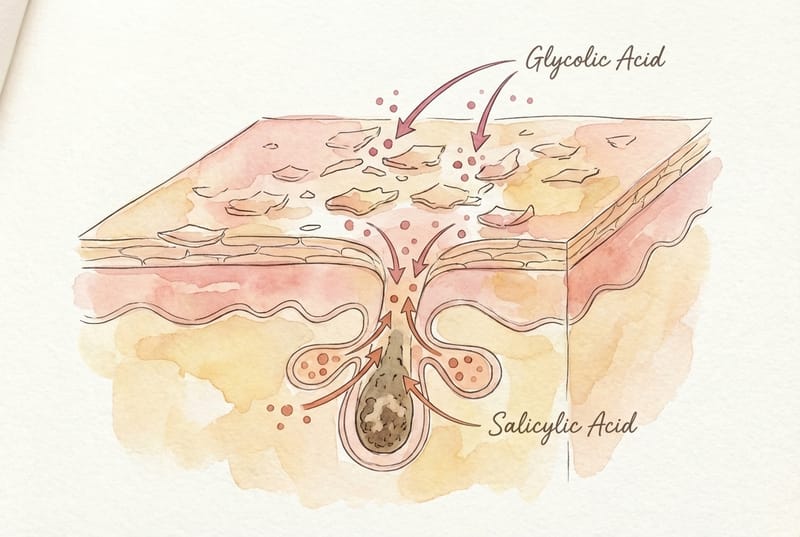
Alpha-hydroxy acids like glycolic acid and lactic acid exfoliate the skin surface by dissolving the bonds between dead skin cells. They improve texture, brighten the complexion, and reduce the appearance of fine lines. Beta-hydroxy acid, primarily salicylic acid, is oil-soluble and penetrates into pores, making it especially effective for acne-prone skin.
- Glycolic acid is the strongest and most deeply penetrating AHA. It produces significant results but can irritate sensitive skin. Start with low concentrations.
- Lactic acid is gentler than glycolic acid and also provides mild hydration. It is a good choice for sensitive or dry skin types.
- Salicylic acid at 0.5 to 2 percent clears pores and reduces breakouts. It is the go-to exfoliant for oily and acne-prone skin.
How to Layer Actives Safely
The cardinal rule of active ingredients is to introduce one at a time and give each at least two weeks before adding another. This lets you observe how your skin responds and identify what works versus what irritates.
- Vitamin C in the morning, retinol in the evening is the classic combination and works beautifully.
- Niacinamide can be used alongside almost anything, morning or evening.
- Do not use AHAs/BHAs on the same night as retinol until your skin is fully adapted to each individually. The combination can be highly irritating for beginners.
Yasmine face yoga improves the absorption of active ingredients by boosting circulation before you apply your serums. The warmth and increased blood flow help products penetrate more effectively and reach the cells where they do their work.