Skin Care
Seasonal Adjustments and Travel
How to adapt your skincare routine for winter, summer, humidity changes, and travel, so your skin stays comfortable in every environment.
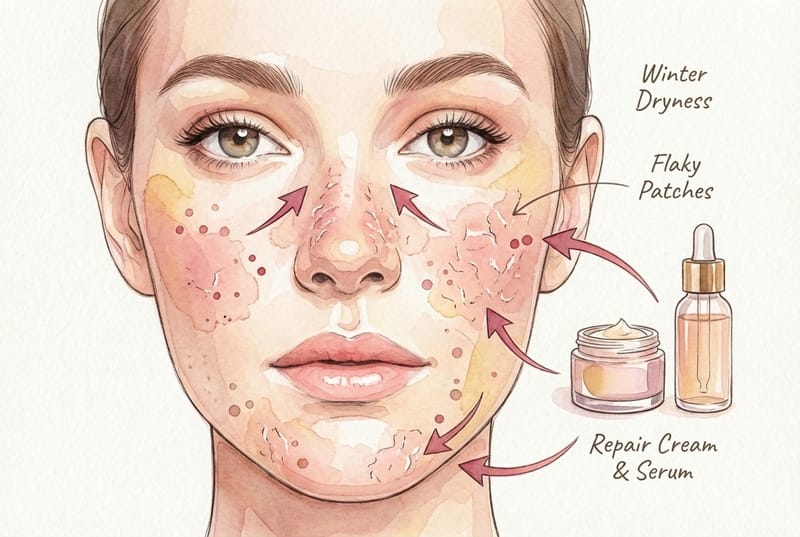
Your skin is constantly responding to the environment around it, and a routine that works perfectly in one season or climate may fail in another. Learning to read these signals and adjust your approach keeps your skin stable and comfortable year-round. The good news is that seasonal adjustments are usually small. You rarely need to overhaul your entire routine, just swap a product or two.
Winter Adjustments
Cold air holds less moisture than warm air, and indoor heating dries the air further. The result is increased transepidermal water loss: moisture escapes from your skin faster than it can be replaced. Winter skin often feels tight, looks dull, and becomes more sensitive.
- Switch to a richer moisturizer. If you use a gel in summer, move to a cream. If you use a lightweight cream, upgrade to something with heavier occlusives.
- Add a hydrating serum if you do not already use one. A hyaluronic acid serum beneath your moisturizer provides an extra layer of water-binding capacity.
- Reduce exfoliation frequency. Compromised skin from cold and wind is more vulnerable to irritation from acids and physical exfoliation.
- Consider a humidifier in your bedroom to maintain indoor humidity levels while you sleep.
Summer Adjustments
Heat and humidity increase oil production and sweat, which can lead to clogged pores and breakouts if your routine is too heavy. The balance shifts toward lighter products and more diligent sun protection.
- Switch to a lighter moisturizer. A gel or lightweight lotion often provides enough hydration in humid conditions.
- Upgrade your sunscreen diligence. You need more frequent reapplication when sweating and spending time outdoors.
- Add a BHA if breakouts increase. A light salicylic acid treatment a few times a week helps keep pores clear when oil production is elevated.
Travel Skin Care
Air travel is particularly harsh on skin. Cabin humidity typically drops to around 10 to 20 percent, far below the 40 to 60 percent your skin prefers. Flights lasting more than a few hours can leave skin significantly dehydrated.
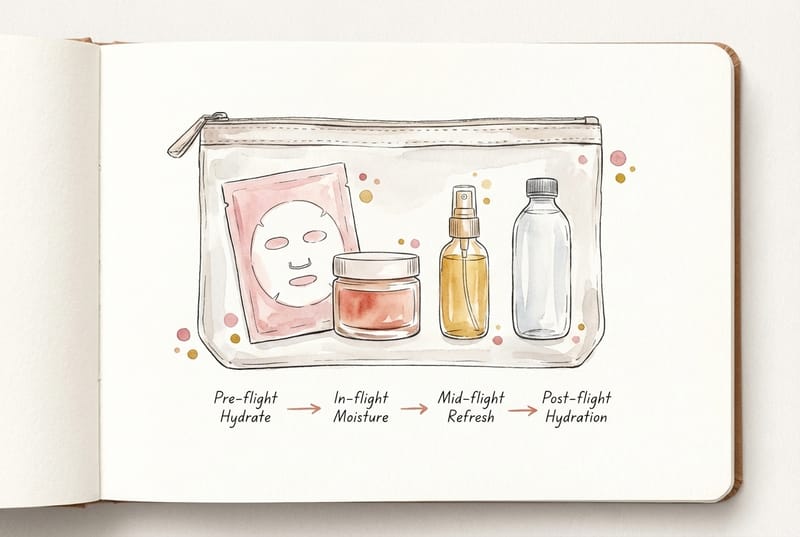
- Before your flight: Apply a heavier moisturizer or a hydrating mask. Skip makeup if possible to let your skin breathe.
- During the flight: Mist your face with a hydrating spray periodically. Drink water consistently. Avoid alcohol and caffeine, which increase dehydration.
- After landing: Cleanse thoroughly and apply your hydrating routine. Your skin may take a day or two to readjust to the new climate.
Climate Changes
Moving from a dry climate to a humid one, or vice versa, requires the biggest adjustments. In humid environments, you need less occlusion and may benefit from lighter formulas all around. In dry environments, heavier moisturizers, more hydrating layers, and occlusive sealing steps become essential. Give your skin two to three weeks to adjust before concluding that a product is not working in the new environment.
Yasmine face yoga travels with you effortlessly. No products to pack, no liquids to limit. A five-minute session in your hotel room supports your skin's circulation and helps it recover from the stress of travel and climate change.