Skin Care
Sculpted Contour and Luminous Highlight
How to create dramatic dimension with contour and highlight: cheekbone sculpting, nose shaping, and the glow that catches every light in the room.
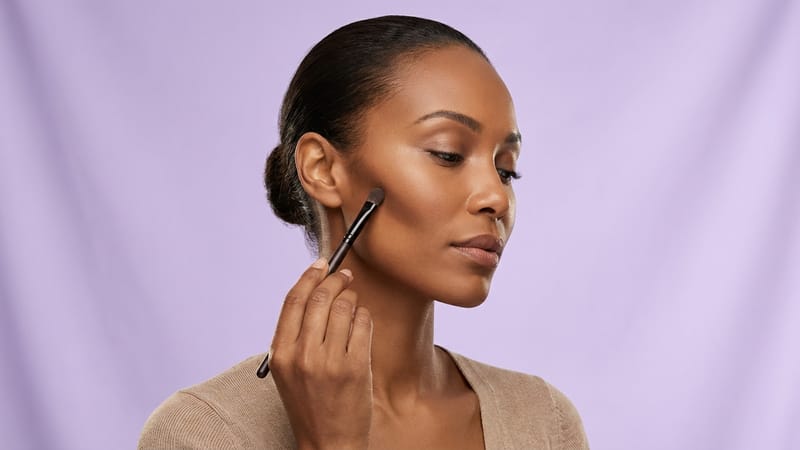
Contour and highlight are the closest thing makeup offers to reshaping your face in real time. By strategically placing shadow and light, you can sharpen cheekbones, define the jawline, slim the nose, and create the kind of dramatic dimension that turns heads in person and photographs beautifully. For evening events where lighting is low and cameras are frequent, mastering these techniques gives you extraordinary control over how your face reads.
Understanding Light and Shadow
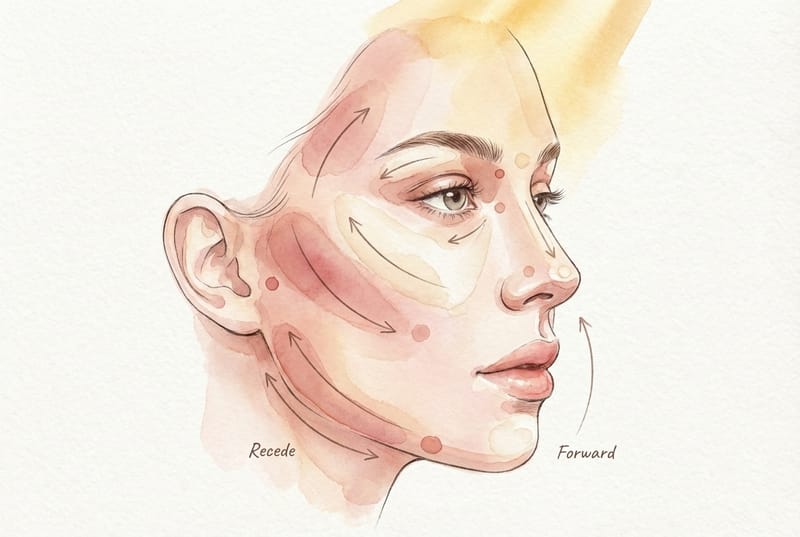
Every contouring and highlighting technique rests on a single principle: dark shades recede, light shades advance. When you place a dark shade in the hollow below your cheekbone, that area visually sinks inward. When you place a luminous highlight on top of the cheekbone, that area catches light and visually lifts forward. The contrast between the two is what creates the illusion of sculpted, three-dimensional bone structure.
In daylight, subtle contour is usually enough because natural light provides its own dimension. Under artificial evening lighting, which flattens everything, you need to be bolder. What feels like too much contour in your bathroom mirror often reads as perfectly sculpted in a dimly lit venue or in flash photography.
Choosing Your Contour Product
Cream contour blends seamlessly into the skin and creates the most natural-looking shadow. It works best on normal to dry skin and is ideal for photography because it does not catch light the way powder can. Powder contour is easier to control, builds gradually, and is the better choice for oily skin or very warm environments where cream products may slide.
The shade matters as much as the formula. Your contour shade should mimic a natural shadow, which means it should be cool-toned and muted, not warm or orange. A shade that is two to three tones darker than your skin with a gray or taupe undertone creates the most convincing illusion. Warm, bronzy shades look beautiful as a bronzer but do not create realistic contour shadows.
Sculpting the Cheekbones
- Find the hollow. Suck in your cheeks gently and locate the natural depression that runs from below the cheekbone toward the mouth. Starting from the ear, apply your contour shade along the hollow in a line that stops at the outer corner of your eye.
- Blend upward. Use a fluffy brush or damp sponge to blend the harsh edge of the contour upward toward the cheekbone, diffusing the line into a soft gradient that mimics a real shadow.
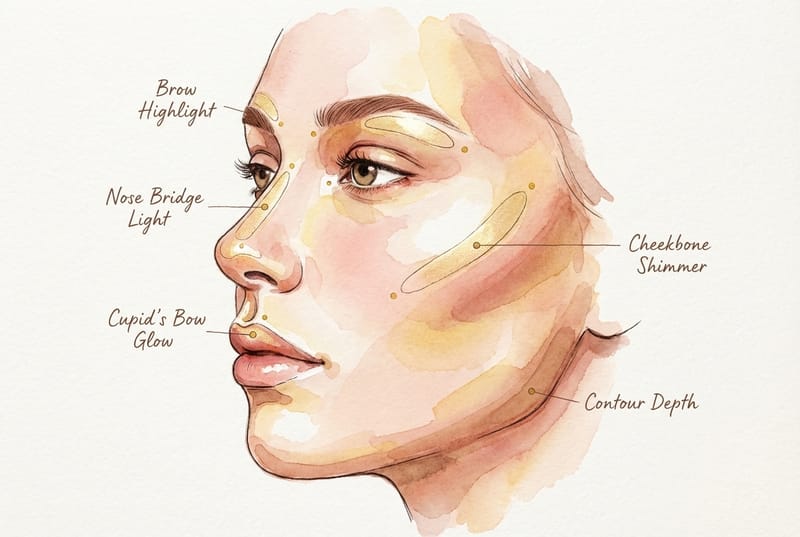
- Highlight the cheekbone. Apply a luminous highlighter along the top of the cheekbone, from the temple to where the cheekbone begins to descend toward the nose. This is the highest point and the area that naturally catches light.
Nose Sculpting
Nose contour is subtle but effective, especially for evening photography. Apply two thin lines of contour shade along the sides of the bridge, then highlight the center of the bridge with a narrow line of illuminator. Blend everything thoroughly so no harsh lines remain. The shadow on the sides narrows the bridge visually, while the highlight draws the eye to the center. For tip refinement, apply a small amount of contour shade just underneath the tip to lift it visually and create a more defined profile.
The Art of Highlight
- Apply highlight to the tops of cheekbones, the brow bone just under the arch, the bridge of the nose, and the cupid's bow above the upper lip.
- For a subtle glow, use a fan brush for the lightest possible application. For full drama, press the product onto the skin with your fingertip for maximum pigment deposit. Avoid applying shimmer highlight to areas with visible texture or pores, as it will accentuate them.
Yasmine face yoga builds the natural muscle tone and bone-structure definition that make contouring easier and more effective. When your facial muscles are lifted and toned, the cheekbones become more prominent, the jawline sharpens, and the overall structure of the face provides better architecture for shadow and light to play across.