Skin Care
Scarring, Marks, and Recovery
Understanding the difference between post-acne marks and true scars, what fades on its own, what needs treatment, and how to support your skin's healing process.

For many people, the marks left behind after a breakout are more distressing than the breakout itself. A pimple lasts days or weeks, but the dark spot, red mark, or textural change it leaves can persist for months or longer. Understanding the difference between temporary marks and permanent scars helps you set realistic expectations and choose the right approach for each type.
Post-Inflammatory Hyperpigmentation (PIH)
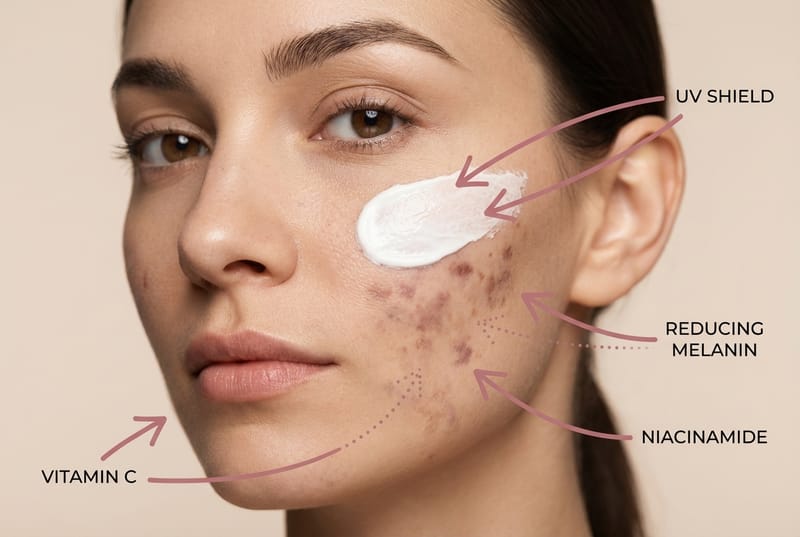
PIH appears as flat, dark spots in shades of brown, tan, or deep purple that form at the site of a healed breakout. It is caused by excess melanin production triggered by the inflammation. PIH is not a scar. The skin surface is smooth. It is purely a color change that fades over time, though the timeline can be frustratingly slow, especially on darker skin tones.
Sunscreen is the most important tool for managing PIH. UV exposure darkens existing spots and slows fading dramatically. Ingredients that speed the process include vitamin C, niacinamide, alpha arbutin, and azelaic acid. With consistent daily SPF and one or two brightening agents, most PIH fades within three to twelve months.
Post-Inflammatory Erythema (PIE)
PIE appears as flat, pink or red marks at the site of a healed breakout. Unlike PIH, which involves melanin, PIE involves damaged capillaries beneath the skin surface. It is most visible on lighter skin tones and can be distinguished from PIH by pressing a clear glass against the mark. If the color disappears under pressure, it is PIE.
PIE is harder to treat topically than PIH. Time is the primary healer, and it can take six to eighteen months for marks to resolve on their own. Azelaic acid, niacinamide, and centella asiatica can help speed the process. Vascular laser treatments offer the fastest results for stubborn PIE but require professional administration.
True Acne Scars
Unlike marks, which are color changes on smooth skin, true scars involve structural changes to the skin's surface. They result from damage to the deeper layers of skin during severe or improperly treated breakouts. There are several types.
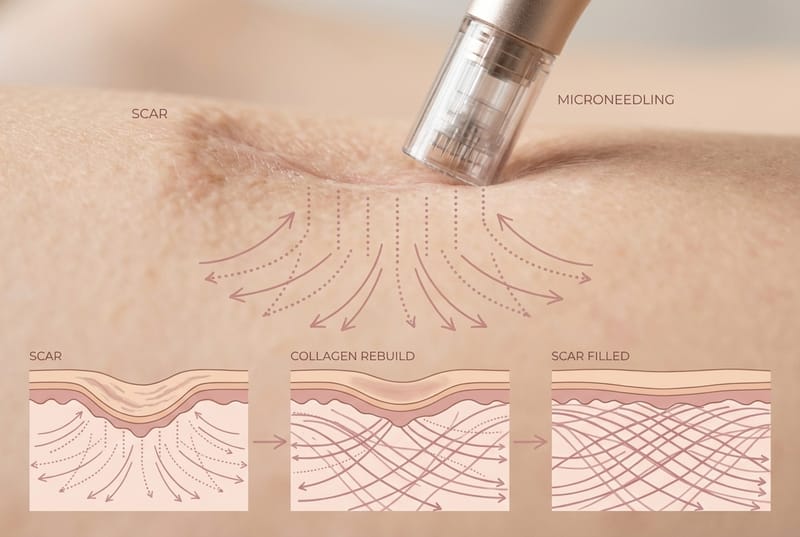
- Atrophic scars are depressed areas where the skin did not produce enough collagen during healing. Ice-pick scars are narrow and deep. Boxcar scars are wider with defined edges. Rolling scars have a gentle, undulating surface.
- Hypertrophic scars and keloids are raised areas where the skin overproduced collagen. These are less common on the face but can occur, especially along the jawline.
True scars do not fade on their own because the structural change is permanent without intervention. Professional treatments like microneedling, chemical peels, laser resurfacing, and subcision can improve their appearance significantly, but complete elimination is rarely possible.
Supporting Your Skin's Healing Process
Whether you are dealing with marks or scars, the following habits support your skin's ability to recover.
- Wear SPF 30 or higher every day. Sun exposure is the single biggest factor that delays healing and darkens marks.
- Do not pick at healing breakouts. Every time you disrupt the healing process, you increase the risk of a mark becoming a permanent scar.
- Keep the skin hydrated and the barrier intact. Healthy, well-moisturized skin heals faster than dry, compromised skin.
- Be patient. Most marks take months to fade, and scars take years of ongoing treatment to improve. Consistency matters more than aggression.
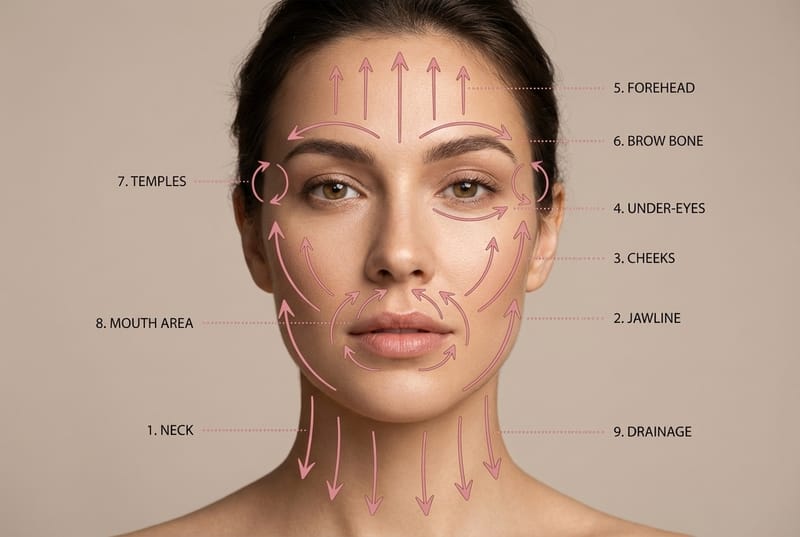
Yasmine face yoga supports the healing process by improving blood flow to damaged areas. Enhanced circulation delivers the oxygen and nutrients that collagen-producing cells need to repair the skin. While face yoga cannot reverse established scars on its own, it creates the optimal healing environment for every other treatment you use.