Wellness
Scalp Health: The Foundation for Growth
Why scalp health is essential for hair growth: circulation, buildup, inflammation, and the daily habits that keep your scalp in optimal condition.
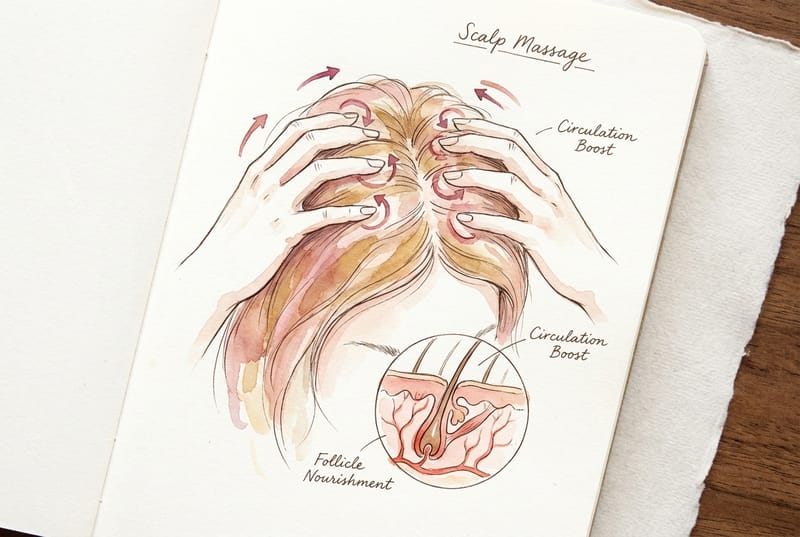
Your scalp is skin, and like all skin, it needs care to function well. Every hair follicle is embedded in the scalp and depends on it for blood supply, nutrients, and a healthy environment in which to grow. A neglected scalp can contribute to thinning and shedding just as much as any genetic or hormonal factor. Treating your scalp with the same attention you give your facial skin is one of the simplest and most effective things you can do for your hair.
Scalp Circulation
Hair follicles are fed by a network of tiny blood vessels that deliver oxygen and nutrients. When circulation is strong, follicles receive the fuel they need to produce thick, healthy hair. When circulation is poor, follicles receive less nourishment, which can lead to thinner, slower-growing hair.
This is why scalp massage supports hair density. The technique does not create new follicles, but it improves the function of existing ones by enhancing blood flow and reducing local tension.
Buildup and Follicle Health
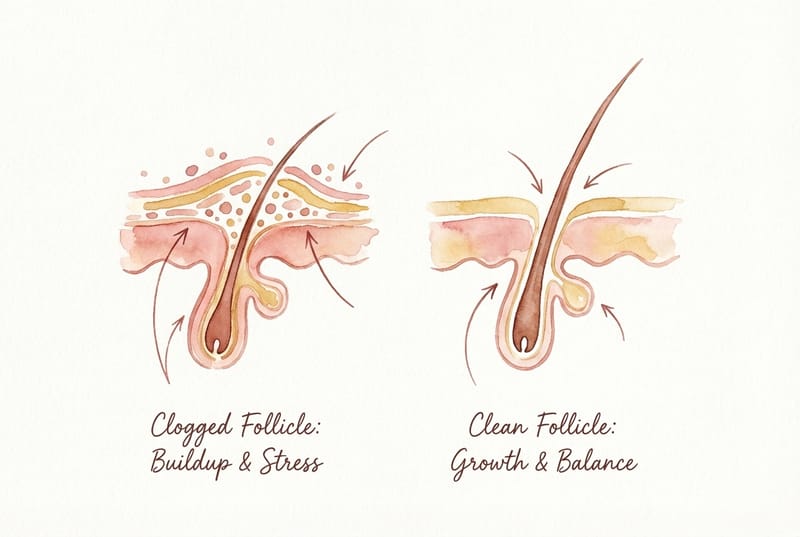
Product buildup, excess sebum, and dead skin cells can accumulate on the scalp, clogging follicles and creating an environment that impairs healthy growth. If your scalp feels heavy, greasy, or itchy between washes, buildup may be a contributing factor.
- Clarifying shampoo used once a week or every two weeks removes accumulated product, mineral deposits, and sebum without stripping the scalp daily.
- Scalp scrubs with gentle physical exfoliants like sugar or salt help remove dead skin cells that can block follicle openings.
- Avoiding heavy silicone-based products near the roots reduces the amount of residue that settles on the scalp.
Scalp Inflammation
Chronic low-level inflammation on the scalp creates an environment hostile to hair growth. Conditions like seborrheic dermatitis, psoriasis, and folliculitis all involve inflammation that can weaken follicles and accelerate shedding. Even without a diagnosed condition, irritation from harsh products, tight hairstyles, or environmental factors can create enough inflammation to affect hair quality.
Keeping the scalp calm requires the same approach as managing facial skin sensitivity: gentle products, minimal irritation, and treatment of any underlying conditions. Anti-inflammatory ingredients like tea tree oil at low concentrations, zinc pyrithione, and ketoconazole shampoos can help manage scalp inflammation.
Daily Scalp Care Habits
- Wash at the right frequency. This varies by scalp type. Oily scalps may need daily or every-other-day washing. Dry scalps may do better with every two to three days. The goal is to remove excess oil and buildup without stripping the scalp.
- Massage while you shampoo. Use your fingertips, not your nails, to gently massage the scalp for one to two minutes during each wash. This combines cleansing with circulation boosting.
- Avoid excessively hot water. Hot water strips oils from the scalp and can trigger both dryness and reactive oil production. Lukewarm water is gentler and more supportive of scalp health.
Scalp Massage Technique
A dedicated daily scalp massage takes only three to five minutes and provides meaningful circulation benefits over time. Place your fingertips on your scalp and make small, firm circles, moving the scalp rather than sliding across it. Work systematically from the front to the back, covering the temples, crown, and back of the head. Apply enough pressure to feel the scalp move but not enough to cause discomfort.
Yasmine face yoga naturally extends to the scalp area through exercises that target the forehead and temple muscles. The increased circulation from these exercises benefits the nearby scalp tissue and follicles, making face yoga a complementary practice for scalp health support.