Skin Care
Rosacea, Sensitivity, and Other Patterns
How to tell different types of facial redness apart: rosacea subtypes, sensitive skin, contact reactions, and other common patterns explained clearly.

Not all facial redness is the same condition, and treating it as one leads to frustration and wasted effort. The first step toward effective management is identifying which pattern you are dealing with. Each type has different triggers, different characteristics, and different treatment approaches. This article helps you distinguish between the most common types of facial redness.
Rosacea
Rosacea is a chronic inflammatory skin condition that primarily affects the central face: cheeks, nose, chin, and forehead. It affects an estimated 1 in 10 people, though many go undiagnosed. Rosacea is not caused by poor hygiene, alcohol use, or any lifestyle choice. It is a complex interaction of genetics, immune dysregulation, and vascular instability.
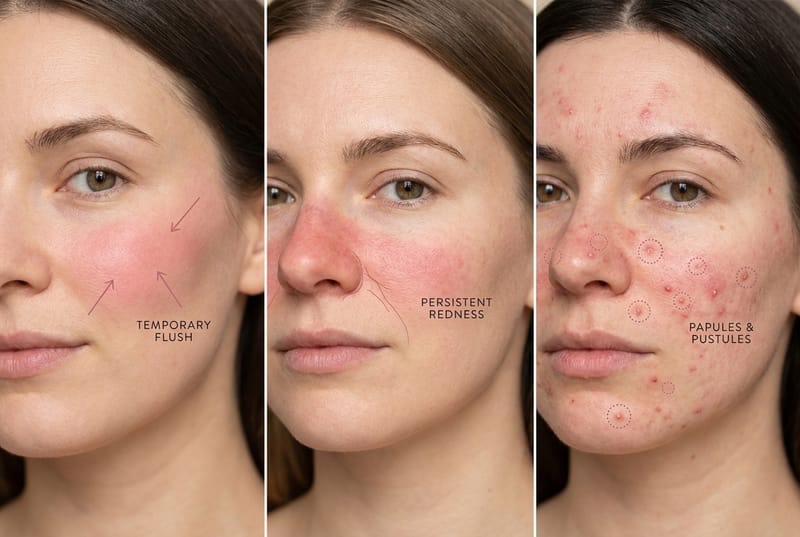
Rosacea progresses through stages if left unmanaged. It typically begins with episodes of flushing that last longer than normal. Over time, the redness becomes persistent. Visible blood vessels, called telangiectasia, may develop. In some cases, small inflammatory bumps that resemble acne appear, which is why rosacea is sometimes confused with adult acne.
Rosacea Subtypes
- Erythematotelangiectatic rosacea is characterized by persistent central facial redness, visible blood vessels, and frequent flushing episodes. The skin may also feel dry, rough, or sensitive to touch.
- Papulopustular rosacea involves inflammatory bumps and pustules alongside persistent redness. It is the subtype most commonly mistaken for acne, but the treatments are different.
- Phymatous rosacea involves thickening of the skin, most commonly on the nose. It is more common in men and is the rarest subtype.
- Ocular rosacea affects the eyes, causing redness, irritation, dryness, and a gritty sensation. It can occur with or without skin symptoms.
Sensitive Skin vs Sensitized Skin
True sensitive skin is a constitutional trait. People with genuinely sensitive skin have always reacted to products and environmental triggers more easily than average. Their skin barrier tends to be thinner, and their inflammatory response tends to be more easily triggered.
Sensitized skin, on the other hand, is a temporary state caused by external damage. Over-exfoliation, harsh products, excessive sun exposure, or environmental stressors can sensitize skin that was previously resilient. The key difference is that sensitized skin can be restored to its normal state by removing the offending agents and repairing the barrier. Sensitive skin is a permanent trait that you learn to manage.
Contact Dermatitis
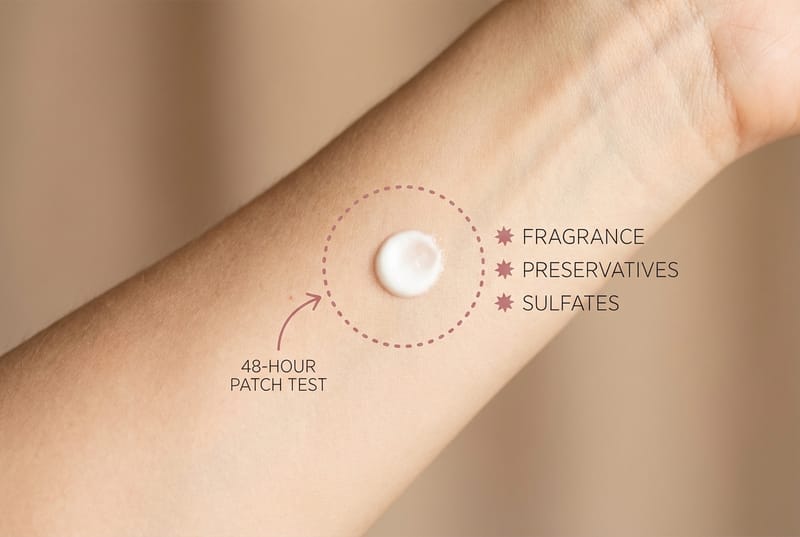
Contact dermatitis is redness, itching, and sometimes swelling caused by a specific substance touching the skin. It can be allergic, triggered by an immune reaction to an ingredient, or irritant, caused by a substance that damages the skin directly. Fragrances, preservatives, certain essential oils, and strong surfactants are common culprits.
If your redness appeared after introducing a new product, contact dermatitis is a likely explanation. Stop using the product, allow the skin to heal, and reintroduce it cautiously if you want to confirm it was the trigger. A patch test on the inner forearm before facial application can prevent future reactions.
Seborrheic Dermatitis
Seborrheic dermatitis causes red, flaky, sometimes itchy patches, typically around the nose, eyebrows, and hairline. It is related to an overgrowth of a type of yeast that naturally lives on the skin. It tends to flare during stress and in cold, dry weather. Antifungal treatments, often in the form of specific cleansers or creams, are usually effective.
Getting a Proper Diagnosis
If your facial redness is persistent, worsening, or accompanied by bumps, visible vessels, or texture changes, a dermatologist visit is worthwhile. Self-diagnosis is unreliable because many redness conditions look similar to the untrained eye. A proper diagnosis ensures you are treating the actual condition rather than guessing.
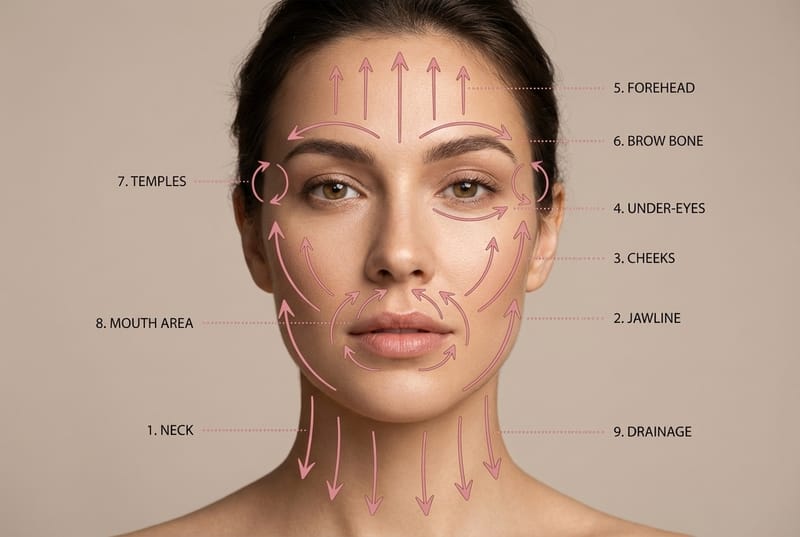
Yasmine face yoga is compatible with all of these conditions when performed gently and with clean hands. The controlled, gentle movements support healthy circulation without the aggressive stimulation that could trigger a flare. If you have rosacea, start with shorter, gentler sessions and observe how your skin responds.