Skin Care
Prevention: Keeping New Spots Away
Proactive strategies for preventing new pigmentation: sun protection habits, antioxidant defense, and the daily practices that keep your skin even.
Treating existing pigmentation is important, but preventing new spots from forming is where the real long-term wins happen. Every dark spot you prevent is one you never have to spend months fading. The good news is that prevention is simpler than treatment and, once the habits are in place, requires minimal daily effort.
Sunscreen as a Daily Habit
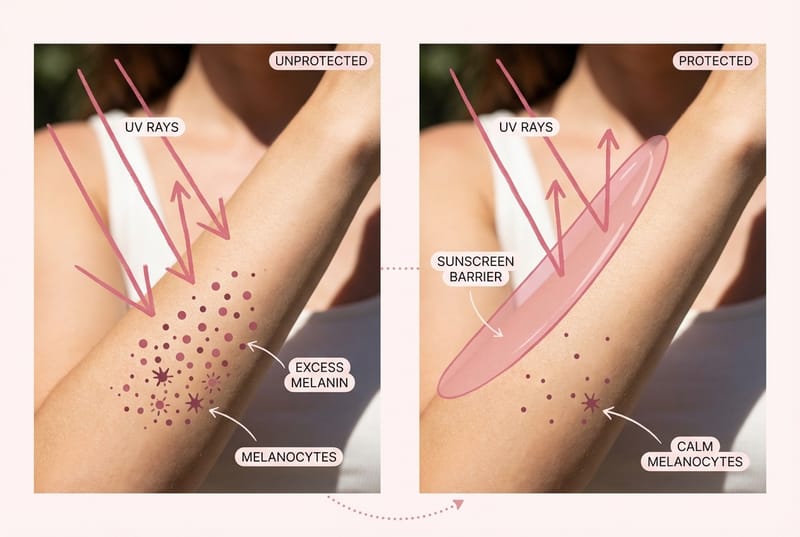
The single most effective prevention strategy is daily broad-spectrum sunscreen. UV exposure triggers melanocytes to produce excess melanin, which is the starting point for virtually every type of acquired hyperpigmentation. Consistent SPF use breaks this trigger at the source.
The challenge is not knowing that sunscreen matters. The challenge is applying it consistently, in sufficient quantity, and reapplying when needed. Building sunscreen into your routine as a non-negotiable final step, like brushing your teeth, is the habit shift that makes prevention automatic.
Beyond Sunscreen: Physical Protection
Sunscreen is powerful but not perfect. No sunscreen blocks 100 percent of UV, and most people do not apply as much as they should or reapply as often as recommended. Physical barriers add an important extra layer of protection.
- A wide-brimmed hat shades the face, ears, and neck from direct UV. This is especially valuable for melasma-prone skin, where even filtered UV through sunscreen can trigger darkening.
- Sunglasses protect the delicate skin around the eyes and reduce squinting, which prevents both pigmentation and crow's feet.
- Seeking shade during peak UV hours is the simplest form of protection and requires no product at all.
Antioxidant Defense
Antioxidants neutralize the free radicals generated by UV exposure and pollution before they can trigger melanin overproduction. A morning vitamin C serum provides a layer of defense that complements your sunscreen. Together, they provide significantly better protection than either one alone.
Other antioxidants like vitamin E, ferulic acid, resveratrol, and green tea extract also contribute to pigmentation prevention. Many vitamin C serums include supporting antioxidants for enhanced effectiveness.
Managing Inflammation
Since inflammation is the trigger for post-inflammatory hyperpigmentation, keeping skin calm prevents one of the most common forms of acquired pigmentation. This means using gentle skincare, avoiding unnecessary irritation, treating acne promptly, and resisting the urge to pick at breakouts.
- Choose products formulated for sensitive or reactive skin, even if your skin is not typically sensitive. Gentle formulas reduce the risk of triggering an inflammatory response.
- Introduce new products slowly and one at a time. Reactions to new ingredients cause the very inflammation that produces pigmentation.

Hormonal Awareness
If you are prone to melasma, being aware of hormonal triggers helps you manage risk. Discuss the pigmentation implications of hormonal medications with your doctor. During hormonal transitions like pregnancy or menopause, increase your sun protection and brightening routine to counteract the increased melanocyte activity.
Yasmine face yoga contributes to prevention by maintaining the healthy circulation that supports even melanin distribution and efficient cell turnover. A daily practice keeps your skin in optimal condition to resist the triggers that cause uneven pigmentation.