Skin Care
Post-Inflammatory Marks
Why your skin darkens after breakouts or injuries, how PIH differs from scarring, and what you can do to speed the fading process.
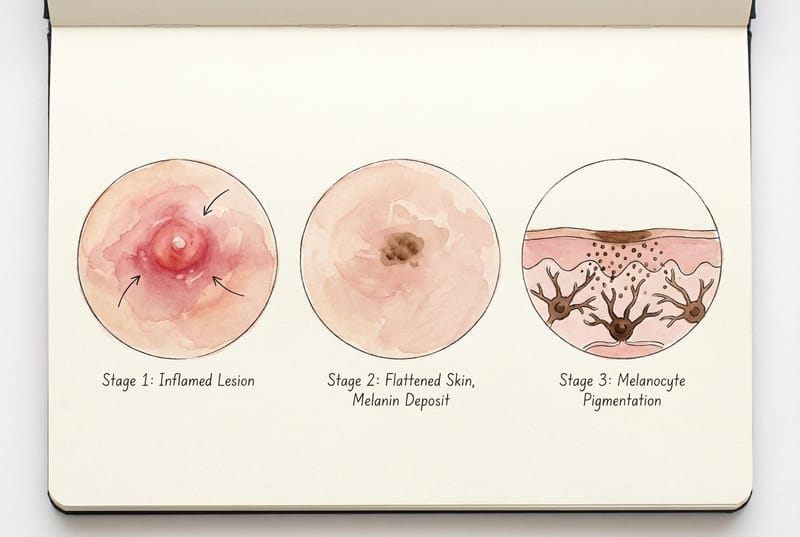
You finally clear a breakout, only to be left with a dark spot that seems determined to outlast the pimple itself. This is post-inflammatory hyperpigmentation, or PIH, and it is one of the most frustrating aspects of acne and skin injury for millions of people. The good news is that PIH is temporary and highly treatable. The frustrating news is that temporary can mean several months, especially without intervention.
What Causes PIH
Whenever your skin experiences inflammation, whether from acne, a burn, a cut, eczema, or even an aggressive skincare treatment, the inflammatory process triggers nearby melanocytes to produce extra melanin. This excess pigment is deposited in the healing skin, creating a flat, dark mark at the site of the original injury. The mark is not a scar. The skin surface is smooth. It is purely a pigment deposit that the body will eventually clear.
PIH vs Scarring
The distinction between PIH and a true scar is important because they require completely different approaches. PIH is flat and involves only color change. Run your finger over it and you feel smooth skin. A scar involves a change in skin texture: a depression, a raised area, or a rough patch. PIH will fade on its own given enough time. Scars require professional intervention to improve.
If you are unsure which you have, look at the spot in good lighting. If it is a flat discoloration on otherwise smooth skin, it is likely PIH. If there is any change in the surface texture, there may be a scarring component alongside the pigment change.
How Long It Takes to Fade
The fading timeline for PIH depends on several factors: your skin tone, the depth of the pigment deposit, and how well you protect the area from further stimulation. In lighter skin, PIH may fade within a few weeks to a few months. In darker skin, where melanocytes produce more pigment in response to inflammation, the process can take six to twelve months or longer without active treatment.
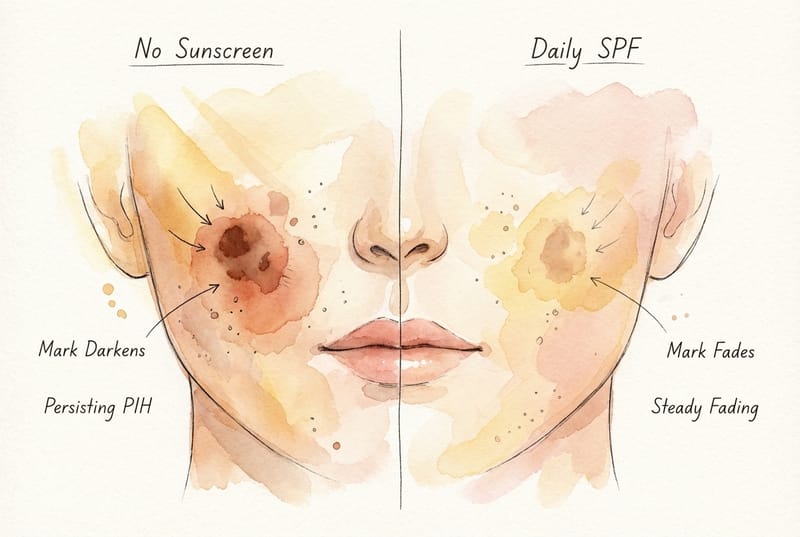
UV exposure is the biggest factor that slows fading. Sunlight stimulates the melanocytes in the affected area to produce even more pigment, effectively resetting the clock every time the spot sees the sun without protection.
Speeding the Process
While PIH will eventually resolve on its own, several ingredients and practices can accelerate fading significantly.
- Sunscreen daily. This cannot be overstated. Every day without SPF is a day the spot gets darker or stays the same rather than fading.
- Vitamin C serum inhibits the enzyme responsible for melanin production and provides antioxidant protection. Daily morning use is ideal.
- Niacinamide at 2 to 5 percent blocks melanin transfer to surrounding cells, gradually reducing the visibility of the spot.
- Azelaic acid at 10 to 20 percent both inhibits melanin production and provides gentle exfoliation, making it one of the most effective single ingredients for PIH.
- Retinoids accelerate cell turnover, which brings fresh, unpigmented cells to the surface faster. Start slowly and always use with sunscreen.
Prevention
The best way to manage PIH is to prevent unnecessary inflammation in the first place. Avoid picking at breakouts, which extends the inflammatory response and deepens the resulting mark. Use gentle skincare products that do not irritate the skin. And treat active acne promptly to reduce the duration of each inflammatory event.
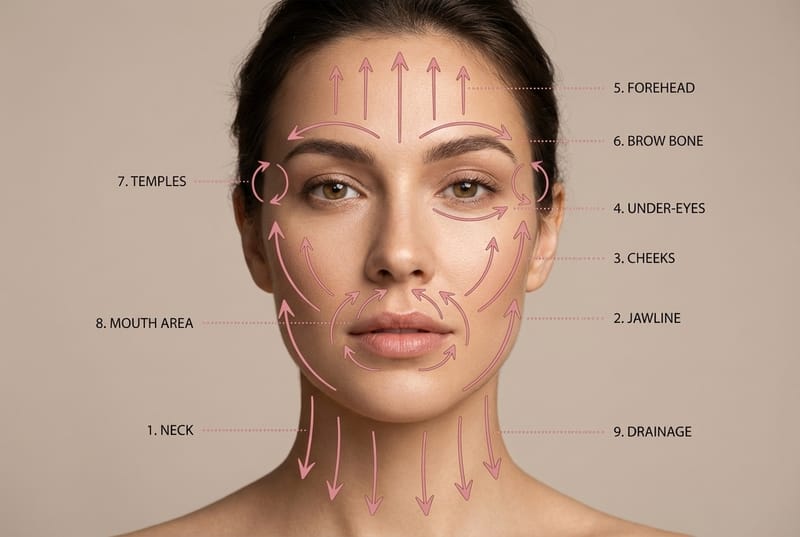
Yasmine face yoga promotes the healthy circulation that helps your skin process and clear excess melanin more efficiently. The improved blood flow delivers nutrients to healing skin and supports the cell turnover that replaces pigmented cells with fresh ones.