Skin Care
Ingredients That Brighten
A detailed guide to the most effective brightening ingredients: how each one works, what it is best for, and how to build a brightening routine.
The world of brightening ingredients can feel overwhelming, with new actives appearing every year and marketing claims that make everything sound revolutionary. This article cuts through the noise to focus on the ingredients with the strongest evidence behind them. Understanding how each one works helps you choose the right combination for your specific type of pigmentation.
Vitamin C
Vitamin C is the most widely researched brightening ingredient and works through multiple mechanisms. It inhibits tyrosinase, the enzyme that drives melanin production. It neutralizes free radicals from UV exposure that trigger pigmentation. And it supports collagen production, which improves overall skin quality alongside brightness.
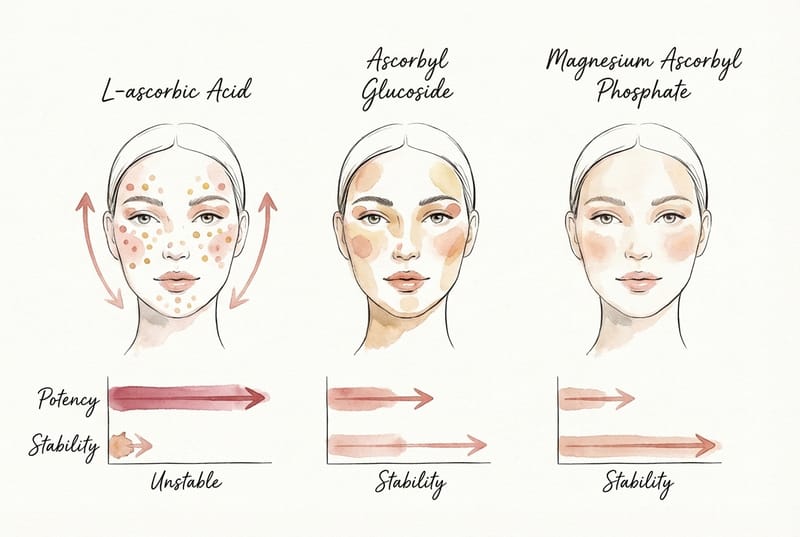
L-ascorbic acid is the most potent form but is also the least stable and most likely to cause irritation. Derivatives like ascorbyl glucoside, magnesium ascorbyl phosphate, and ethyl ascorbic acid are more stable and gentler while still providing meaningful results. Use vitamin C in the morning for antioxidant protection throughout the day.
Arbutin
Alpha arbutin is a naturally derived tyrosinase inhibitor that reduces melanin production gradually and gently. It is one of the most well-tolerated brightening ingredients, making it suitable for sensitive skin types that cannot tolerate more aggressive options. It works best at concentrations of 1 to 2 percent and produces visible results over consistent use of six to twelve weeks.
Azelaic Acid
Azelaic acid is a multitasking ingredient that inhibits tyrosinase, exfoliates gently, reduces inflammation, and kills acne-causing bacteria. This makes it exceptionally useful for people dealing with both pigmentation and acne, since it addresses both concerns simultaneously. It is available at 10 percent over the counter and up to 20 percent by prescription. It is also one of the few brightening ingredients considered safe during pregnancy.
Niacinamide
Niacinamide works differently from most brightening ingredients. Rather than reducing melanin production, it blocks the transfer of melanin from melanocytes to surrounding keratinocytes. This means the pigment is still produced but is not distributed to the cells you can see. It also strengthens the skin barrier and reduces inflammation, making it a valuable supporting ingredient in any brightening routine.
Tranexamic Acid
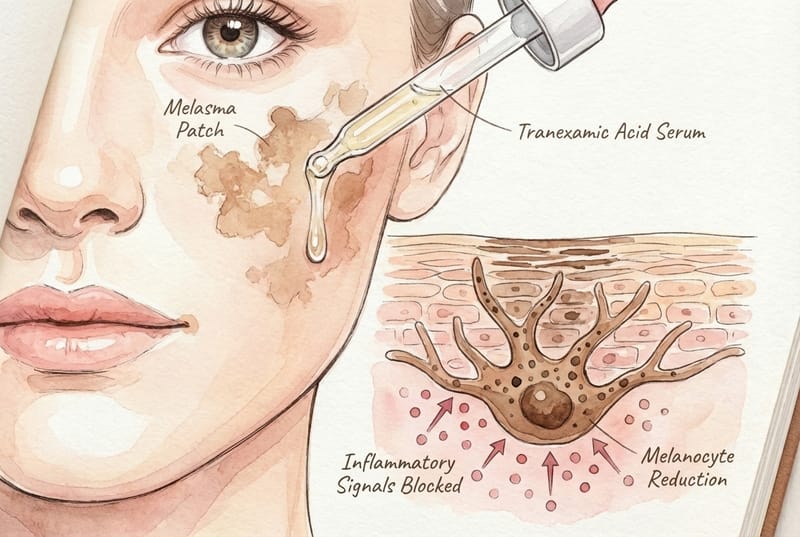
Tranexamic acid is one of the newer additions to the brightening toolbox and has shown impressive results, particularly for melasma. It works by reducing the inflammatory signals that trigger melanocytes to overproduce. Available in topical serums over the counter and as an oral medication by prescription, it has become a key ingredient for stubborn pigmentation that does not respond to other treatments.
Kojic Acid
Kojic acid is a byproduct of fermentation and works as a tyrosinase inhibitor. It can be effective for superficial pigmentation but has some drawbacks: it is unstable in formulation, can cause contact dermatitis in some people, and loses potency relatively quickly. It is best used as a supporting ingredient rather than the primary brightening agent in your routine.
Retinoids
Retinoids deserve mention in a brightening context because they accelerate cell turnover, which brings fresh, unpigmented cells to the surface faster. They do not directly inhibit melanin production, but the accelerated exfoliation helps clear existing pigment while other ingredients prevent new deposits. Retinol at night combined with a brightening serum in the morning is a highly effective combination.
Building a Brightening Stack
The most effective approach combines ingredients that work through different mechanisms. A reasonable starting combination might include vitamin C in the morning for antioxidant protection and tyrosinase inhibition, niacinamide in your moisturizer for melanin transfer blocking, and azelaic acid or retinol in the evening for exfoliation and further pigment reduction.
Yasmine face yoga enhances the effectiveness of brightening ingredients by improving the blood flow that delivers them to the melanocytes and surrounding cells. This circulation support is a natural complement to your topical routine that helps every product work a little harder.