Skin Care
Hydration and Moisturizing Explained
The difference between hydration and moisturizing, the three types of moisturizing ingredients, and how to layer them for all-day comfort.
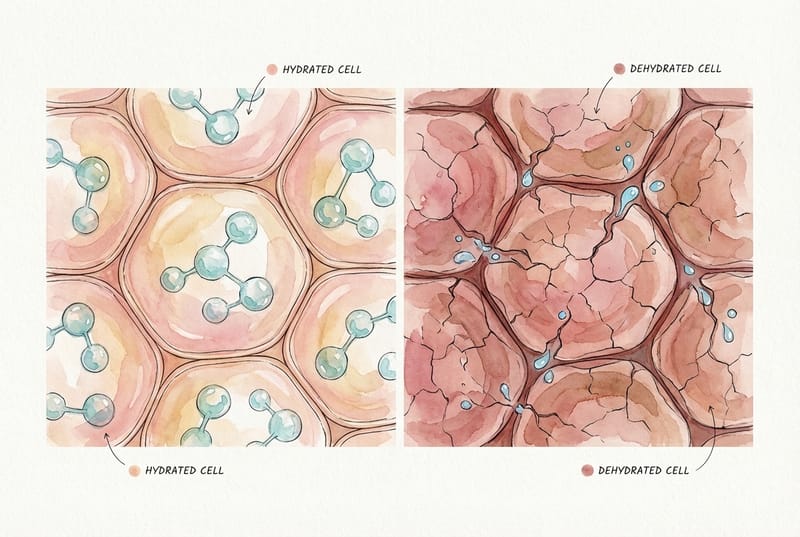
Hydration and moisturizing sound like the same thing, but they work differently and your skin needs both. Understanding the distinction and how different ingredients contribute to each one is the key to building a routine that keeps your skin comfortable, plump, and healthy in every season and environment.
Hydration vs Moisturizing
Hydration refers to the water content of your skin cells. Hydrated skin cells are plump, translucent, and function efficiently. Dehydrated cells shrink, become dull, and process nutrients less effectively. Hydration comes primarily from water you drink and from water-attracting ingredients in your skincare.
Moisturizing refers to locking that water in by creating a barrier on the skin surface that prevents evaporation. Even well-hydrated skin will dry out if moisture escapes faster than it is replenished. Moisturizing ingredients form a protective layer that slows this water loss and keeps hydration levels stable throughout the day.
The Three Types of Moisturizing Ingredients
Every effective moisturizer contains ingredients from one or more of these three categories. Understanding them helps you choose products that address your specific needs.
- Humectants attract water from the environment and from deeper layers of the skin to the surface. Hyaluronic acid, glycerin, and aloe vera are common humectants. They are the hydration part of the equation and work best in combination with ingredients that prevent the water they attract from evaporating.
- Emollients fill the gaps between skin cells, smoothing the surface and giving the skin a soft, supple feel. Squalane, ceramides, fatty alcohols, and plant oils are emollients. They repair the texture of the barrier and give moisturizers their comfortable, skin-smoothing quality.
- Occlusives form a physical barrier on the skin surface that prevents water from escaping. Petrolatum, beeswax, dimethicone, and shea butter are occlusives. They are the sealing step and are especially important for dry skin or in dry, cold environments.
Layering for Maximum Effect
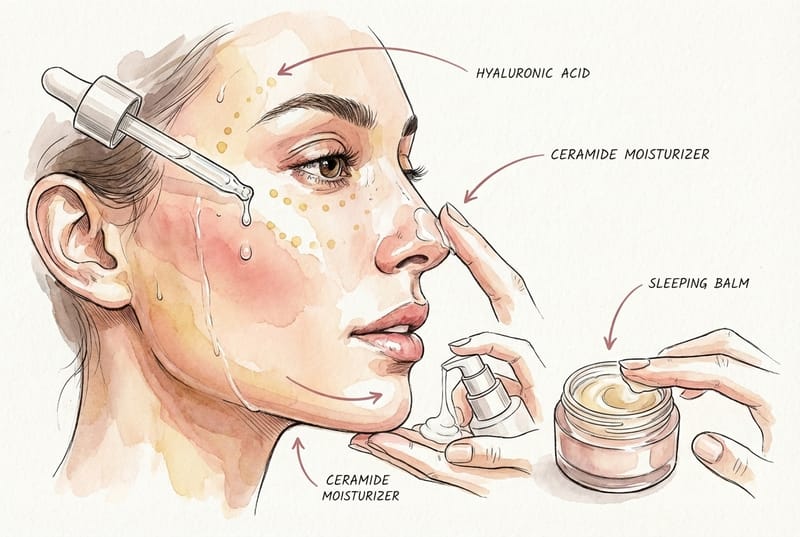
The most effective approach to moisturizing uses all three ingredient categories in the right order. This layering strategy ensures that water is attracted to the skin, the barrier is repaired, and moisture is sealed in.
- Humectant first. Apply a hyaluronic acid serum or a hydrating toner to damp skin. The dampness gives the humectant water to work with.
- Emollient second. Follow with a moisturizer containing ceramides, squalane, or other emollients. This repairs the barrier and smooths the skin surface.
- Occlusive last (if needed). For dry skin or harsh conditions, seal everything with a thin layer of an occlusive product. A pea-sized amount of a balm or sleeping pack is usually enough.
Choosing by Skin Type
Oily skin benefits most from lightweight humectant-rich products and minimal occlusion. A gel moisturizer with hyaluronic acid and niacinamide is often all that is needed. Dry skin needs heavier emollients and occlusives to prevent moisture loss. A cream moisturizer with ceramides and shea butter works well. Combination skin may need different products for different zones, or a medium-weight moisturizer that balances both needs.
When to Moisturize
Apply your moisturizer within a few minutes of cleansing, while the skin is still slightly damp. This captures the surface moisture and gives humectant ingredients water to bind. Waiting too long allows that moisture to evaporate, reducing the effectiveness of your entire routine.
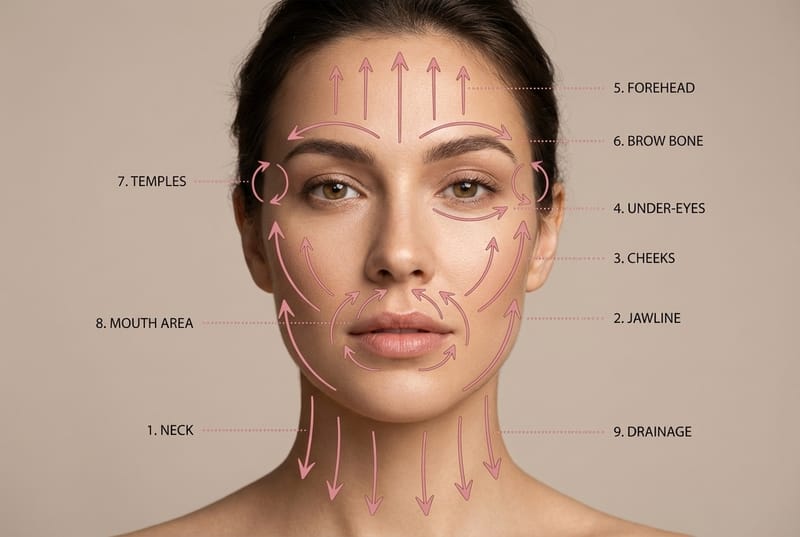
Yasmine face yoga between cleansing and moisturizing boosts circulation, which improves the skin's ability to absorb and retain the hydration you apply. The warmth generated by gentle facial exercise helps products penetrate more evenly.