Skin Care
Your Skin: How It Works and What It Needs
A foundational guide to skin structure, skin types, and how to read your own skin so every product choice is informed rather than guesswork.
Before you build a skincare routine, it helps to understand what you are actually taking care of. Your skin is not a passive surface waiting for products. It is a living, dynamic organ with its own systems for hydration, protection, and repair. When you understand how it works, every decision you make about cleansing, moisturizing, and treatment becomes more intentional and more effective.
The Three Layers
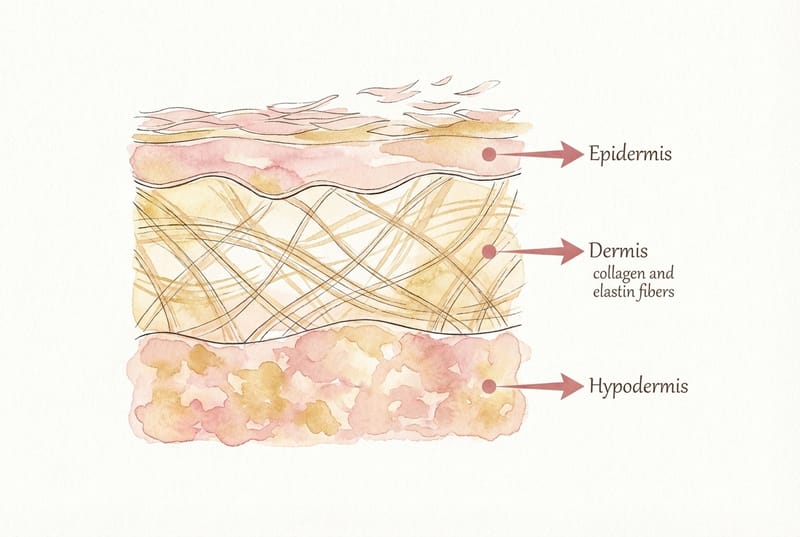
Your skin has three main layers, each with a distinct role. The epidermis is the outer layer you can see and touch. It is where dead skin cells are shed, where pigmentation lives, and where the moisture barrier sits. Beneath it is the dermis, a thicker layer containing collagen, elastin, blood vessels, and nerve endings. This is where structural support and elasticity come from. The deepest layer, the hypodermis, is mostly fat and connective tissue that cushions and insulates.
Most skincare products work on the epidermis and the very top of the dermis. Understanding this helps set realistic expectations. A moisturizer hydrates the surface layers beautifully, but it cannot restructure collagen in the deep dermis. That requires different tools, whether retinoids, professional treatments, or the circulation-boosting effects of consistent face yoga.
The Moisture Barrier
The moisture barrier is the outermost part of the epidermis, and it is arguably the most important structure in skin health. It consists of dead skin cells cemented together by a lipid matrix of ceramides, cholesterol, and fatty acids. This barrier does two critical jobs: it keeps water inside the skin and keeps irritants, bacteria, and pollutants outside.
When the moisture barrier is healthy, skin feels comfortable, looks plump, and tolerates active ingredients without issue. When it is damaged, skin becomes dry, reactive, and prone to breakouts and sensitivity. Protecting this barrier is the foundation of every good skincare routine, regardless of skin type or concern.
Skin Types Explained
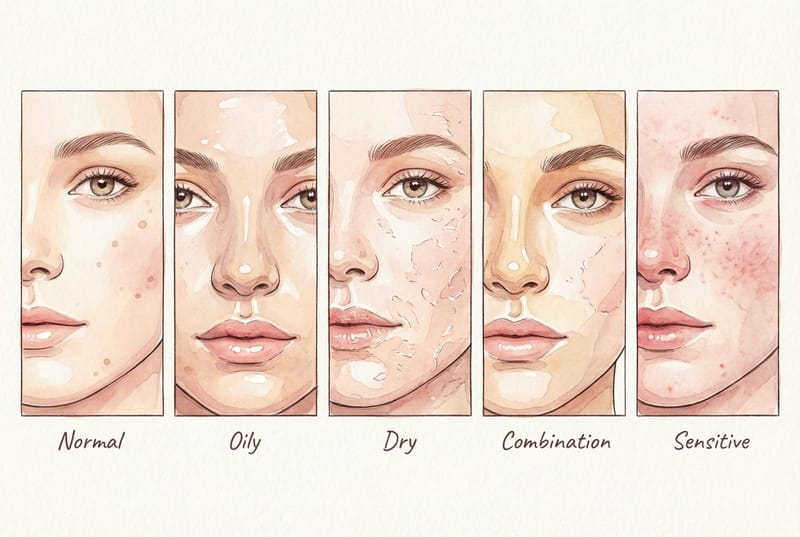
Your skin type is largely determined by genetics, specifically how much sebum your sebaceous glands produce and how your skin retains water. Understanding your type helps you choose the right products, but it is important to recognize that skin type can fluctuate with seasons, hormones, and age.
- Normal skin produces a balanced amount of oil, retains moisture well, and rarely reacts to products. It is the least common type and requires maintenance rather than correction.
- Oily skin overproduces sebum, leading to a shiny appearance, enlarged pores, and a tendency toward breakouts. It benefits from lightweight, non-comedogenic products and oil-regulating ingredients.
- Dry skin underproduces sebum and loses moisture easily. It often feels tight, may flake, and benefits from richer moisturizers and barrier-supportive ingredients.
- Combination skin is oily in some areas, typically the T-zone, and dry in others, usually the cheeks. It often benefits from using different products on different zones.
- Sensitive skin reacts easily to products, environmental factors, or physical contact. It requires gentle formulations, minimal ingredients, and careful introduction of new products.
How to Read Your Own Skin
The best way to determine your skin type is the bare-face test. Wash your face with a gentle cleanser, pat dry, and wait one hour without applying any products. After an hour, observe your skin in good lighting. If it feels comfortable and looks even, you likely have normal skin. If it is shiny all over, you lean oily. If it feels tight or looks flaky, you lean dry. If the T-zone is shiny but the cheeks are dry, you have combination skin.
Beyond type, pay attention to how your skin behaves throughout the day and across seasons. Skin that is oily in summer may be combination or even dry in winter. A routine that works perfectly in one season may need adjusting in another. This ongoing attentiveness is more valuable than any single product choice.
What This Guide Covers
The articles that follow walk you through every step of a complete skincare education: cleansing, hydration, sun protection, active ingredients, targeted treatments, routine building, seasonal adjustments, and separating myth from evidence. Each article builds on the last, giving you the knowledge to make confident, informed decisions about your skin for the rest of your life.
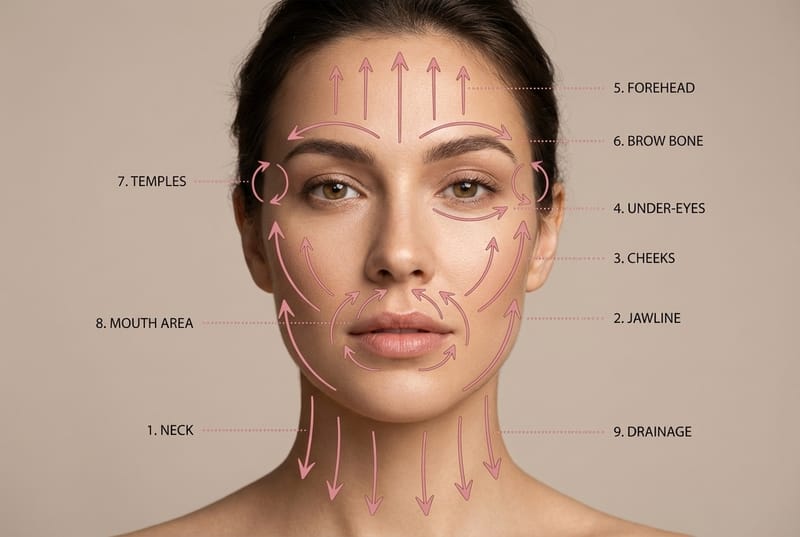
Face yoga with Yasmine adds a structural dimension to skincare that products alone cannot provide. As you learn to care for the surface of your skin through this guide, the daily practice of face yoga supports everything from underneath by improving circulation, maintaining muscle tone, and encouraging lymphatic drainage.