Anti-Aging
How Your Skin Ages and What You Can Influence
A clear look at the science behind skin aging, what your genes and lifestyle each control, and how to think about your skin at every stage.
Understanding why your skin changes is the first step to caring for it with confidence. The encouraging truth is that most visible skin aging is not written in stone. A large part of it is shaped by choices and habits you can act on starting today.
What Collagen and Elastin Actually Do
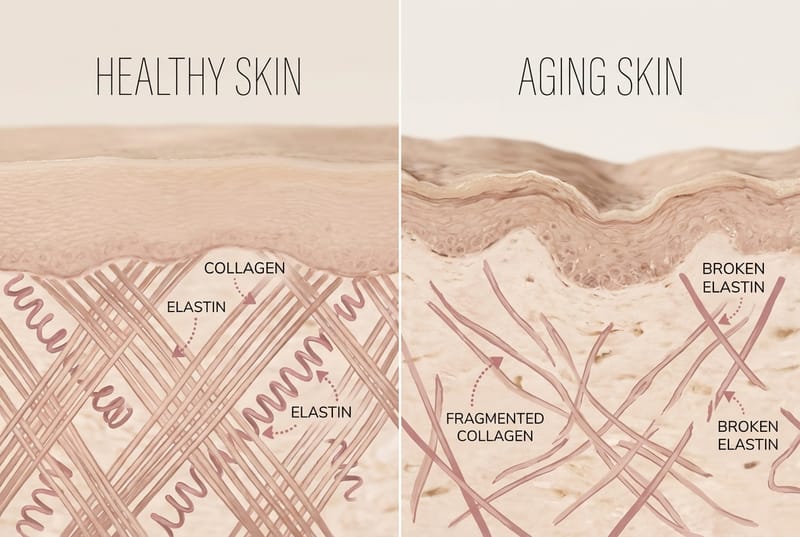
Collagen is the protein that gives skin its structure and thickness. Elastin works alongside it, allowing skin to spring back after movement or expression. Together they keep skin firm, smooth, and resilient. Starting in your mid-twenties, collagen production slows by roughly one percent each year, and elastin fibers become less supple over time. The result is skin that gradually thins, loses bounce, and forms lines more easily.
Intrinsic and Extrinsic Aging
Skin aging falls into two distinct categories. Intrinsic aging is the baseline change that happens regardless of how you live. Extrinsic aging is the layer on top of that, shaped by environment and daily habits. The evidence is consistent: extrinsic factors account for the vast majority of visible aging, which means the choices you make daily carry far more weight than your genes alone.
Intrinsic Aging: Your Natural Timeline
Intrinsic aging is driven by biology and unfolds at its own pace. Your genetics determine how your skin is structured and how resilient it tends to be. Hormone levels shift across the decades, particularly during perimenopause and menopause, affecting skin thickness, moisture retention, and oil production. Cell turnover also slows gradually, meaning skin repairs and renews itself more slowly as you age.
Extrinsic Aging: The Part You Can Change
- Ultraviolet exposure is the single largest driver of premature aging, responsible for a substantial majority of visible skin changes on its own
- Air pollution, secondhand smoke, and personal smoking generate free radicals that degrade collagen, disrupt the skin barrier, and accelerate elastin breakdown
- Chronic poor sleep, unmanaged stress, excess sugar, and alcohol each interfere with the body's ability to produce and protect collagen
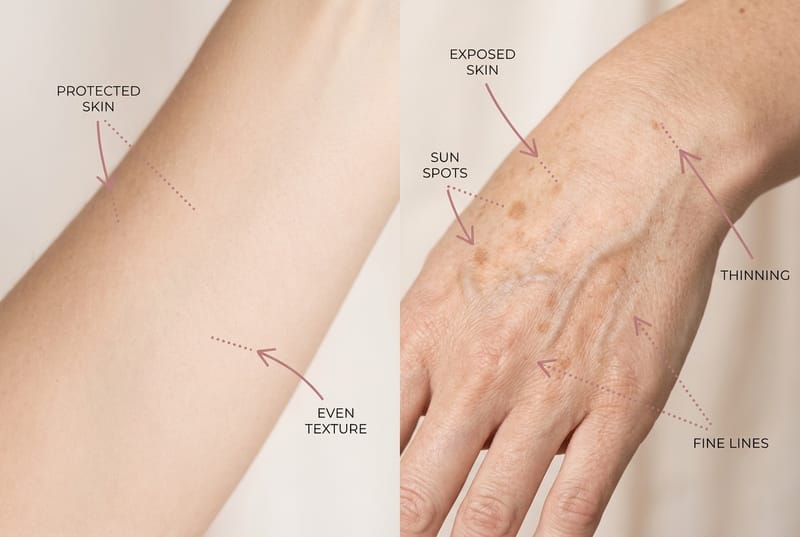
Much of what we recognize as aging is actually accumulated damage from these external sources. A significant share of visible skin change is not inevitable but preventable, and that reframe changes how you think about daily habits.
What Science Says You Can Influence
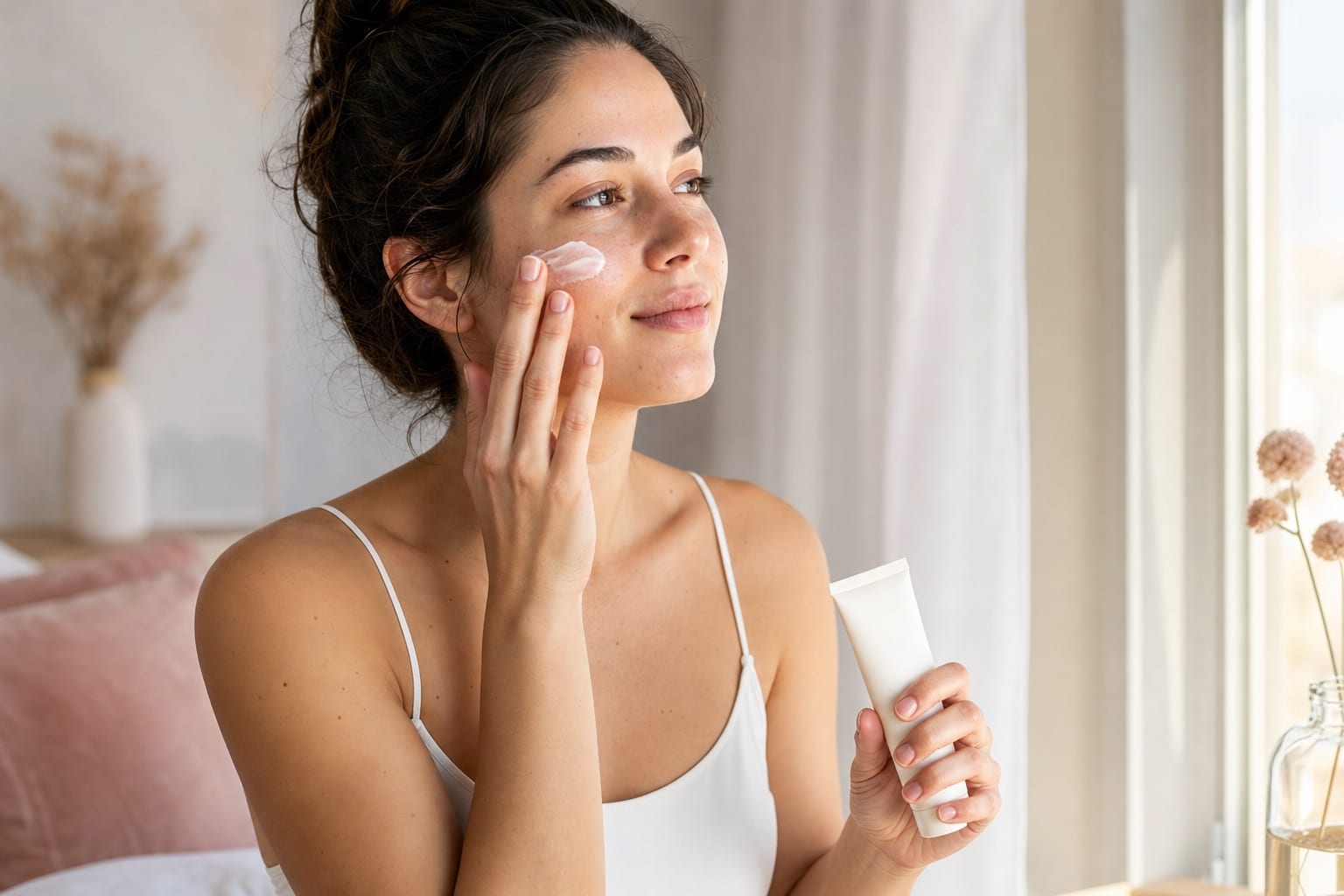
A handful of habits meaningfully slow visible aging. Combined with face yoga through Yasmine, which builds muscle tone and circulation beneath the skin, these controllable factors form the foundation of any effective approach.
- Daily broad-spectrum sun protection is the most consistently supported step for slowing visible aging at any decade of life
- Protecting and restoring the skin barrier through gentle cleansing and hydrating ingredients keeps skin resilient and slows moisture loss
- Lifestyle patterns including adequate sleep, stress management, and a diet with sufficient protein and antioxidants support the collagen your body continues to produce
Your Skin Decade by Decade
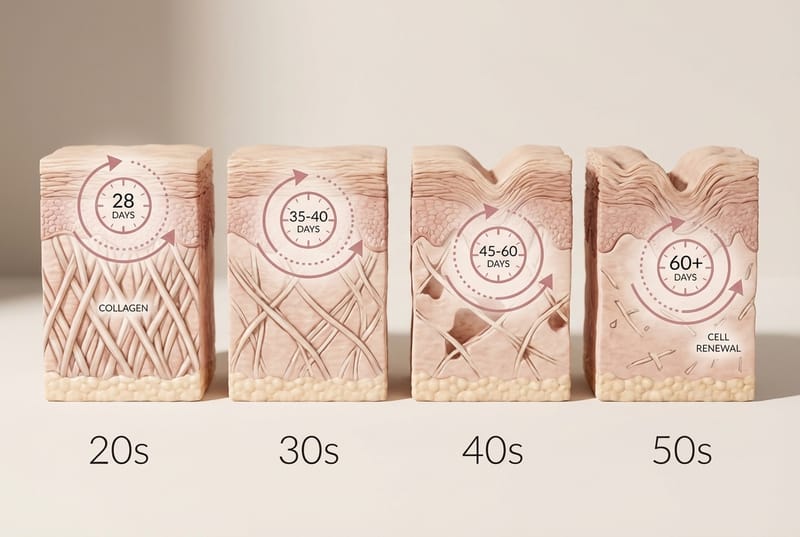
In your twenties, collagen begins its gradual annual decline and cell renewal operates on a roughly twenty-eight day cycle. Skin still recovers quickly, but sun damage begins accumulating silently. In your thirties, renewal slows to around thirty-five to forty days, fine lines around the eyes and forehead become more apparent, and subtle shifts in firmness may start to appear.
In your forties, hormonal changes often accelerate the pace. Cell turnover extends to forty-five to sixty days, the jawline may soften, and skin tends to feel drier overall. By the fifties and beyond, renewal can slow to sixty or more days, skin may thin noticeably, and collagen loss picks up speed. Each decade calls for a slightly different focus, and the lessons ahead walk through each one in practical terms.