Skin Care
Gentle Cleansing and Barrier Repair
How to cleanse redness-prone skin without causing flares, and the barrier repair strategies that reduce baseline redness over time.
For redness-prone skin, cleansing is the step with the most potential for both help and harm. A gentle, well-chosen cleanser supports the skin barrier and sets up every subsequent step for success. A harsh one triggers the very inflammation and irritation that drive redness. Getting this foundation right can, on its own, reduce your baseline redness noticeably within a few weeks.
What Redness-Prone Skin Needs from a Cleanser
The ideal cleanser for reactive skin removes impurities without disrupting the lipid barrier or the skin's natural pH. This means avoiding high-foaming formulas, sulfates, and anything that leaves the skin feeling tight or stripped. The goal is to end the cleansing step with skin that feels exactly the same as before, just cleaner.
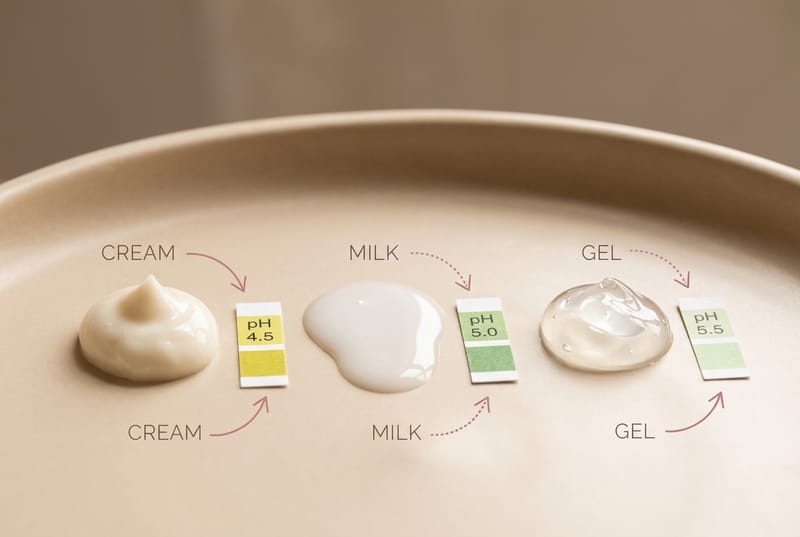
- Choose a cream, milk, or gentle gel cleanser with a pH between 4.5 and 5.5, matching the skin's natural acid mantle.
- Avoid cleansers with fragrance, essential oils, alcohol, or menthol, all of which can trigger reactivity.
- Consider micellar water for mornings when you want to skip full cleansing but still refresh the skin.
Cleansing Technique for Reactive Skin
- Use lukewarm water only. Hot water dilates blood vessels and triggers flushing. Cold water can cause reactive redness in some people. Lukewarm is the safe middle ground.
- Apply with fingertips, not tools. Washcloths, brushes, and sponges create friction that irritates reactive skin. Your fingertips provide the gentlest contact.
- Massage briefly and gently. 30 seconds of light, circular motion is enough. Prolonged rubbing increases irritation.
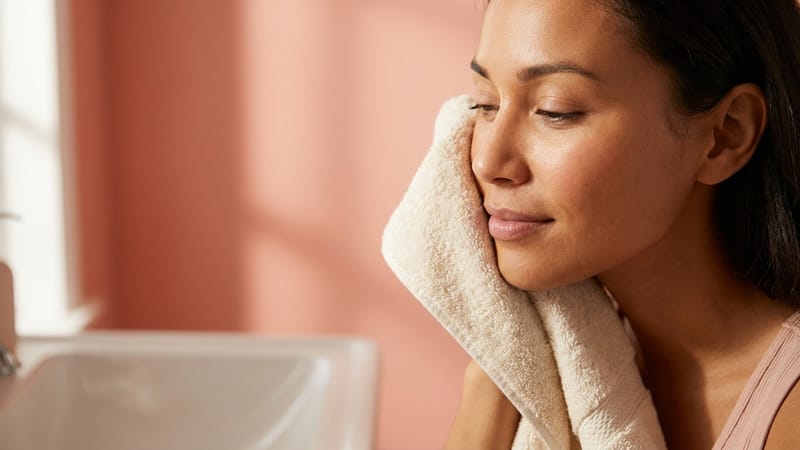
- Pat dry, never rub. Press a soft towel against your face to absorb water. Rubbing creates friction and heat that can trigger redness.
The Barrier Repair Strategy
A compromised moisture barrier is one of the most common drivers of persistent redness. When the barrier is weak, irritants penetrate more easily and the skin's inflammatory response stays activated. Repairing the barrier reduces this chronic low-level inflammation and lowers your baseline redness.
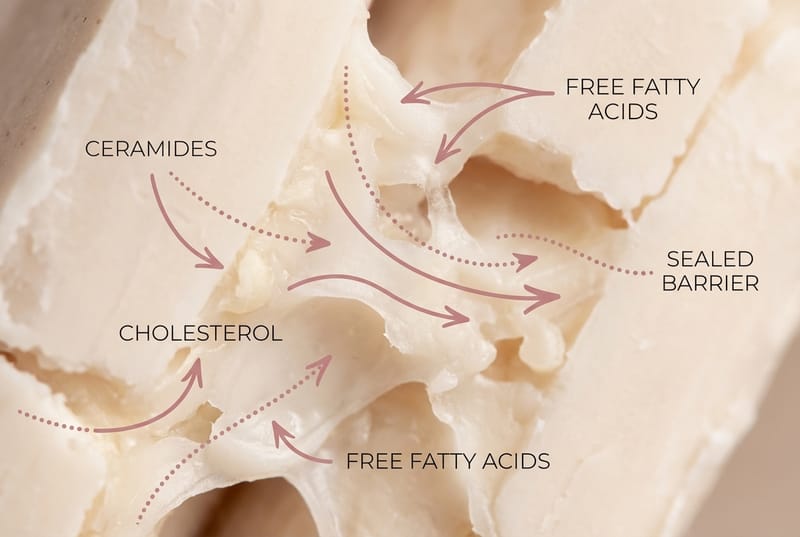
Barrier repair requires patience and simplicity. Use a moisturizer rich in ceramides, cholesterol, and fatty acids, the same lipids that make up the barrier naturally. Avoid all active ingredients during the repair phase. Stick to cleanser, barrier moisturizer, and mineral sunscreen until the redness begins to calm, which typically takes two to four weeks.
Ingredients to Seek
- Ceramides restore the lipid matrix of the barrier directly.
- Squalane is a lightweight, non-irritating oil that supports barrier function.
- Panthenol (vitamin B5) soothes irritation and supports skin repair.
- Colloidal oatmeal has anti-inflammatory properties and is widely used in products for reactive skin.
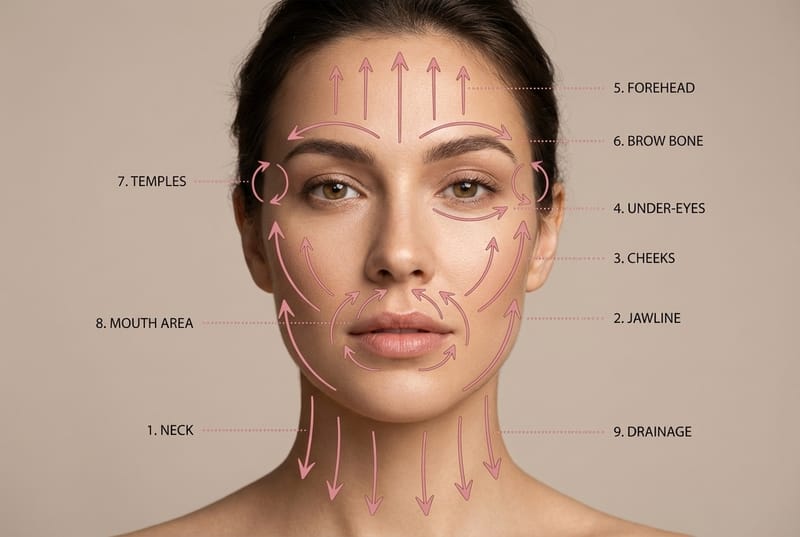
Yasmine face yoga slots naturally into a redness-friendly routine. After gentle cleansing and before moisturizing, a brief face yoga session with clean hands on bare skin improves circulation without the chemical or mechanical irritation that triggers reactive flares.