Skin Care
Genetics, Diet, and the Gut-Skin Connection
How inherited susceptibility, glycemic load, dairy consumption, and gut microbiome health converge to influence acne severity, and what the evidence actually shows.

Acne has always been surrounded by dietary myths, from the long-debunked chocolate theory to more recent claims about specific superfoods that supposedly clear skin overnight. The reality, supported by a growing body of research, is more nuanced. Genetics set the stage for acne susceptibility. Diet modulates that susceptibility through measurable hormonal and inflammatory pathways. And the gut microbiome, a topic of intense current research, appears to influence skin health in ways that are only beginning to be understood.
The Genetic Foundation
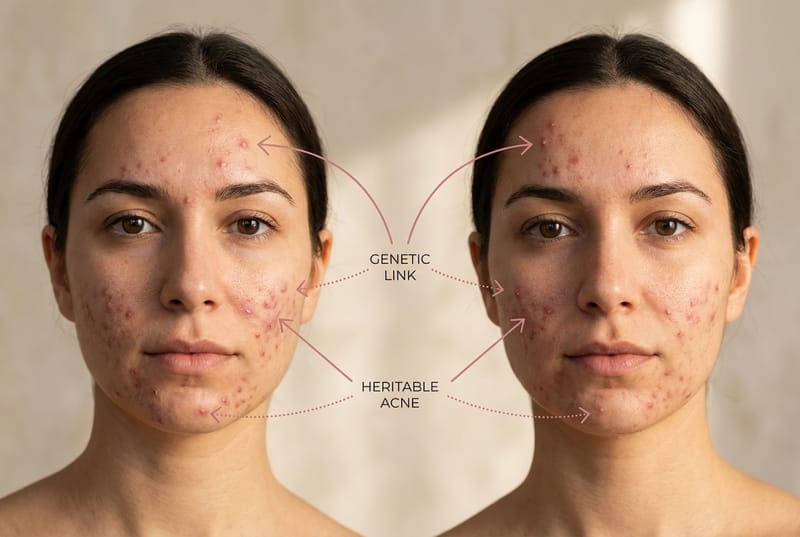
Twin studies have established that acne has a strong heritable component. Research comparing identical and fraternal twins estimates that genetics account for approximately 80 percent of the variation in acne susceptibility. If both of your parents had significant acne, your probability of developing it is substantially higher than that of someone with no family history.
The genetic factors involved are polygenic, meaning many genes contribute rather than a single acne gene. These genes influence sebaceous gland size and activity, the sensitivity of androgen receptors, the tendency toward follicular hyperkeratinization, the vigor of the inflammatory response, and the composition of the skin microbiome. No one chooses their genetic hand, but understanding it helps set realistic expectations and informs treatment decisions.
Glycemic Load and Acne
The relationship between high-glycemic diets and acne is the most robust dietary finding in acne research. High-glycemic foods, including white bread, sugary beverages, processed snacks, and refined cereals, cause rapid blood sugar spikes that trigger insulin release. As discussed in the hormones article, elevated insulin increases IGF-1, amplifies androgen signaling, and suppresses SHBG, creating a hormonal environment that promotes sebum overproduction.
A landmark 2007 study by Smith and colleagues placed young men with acne on either a low-glycemic or a standard diet for 12 weeks. The low-glycemic group showed statistically significant improvements in acne lesion counts, sebum production, and androgen levels compared to the control group. Subsequent studies in Korea, Turkey, and Australia have replicated these findings, establishing glycemic load as a meaningful, modifiable acne risk factor.
The Dairy Question
Dairy consumption has been positively associated with acne prevalence, with skim milk showing the strongest correlation. The proposed mechanism involves the naturally occurring hormones and growth factors in milk, including IGF-1, which survives pasteurization and digestion in quantities sufficient to influence circulating levels. Whey protein, a dairy derivative popular in fitness culture, contains amino acids that stimulate insulin and IGF-1 production, and case reports have documented acne flares in patients who begin whey supplementation.
The dairy evidence is less conclusive than the glycemic evidence because most studies are observational rather than randomized controlled trials. Confounding factors are difficult to eliminate. However, the consistency of the association across populations and the plausible biological mechanism make dairy a reasonable factor to test through personal elimination if you suspect a connection.
The Gut-Skin Axis
The gut-skin axis is an emerging area of research that examines how the trillions of microorganisms in the gastrointestinal tract influence skin health. The concept is not new. In the 1930s, dermatologists John Stokes and Donald Pillsbury hypothesized that emotional states could alter the gut microbiome in ways that promoted systemic inflammation and, consequently, skin disease. Modern research is largely confirming their intuition with molecular evidence.
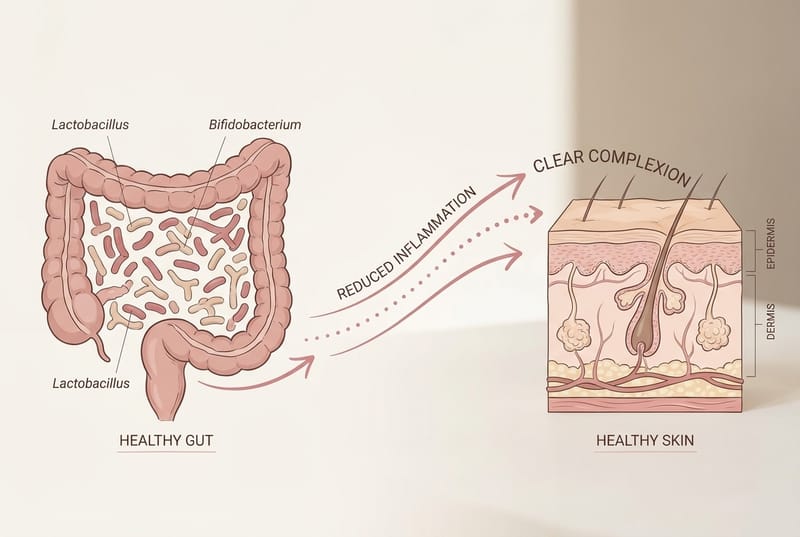
The gut microbiome modulates immune function, inflammatory signaling, and nutrient absorption. Dysbiosis in the gut, caused by poor diet, antibiotic use, chronic stress, or illness, increases intestinal permeability, sometimes called leaky gut. This allows bacterial endotoxins like lipopolysaccharide (LPS) to enter the bloodstream, triggering low-grade systemic inflammation that can manifest in the skin as increased acne severity.
Probiotics and Gut Health
If gut dysbiosis contributes to acne through systemic inflammation, then restoring gut microbial balance should theoretically improve skin outcomes. Early clinical trials of oral probiotics, particularly strains of Lactobacillus and Bifidobacterium, have shown modest but promising improvements in acne severity. A 2010 study by Kim and colleagues found that participants taking a Lactobacillus probiotic for 12 weeks showed significant reductions in acne lesion count and sebum production compared to placebo.
Dietary approaches that support gut diversity, including fiber-rich foods, fermented products, polyphenol-containing plants, and reduced processed food intake, align with the same low-glycemic dietary patterns already shown to benefit acne. This convergence suggests that dietary changes for acne may work through both the insulin pathway and the gut-skin axis simultaneously.
Putting the Evidence Together
The scientific picture that emerges is one of interconnected systems. Genetics determine your baseline susceptibility. Hormones, modulated by stress and diet, control the activity of the sebaceous glands. The skin microbiome determines how the follicular environment responds to excess sebum. The gut microbiome influences systemic inflammation. And diet affects all of these systems simultaneously through insulin, IGF-1, and microbial nourishment.
This complexity explains why no single intervention works for everyone and why personalized approaches, informed by an understanding of which pathways are most active in your specific case, produce the best results. It also explains why combination strategies that address multiple pathways outperform monotherapy.
Yasmine face yoga integrates into this holistic picture as a daily practice that supports multiple pathways at once. The stress reduction from mindful breathing helps regulate cortisol and its downstream hormonal effects. The improved facial circulation supports skin healing and immune balance. And the ritualized self-care inherent in the practice often anchors broader healthy habits, including dietary improvements, that compound its benefits over time.
References
- Bataille, V. et al. (2002). The influence of genetics and environmental factors in the pathogenesis of acne: a twin study of acne in women. Journal of Investigative Dermatology, 119(6), 1317-1322.
- Smith, R.N. et al. (2007). A low-glycemic-load diet improves symptoms in acne vulgaris patients: a randomized controlled trial. American Journal of Clinical Nutrition, 86(1), 107-115.
- Adebamowo, C.A. et al. (2005). High school dietary dairy intake and teenage acne. Journal of the American Academy of Dermatology, 52(2), 207-214.
- Bowe, W.P. & Logan, A.C. (2011). Acne vulgaris, probiotics and the gut-brain-skin axis: back to the future? Gut Pathogens, 3(1), 1-11.
- Salem, I. et al. (2018). The gut microbiome as a major regulator of the gut-skin axis. Frontiers in Microbiology, 9, 1459.