Skin Care
Foundation Shade Matching and Application
How to find your perfect foundation match: understanding undertones, testing shades correctly, choosing the right tools, and avoiding the most common mistakes.
Finding the right foundation shade is the single most important step in natural makeup, and it is the one most people struggle with. A shade that is too light, too dark, too warm, or too cool announces itself immediately. But a perfect match disappears into the skin, becoming invisible while doing its job of evening out tone and adding luminosity. Getting this right is worth the effort.
Understanding Undertones
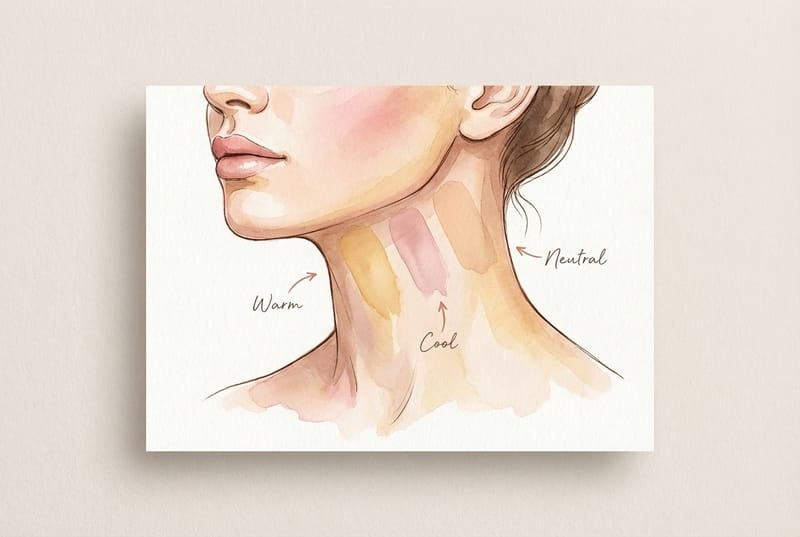
Your undertone is the color beneath the surface of your skin, and it stays consistent regardless of tanning, sun exposure, or seasonal changes. Every person's undertone falls into one of three categories, and correctly identifying yours is the key to a natural-looking match.
- Warm undertones have a golden, peachy, or yellow base. Veins on the inner wrist appear greenish. Gold jewelry tends to be more flattering than silver.
- Cool undertones have a pink, red, or bluish base. Veins appear blue or purple. Silver jewelry tends to be more flattering than gold.
- Neutral undertones are a balance of warm and cool. Veins appear blue-green. Both gold and silver jewelry look equally flattering.
How to Test Foundation Correctly
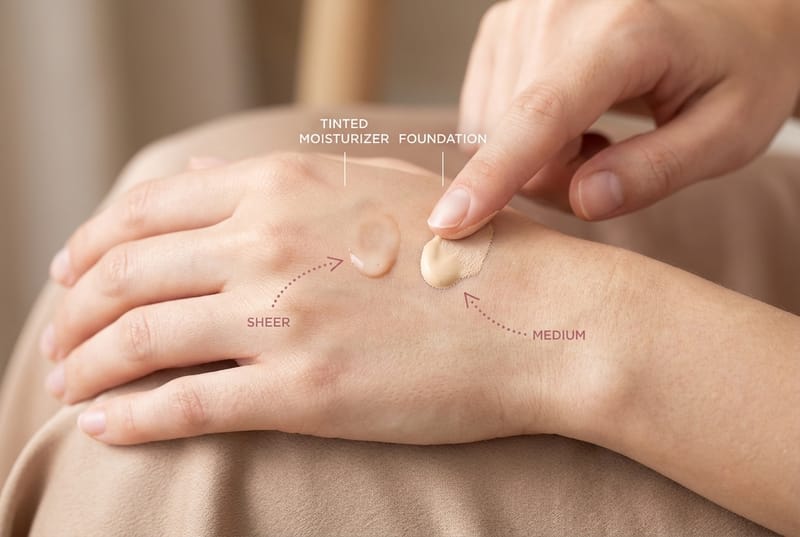
Testing foundation on your hand is the most common and most misleading approach. Your hand is often a different shade and undertone than your face and neck. The correct testing location is along the jawline, where the face meets the neck, because your foundation needs to blend seamlessly between these two areas.
- Test in natural light. Store lighting is notoriously unreliable. Apply a swatch along your jawline and step outside or near a window to evaluate the match in daylight.
- Test three shades. Apply swatches of three adjacent shades side by side along the jawline. The correct shade is the one that disappears into the skin without adjustment. If none of the three disappear, move up or down the shade range.
- Wait five minutes. Many foundations oxidize slightly after application, meaning they darken as they react with your skin's oils and the air. Wait a few minutes before making your final decision.
- Check both sides. Facial skin can vary slightly from one side to the other due to sun exposure patterns. Check the match on both sides of the jawline.
Application Techniques That Look Natural
Even the perfect shade will look unnatural if applied with the wrong technique. For natural makeup, the goal is to apply foundation so that it looks like your skin, just better. This means thin, even layers with no visible edges or buildup.
Start in the center of your face where you typically have the most discoloration and blend outward. Use decreasing amounts of product as you move toward the perimeter. The foundation should fade to nothing at the jawline, hairline, and around the ears. There should never be a visible line where your foundation starts or stops.
Common Mistakes and How to Avoid Them
- Choosing a shade based on how it looks in the bottle rather than on your skin. Always test on the face.
- Matching to your forehead or cheek rather than the jawline, which leads to a noticeable mismatch between face and neck.
- Applying the same amount everywhere. More product in the center, less at the edges, is always the way.
- Forgetting to blend down the neck. Even a small amount of foundation blended onto the upper neck prevents the mask effect.
Yasmine face yoga promotes even skin tone by improving the circulation that delivers nutrients and oxygen to every part of the face. When your natural skin tone is more uniform, foundation matching becomes easier and you may find you need even less product to achieve a balanced, radiant result.