Skin Care
Face Masks and Weekly Extras
A guide to face masks and supplementary treatments: types, frequency, how they fit into your routine, and which ones are worth your time for different skin concerns.
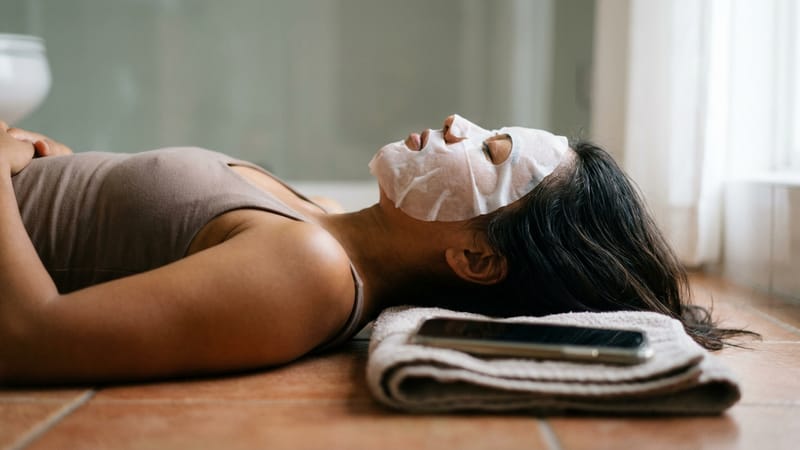
Once your daily routine is solid, weekly treatments like face masks offer a chance to give your skin a deeper level of care. They are not essential. You can have perfectly healthy skin without ever using a mask. But for those who enjoy the ritual or have specific concerns they want to address more intensively, weekly extras provide concentrated benefits that daily products cannot match in a single application.
Why Masks Work Differently
The key advantage of a face mask over a leave-on product is contact time. When you apply a serum, it absorbs in seconds. When you apply a mask and leave it on for 10 to 20 minutes, the active ingredients have prolonged contact with the skin, allowing deeper penetration and more dramatic short-term results. This is why your skin looks noticeably different after a good mask in a way that a single application of serum rarely achieves.
Types of Face Masks
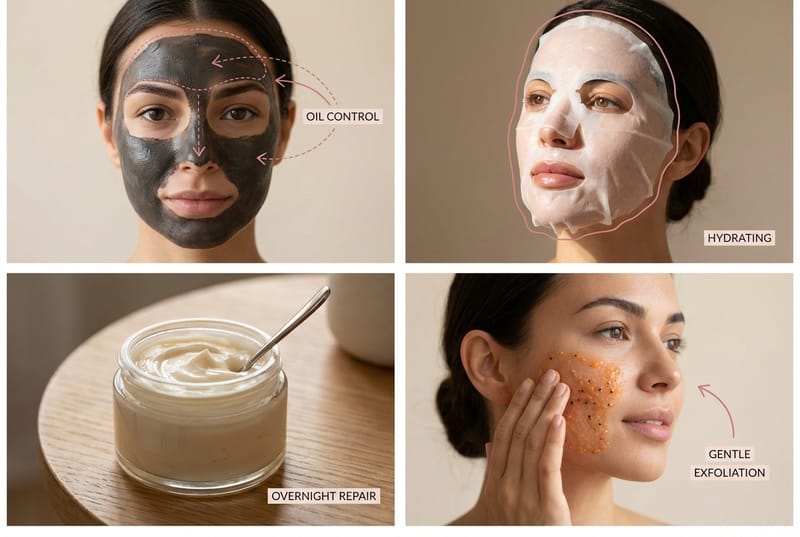
- Clay masks absorb excess oil and draw impurities from pores. They are best suited for oily and combination skin and should be used once a week at most. Leaving a clay mask on too long or using it too frequently can dry out the skin, so follow the recommended time and always moisturize afterward.
- Sheet masks are pre-soaked fabric sheets saturated with serums. They are typically hydrating and soothing, making them suitable for all skin types including sensitive. They provide a concentrated dose of hydration and are a good option when your skin feels depleted or dull.
- Hydrating masks, often in cream or gel form, are designed to deeply moisturize. They benefit dry and dehydrated skin most and can be used as overnight sleeping masks for an extended treatment period.
- Exfoliating masks contain chemical exfoliants like AHAs or BHAs that dissolve dead skin cells and improve texture and brightness. Enzyme masks, which use natural fruit enzymes from papaya or pineapple, are a milder alternative. Both should be used cautiously, starting once a week and only increasing if the skin tolerates it well.
Frequency and Timing
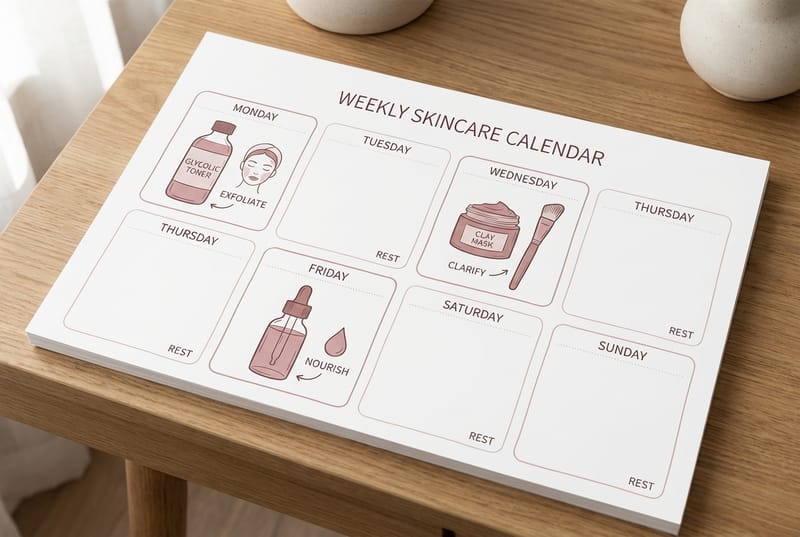
Most masks should be used one to two times per week. Using them more frequently provides diminishing returns and can overstimulate or over-exfoliate the skin. The exception is gentle hydrating masks, which some people use several times a week or even daily without issues. The best time to mask is in the evening, after cleansing and before the rest of your routine, so you can follow up with your usual serum and moisturizer to lock in the benefits.
Other Weekly Extras
- Chemical exfoliants in toner or serum form, like glycolic or salicylic acid, can be used one to two times per week to maintain smooth texture and clear pores. Start with lower concentrations and work up gradually.
- Facial oils applied as a final nighttime layer once or twice a week provide an extra boost of nourishment for dry or mature skin. Oils like rosehip, jojoba, and marula are well-tolerated by most skin types.
- Lip and eye treatments address the thinner, more delicate skin in these areas. A hydrating lip mask overnight or a nourishing eye cream used a few times a week can make a visible difference over time.
Yasmine face yoga is its own form of weekly extra, though it works best as a daily practice. On the days you use a hydrating mask, try performing your face yoga exercises immediately after rinsing off the mask. Your skin will be at its most supple and hydrated, allowing the movements to glide smoothly and the increased circulation to enhance the mask's benefits.