Skin Care
Eyes That Sparkle Naturally
Everyday eyeshadow techniques, color theory basics, and natural placement strategies that make your eyes the focal point without looking overdone.
The eyes are the most expressive feature on your face, and natural eye makeup should enhance that expressiveness rather than compete with it. The goal is to bring out the depth, shape, and color of your eyes so they become the natural focal point. When done well, natural eye makeup makes people notice your eyes, not your eyeshadow.
Understanding Your Eye Shape
Before choosing colors or techniques, take a moment to observe your eyes in a mirror. Notice where your crease sits, whether your lids are hooded or prominent, how much visible lid space you have when your eyes are open, and where your natural highlight and shadow areas fall. Every eye shape is beautiful, and understanding yours helps you place product where it will have the most impact.
Natural eye makeup is forgiving because it uses soft, blended colors that work with your anatomy rather than fighting it. You do not need to reshape your eyes with shadow. You just need to accentuate the dimension that already exists.
Color Theory for Natural Eyes
The most universally flattering natural eyeshadow colors are warm neutrals: soft taupes, warm browns, champagnes, peaches, and muted mauves. These shades complement every skin tone and eye color because they mimic the natural shadows and highlights of the face. They add dimension without drawing attention to themselves.
- Blue and gray eyes are enhanced by warm tones like copper, peach, soft brown, and champagne gold. The warm tones create contrast that makes cool eyes appear brighter.
- Brown eyes look stunning with taupe, plum, bronze, and warm gold. Almost every neutral shade pairs beautifully with brown eyes, making them the most versatile eye color for natural makeup.
- Green and hazel eyes come alive with muted mauves, warm burgundy, soft copper, and golden brown. These complementary tones bring out the green and gold flecks.
The Three-Shadow Technique
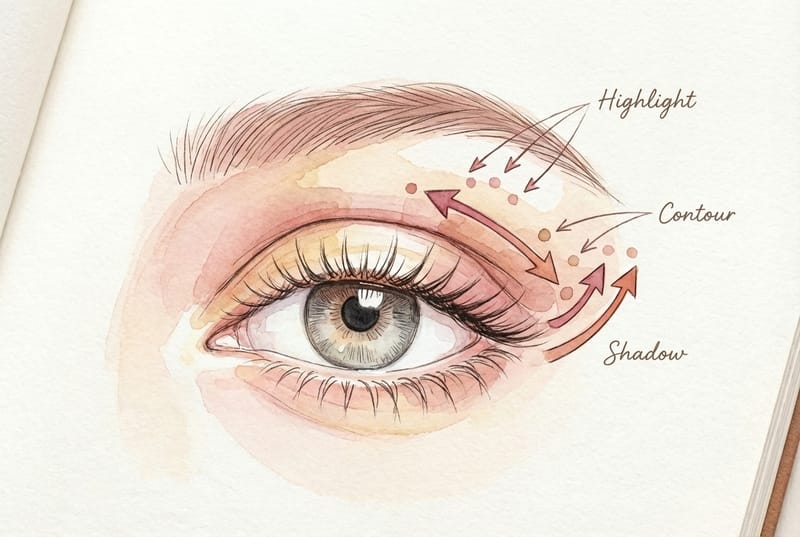
The simplest and most effective natural eye look uses just three shades: a base, a contour, and a highlight. This technique works for every eye shape and every occasion, and it takes less than two minutes once you have practiced it.
- Base shade. Apply a matte or satin shade that matches your skin tone across the entire lid, from lash line to brow bone. This evens out any discoloration and creates a smooth canvas.
- Contour shade. Apply a slightly deeper shade into the crease and along the outer corner of the eye. Use a windshield-wiper blending motion with a fluffy brush to diffuse the edges. This shade adds the depth and dimension that defines the eye.
- Highlight shade. Apply a light, shimmery or satin shade to the center of the lid and the inner corner of the eye. This catches the light and makes the eyes appear larger and more awake.
Placement Tips
Where you place your shadow matters more than what shade you use. Concentrate color on the outer third of the lid and in the crease for subtle definition. Keep the inner corner and center of the lid lighter to create the illusion of larger, more open eyes. Avoid bringing dark shadow all the way to the inner corner, which can close the eye off and look heavy.
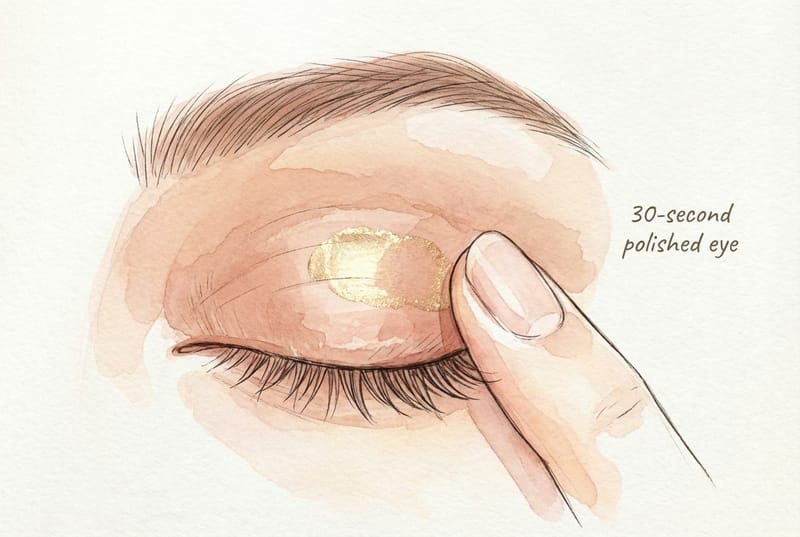
For a quick, effortless look, skip shadow entirely and simply use a flesh-toned matte shade across the lid to even out any redness, then add a touch of shimmer to the center of the lid. This takes thirty seconds and makes your eyes look polished and awake with almost no visible product.
Yasmine face yoga exercises that target the eye area help reduce puffiness, improve circulation around the delicate orbital skin, and maintain the muscle tone that keeps your eyelids smooth and lifted. When the eye area is well-toned and refreshed, even the simplest shadow application looks remarkable.