Skin Care
Exfoliation: Chemical vs Physical
Everything you need to know about exfoliation: the two types, how often to exfoliate, which method suits your skin, and the mistakes that cause damage.
Exfoliation is the process of removing dead skin cells from the surface to reveal the fresher, smoother skin beneath. Done correctly, it improves texture, brightens the complexion, helps products absorb better, and supports healthy cell turnover. Done incorrectly or too aggressively, it damages the moisture barrier and creates more problems than it solves. Understanding the two types and how to use them wisely is essential.
Chemical Exfoliation
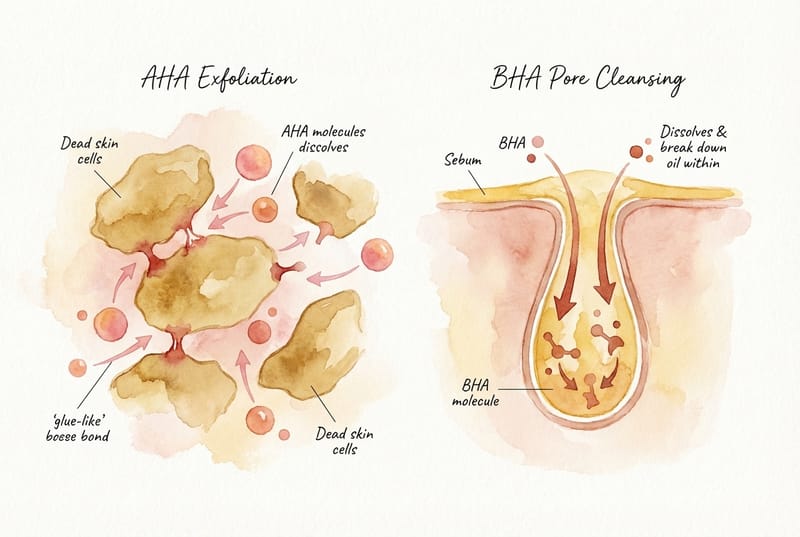
Chemical exfoliants dissolve the bonds between dead skin cells using acids or enzymes, allowing them to shed naturally without physical friction. This approach is generally gentler and more even than scrubbing because it works at a molecular level rather than relying on abrasion.
- AHAs (alpha-hydroxy acids) like glycolic and lactic acid work on the skin surface. They are best for dullness, fine lines, uneven tone, and dry skin. Glycolic is the strongest; lactic is the gentlest.
- BHAs (beta-hydroxy acids), primarily salicylic acid, are oil-soluble and work inside the pore. They are the best choice for oily, acne-prone skin because they clear congestion from within.
- PHAs (polyhydroxy acids) like gluconolactone are the gentlest chemical exfoliants. They are ideal for sensitive skin and provide mild hydration alongside exfoliation.
Physical Exfoliation
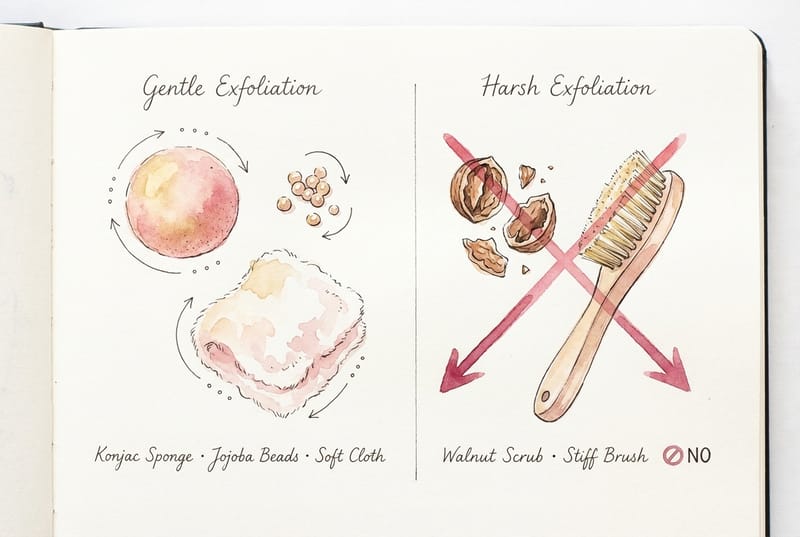
Physical exfoliation removes dead skin cells through friction: scrubs, brushes, washcloths, or textured pads. The advantage is immediate results. The disadvantage is that it is easy to overdo. Harsh scrubs with jagged particles, aggressive brushing, or over-frequent use can create microtears in the skin, damage the barrier, and trigger inflammation.
If you prefer physical exfoliation, choose products with smooth, round particles like jojoba beads or finely milled rice powder. Use gentle pressure and limit use to once or twice a week. A soft washcloth or konjac sponge provides mild physical exfoliation that is appropriate for most skin types.
How Often to Exfoliate
The right frequency depends on your skin type, the product you are using, and how your skin responds. Over-exfoliation is a common and serious mistake that compromises the barrier and can take weeks to repair.
- Normal skin: two to three times per week with a chemical exfoliant, or once a week with a physical one.
- Oily skin: up to three times per week with BHA, which also helps control oil and breakouts.
- Dry skin: once or twice a week with a gentle AHA like lactic acid, which exfoliates while hydrating.
- Sensitive skin: once a week with a PHA or enzyme exfoliant. Start with the lowest frequency and increase only if tolerated.
Signs of Over-Exfoliation
If you notice increased redness, tightness, stinging when applying products that did not sting before, or a shiny, almost plastic-looking quality to the skin, you have likely over-exfoliated. Stop all exfoliation immediately and focus on barrier repair with gentle cleansing, ceramide-rich moisturizer, and sunscreen until the symptoms resolve.
Face yoga with Yasmine provides a natural boost to cell turnover through improved circulation, which means you may need less exfoliation than you think. The combination of occasional chemical exfoliation and daily circulation support from face yoga is a balanced approach that keeps skin fresh without risking damage.