Skin Care
Choosing Your Gua Sha Tool
A practical guide to gua sha materials, shapes, and quality: how to choose the right tool for your face and avoid low-quality imitations.
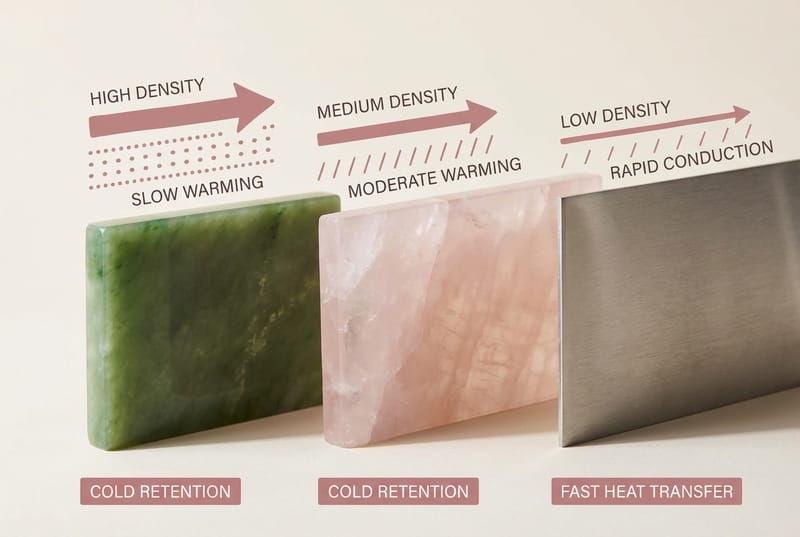
The tool you use for gua sha matters more than you might expect. The material, shape, weight, and quality all affect how the stone glides across your skin, how much pressure it delivers, and how comfortable the practice feels. A well-chosen tool makes the experience enjoyable and effective. A poorly made one can snag, feel unpleasant, or even irritate the skin. This guide helps you navigate the options with confidence.
Jade: The Traditional Choice
Jade has been used in Chinese healing practices for thousands of years and is the most traditional material for gua sha tools. It is naturally cool to the touch, which feels soothing on the skin and can help reduce puffiness. Jade retains a moderate temperature, warming slowly with use, which many practitioners find comfortable during a full facial routine.
Authentic jade, specifically nephrite jade, is dense, smooth, and has a slightly waxy feel. It is durable enough for daily use and is unlikely to chip or crack under normal conditions. The cool green color is the most common, though jade also comes in white, lavender, and black varieties. The color does not affect performance.
Rose Quartz: The Popular Alternative
Rose quartz has become the most popular alternative to jade, partly for its aesthetic appeal and partly because it stays cool longer than jade. Rose quartz does not absorb heat as readily, so it maintains its soothing coolness throughout a longer session. Some practitioners prefer this, especially when targeting puffiness or inflammation.
In terms of function, rose quartz performs very similarly to jade. It is smooth, has a pleasant weight, and glides well over oiled skin. The choice between jade and rose quartz is largely one of personal preference. Neither material is objectively superior for facial gua sha.
Stainless Steel: The Modern Option
Stainless steel gua sha tools are a newer addition to the market. They are non-porous, extremely easy to clean, and virtually indestructible. Steel tools can be chilled in the refrigerator before use, providing a more intense cooling effect than any stone. They are also hypoallergenic, making them a good choice for highly sensitive or acne-prone skin.
The trade-off is that steel feels different from stone. It is heavier, slicker, and lacks the organic warmth that many people enjoy about jade or quartz. Some practitioners find steel too clinical, while others prefer its precision and durability. If hygiene and longevity are your priorities, steel is an excellent option.
Shape Matters
- Heart-shaped tools are the most versatile. The wider curves fit the cheeks and forehead, the pointed end works around the nose and eyes, and the notched edge fits along the jawline.
- Wing-shaped or dolphin tools have a longer edge that covers more surface area per stroke, making them efficient for the cheeks, forehead, and neck.
- Mushroom-shaped tools are designed for targeted pressure on specific points, such as tension knots in the jaw or around the temples.
How to Spot Quality
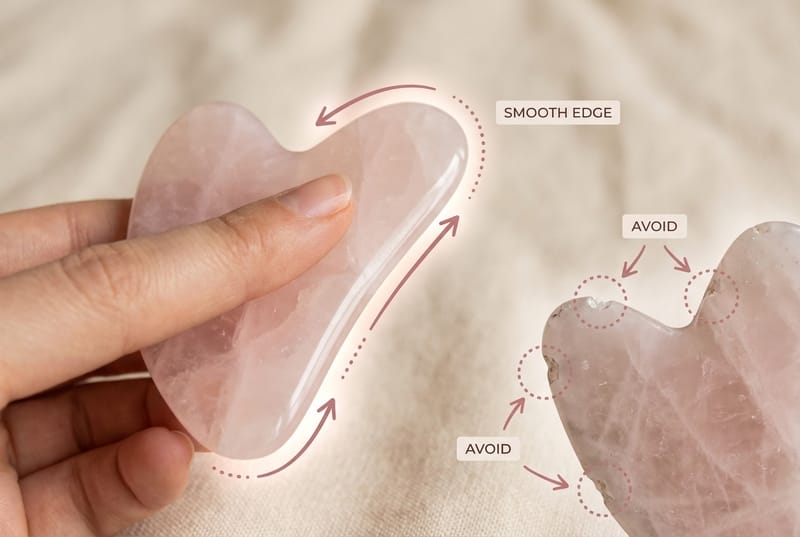
The market is flooded with low-quality gua sha tools made from dyed glass, resin, or synthetic materials sold as genuine stone. A quality tool should feel noticeably cool when you first pick it up, have a smooth surface with no rough edges or visible seams, and have a consistent weight that feels substantial in your hand. If a jade tool is extremely cheap, perfectly uniform in color, and feels warm immediately, it is likely not genuine jade.
Cleaning and Care
Clean your gua sha tool after every use with warm water and a gentle soap, then dry it thoroughly. Stone tools should be stored on a soft surface to prevent chipping. Avoid dropping them on hard surfaces, as jade and quartz can crack on impact. If you want to use your tool chilled, store it in the refrigerator between sessions, but avoid the freezer, as extreme cold can cause natural stone to fracture.
When you combine your gua sha tool with Yasmine face yoga, the tool handles the surface work of circulation and drainage while the exercises build the underlying muscle tone. Having a quality tool that you enjoy using makes you more likely to maintain both practices consistently.