Skin Care
Building a Redness-Friendly Routine
A complete step-by-step routine designed for redness-prone skin: what to use, what to skip, and how to layer products without triggering flares.

Building a skincare routine for redness-prone skin requires a different mindset than building one for most other concerns. The priority is not adding powerful actives but removing unnecessary irritation, supporting the barrier, and creating the calmest possible environment for your skin. This article assembles a complete morning and evening routine that manages redness while still delivering meaningful skincare benefits.
The Guiding Principles
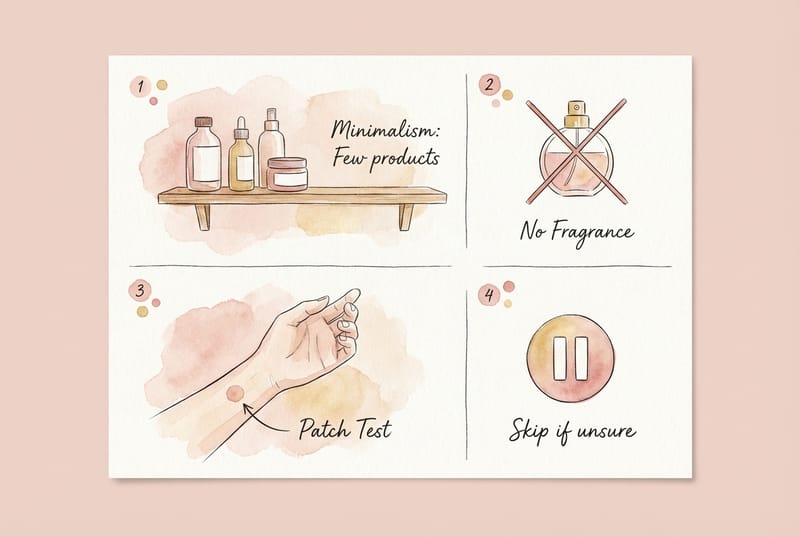
- Fewer products are better. Every additional product is a potential irritant. Use the minimum number of steps needed to address your skin's needs.
- Fragrance-free everything. Fragrance is the most common cause of skin irritation and has no skincare benefit. Eliminate it completely.
- Patch test every new product. Apply a small amount to the inner arm for 48 hours before using it on your face.
- When in doubt, skip it. If you are unsure whether a product will trigger a flare, err on the side of caution and leave it out.
Morning Routine
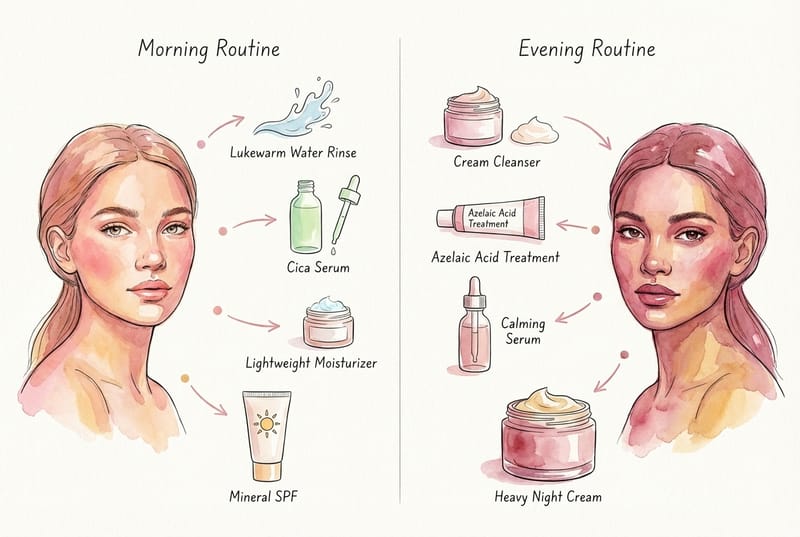
- Rinse with lukewarm water. Many redness-prone people find that skipping cleanser in the morning reduces baseline redness. If you prefer to cleanse, use a gentle micellar water or cream cleanser.
- Apply a calming serum. A cica or niacinamide serum provides anti-inflammatory protection for the day ahead. Pat gently onto damp skin.
- Moisturize with a barrier-supportive cream. A ceramide-rich moisturizer seals in hydration and strengthens the barrier against triggers you will encounter throughout the day.
- Apply mineral sunscreen. Mineral sunscreens with zinc oxide are the best choice for redness-prone skin. Zinc is naturally anti-inflammatory and provides physical UV protection without the potential reactivity of chemical filters.
Evening Routine
- Cleanse gently. A single cleanse with a mild cream or gel cleanser is usually sufficient. Double cleanse only if you wore heavy sunscreen or makeup.
- Apply treatment (if using). Azelaic acid is the primary treatment ingredient for redness management. Apply a thin layer and let it absorb.
- Apply calming serum. If you use azelaic acid, apply your cica or niacinamide serum after it absorbs. If you skip the treatment step, the serum goes directly on clean skin.
- Moisturize generously. Evening is the time for a richer moisturizer. The skin repairs overnight, and a nourishing cream supports that process.
What to Skip
Certain products and ingredients have no place in a redness-focused routine. Removing them often produces as much improvement as adding the right calming products.
- Alcohol-based toners. These strip the barrier and trigger immediate redness in reactive skin.
- Physical scrubs and exfoliating brushes. Friction is a direct trigger for flushing and irritation.
- Strong AHAs and high-percentage acids. These can damage the barrier and increase inflammation in redness-prone skin.
- Retinol, at least initially. While retinol has benefits, it is best introduced only after the barrier is stable and baseline redness has improved. Start at the lowest concentration and the lowest frequency.
A brief Yasmine face yoga session fits perfectly between cleansing and serums, both morning and evening. The gentle movement primes the skin for product absorption while the controlled breathing helps keep the nervous system calm, supporting your overall redness management strategy.