Anti-Aging
Brightening Your Skin and Evening Your Tone
Understand what drives uneven skin tone with age and which ingredients and habits reliably make a difference.
Skin tone that once seemed effortlessly even can gradually shift toward patches, spots, and dullness as the years pass. This is one of the most frustrating changes to navigate because the causes are slow and cumulative, and so is the correction. Understanding what is actually happening beneath the surface makes it much easier to stay consistent with the right approach.
What Causes Uneven Tone
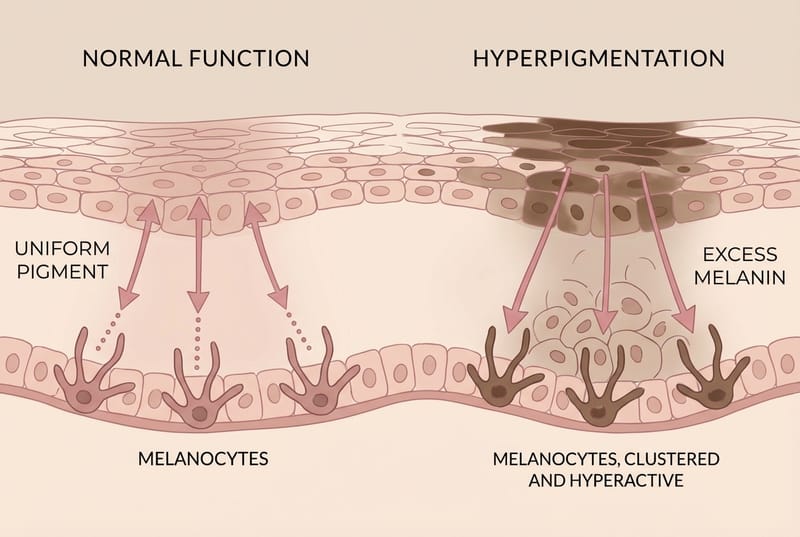
Melanin is the pigment responsible for skin color, produced by cells called melanocytes. With age, these cells become less evenly distributed and more easily triggered into overproduction. Years of sun exposure cause clusters of melanocytes to become hyperactive, leading to localized deposits of pigment. Inflammation from breakouts, friction, or irritation can also leave behind dark marks that older skin resolves more slowly.
- Sun spots are flat, well-defined patches of darker pigment on areas with the most sun history, typically the face, hands, and chest
- Post-inflammatory marks are discoloration left behind after breakouts or skin irritation, often tan, brown, or reddish in tone
- Melasma presents as larger, blotchy areas of hyperpigmentation with irregular borders, strongly linked to hormonal shifts and UV exposure
Ingredients That Brighten
A handful of ingredients have genuine research behind them and are well-suited for consistent daily use. They work through different mechanisms and many can be layered for better effect.
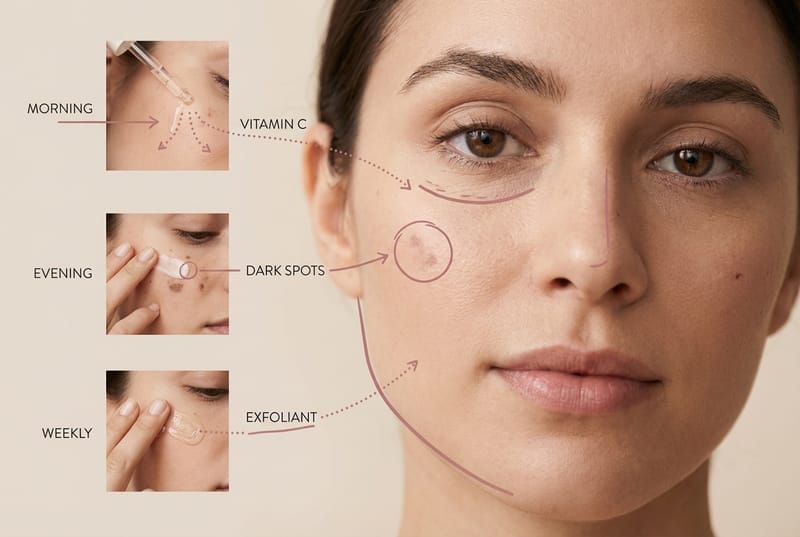
- Vitamin C interrupts the enzyme pathway responsible for melanin production. Most effective in stable serums at concentrations between 10 and 20 percent, paired with morning sun protection.
- Alpha arbutin and azelaic acid both inhibit melanin production through gentler mechanisms, making them suitable for sensitive skin and particularly useful for post-inflammatory marks and melasma.
- Niacinamide reduces the transfer of pigment to skin cells rather than blocking production, offering additional benefits for texture and barrier function.
Chemical Exfoliation and Routine Steps
Chemical exfoliants dissolve bonds between dead skin cells, revealing fresher skin underneath and speeding the fading of surface pigmentation. Alpha hydroxy acids like glycolic and lactic acid work on the surface and are effective for overall brightening. Start with once or twice a week and increase only as your skin tolerates it. Because exfoliation and brightening actives increase sun sensitivity, reliable daily SPF is essential when these ingredients are in rotation.
- Apply vitamin C in the morning. After cleansing and before moisturizer, apply a few drops of a stable vitamin C serum and allow it to absorb fully.
- Use a brightening active in the evening. Choose alpha arbutin, azelaic acid, or niacinamide as a targeted treatment after cleansing and before moisturizer.
- Add a chemical exfoliant one to two nights per week. On nights when the brightening active is skipped, apply a low-concentration AHA to clear dead cell buildup.
Face Yoga and Patience
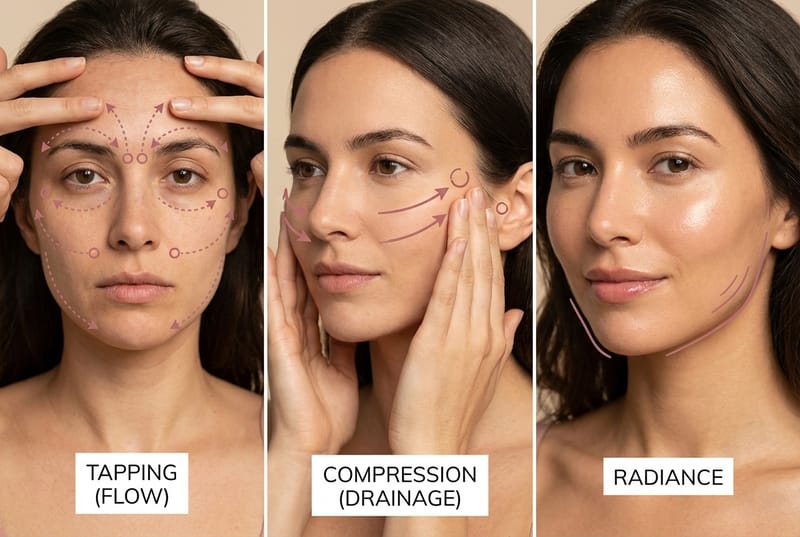
Circulation is a less obvious but genuine factor in skin radiance. When blood flow is sluggish, the complexion looks flat even when underlying pigmentation is not the primary issue. Face yoga practices that involve gentle compression, tapping, and deliberate muscle engagement help move blood and lymph more actively through facial tissue, and many people notice their skin looks more awake with regular practice.
Pigmentation rarely fades in a straight line. You may notice improvement, then a plateau, then further improvement. Most ingredients need six to twelve weeks of consistent use before meaningful fading becomes visible. Patience is the ingredient most often left out of the routine.