Skin Care
Body Acne: Same Problem, Different Skin
Why acne develops on the back, chest, and shoulders, how it differs from facial acne, its overlap with folliculitis, and targeted strategies for treatment and prevention.

Acne on the back, chest, and shoulders follows the same fundamental biology as facial acne: excess sebum, follicular plugging, bacterial overgrowth, and inflammation. Yet body acne behaves differently in important ways. The skin on these areas is thicker, the pores are larger, the follicles are deeper, and the environment, constantly covered by clothing, involves friction and sweat that the face never contends with. Understanding these differences is key to treating body acne effectively rather than simply applying facial acne strategies to the wrong context.
Why These Specific Areas
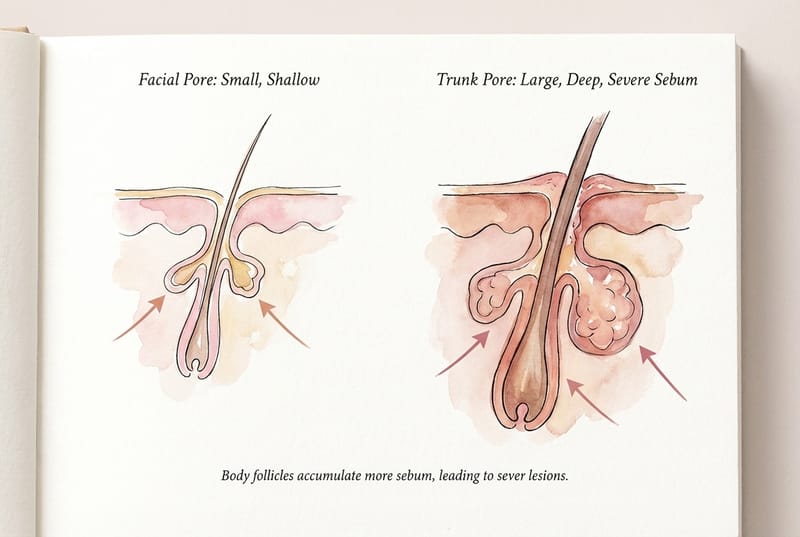
The back, chest, and shoulders have the highest density of sebaceous glands on the body outside the face. These areas also contain larger follicles that produce thicker terminal hairs, creating deeper channels where sebum can accumulate. The combination of high oil production and deep follicular anatomy makes these zones particularly vulnerable to comedone formation and inflammatory acne.
Hormonal sensitivity in these areas mirrors that of the face. Androgens drive sebum production from the same sebaceous glands, which is why body acne often appears and worsens alongside facial acne during puberty, hormonal fluctuations, and periods of stress. In many people, body acne is actually more severe than facial acne because the sebaceous glands on the trunk tend to be larger and more productive.
Acne vs. Folliculitis
Not every bump on the body is acne. Folliculitis, an infection or inflammation of individual hair follicles, produces bumps that can look identical to acne but has different causes and requires different treatment. Bacterial folliculitis is often caused by Staphylococcus aureus rather than C. acnes. Pityrosporum folliculitis, caused by the Malassezia yeast, produces uniform, itchy bumps typically concentrated on the chest and upper back.
The distinction matters because treatments that work for acne may not work for folliculitis and vice versa. If body bumps are intensely itchy, uniformly sized, or do not respond to standard acne treatments, folliculitis should be considered. A dermatologist can distinguish between the two conditions and recommend the appropriate approach.
The Friction and Sweat Factor
Two factors that are unique to body acne are mechanical friction and prolonged sweat contact. Tight clothing, backpack straps, sports equipment, and synthetic fabrics create constant friction against the skin, a phenomenon called acne mechanica. This friction irritates follicles, promotes plugging, and triggers inflammation independently of the hormonal and bacterial pathways.
Sweat itself does not cause acne, but sweat that remains on the skin for extended periods creates a warm, moist environment that promotes bacterial growth and softens the follicular plug in ways that encourage inflammation. Athletes, people who exercise frequently, and those who wear occlusive clothing for long periods are at higher risk for body acne partly because of prolonged sweat exposure.
Treatment Strategies for Body Acne
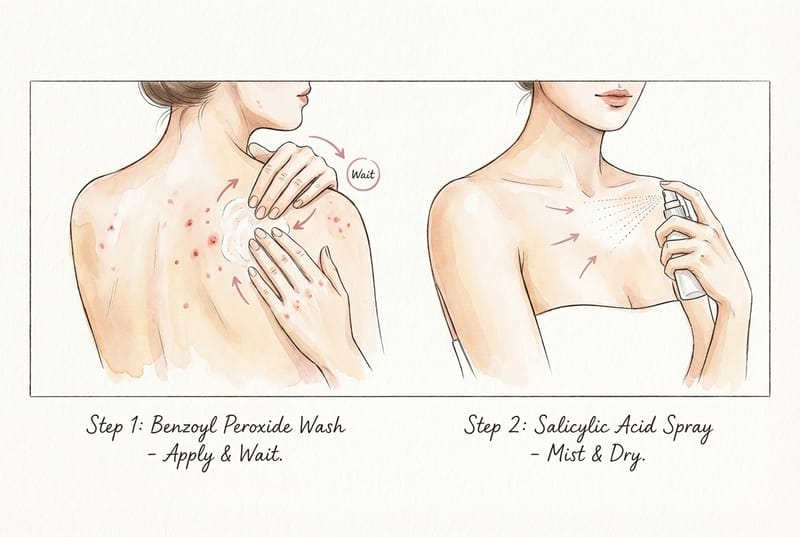
- Use a medicated body wash. Benzoyl peroxide washes at 5 to 10 percent concentration are the first-line treatment for body acne. Apply the wash to affected areas, let it sit for 1 to 2 minutes before rinsing, and use it daily. Higher concentrations are appropriate for the body because the skin is thicker and more tolerant than facial skin.
- Incorporate salicylic acid. A salicylic acid body spray or lotion at 2 percent concentration helps dissolve the keratin plugs inside follicles. Apply it to clean, dry skin on days when you do not use benzoyl peroxide to avoid over-drying.
- Reduce friction. Wear loose, breathable fabrics, especially during physical activity. Switch to moisture-wicking materials and avoid carrying heavy backpacks or bags directly against the skin.
- Shower promptly after sweating. Do not let sweat-soaked clothing sit against the skin. If you cannot shower immediately, at least change into dry clothing.
When to Seek Medical Help
Body acne that does not respond to consistent over-the-counter treatment after 8 to 12 weeks, acne that is deep, painful, or cystic, or acne that is leaving scars warrants a dermatologist visit. Prescription options including topical retinoids, oral antibiotics, hormonal therapy, and isotretinoin are available for body acne just as they are for facial acne. The threshold for systemic treatment is often lower with body acne because topical agents struggle to cover the larger surface areas involved.
Yasmine face yoga, while focused primarily on the face, includes exercises that promote overall circulation, lymphatic drainage, and stress reduction. Since stress and hormonal factors drive body acne through the same pathways as facial acne, the systemic benefits of a consistent face yoga practice extend to skin health across the entire body.
References
- Del Rosso, J.Q. et al. (2007). Truncal acne: a neglected entity. Journal of Drugs in Dermatology, 6(10), 1008-1012.
- Stoll, S. et al. (2001). The effect of the menstrual cycle on acne. Journal of the American Academy of Dermatology, 45(6), 957-960.
- Mills, O.H. & Kligman, A. (1975). Acne mechanica. Archives of Dermatology, 111(4), 481-483.
- Lolis, M.S. et al. (2009). Acne and systemic disease. Medical Clinics of North America, 93(6), 1161-1181.