Anti-Aging
Beyond Your Face: Neck, Hands, and Lifestyle
Extend your anti-aging care to overlooked body areas and build lifestyle habits that support skin from the inside out.
Your face gets most of the attention, but the areas just beyond it often tell the real story of how your skin is aging. The neck, hands, and chest are exposed to the same sun damage and environmental stress as your face, yet they rarely get the same level of care. Bringing these areas into your routine, alongside some foundational lifestyle habits, is one of the most impactful steps you can take.
Caring for Your Neck
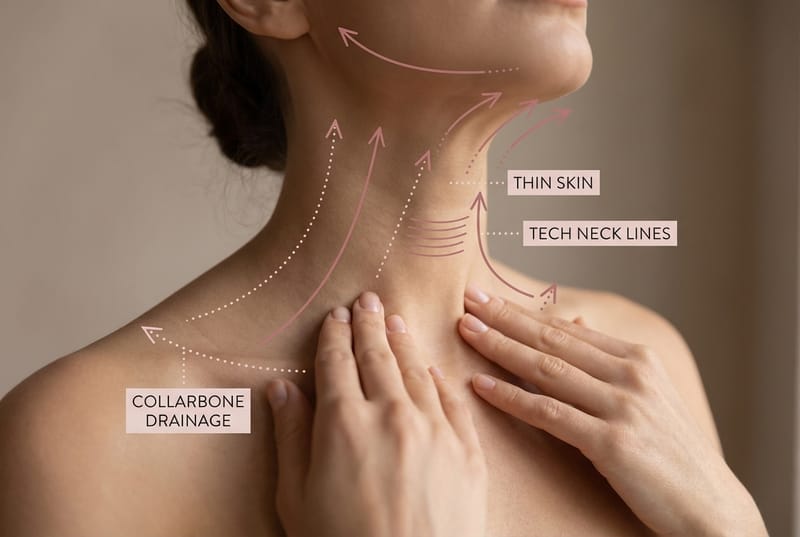
The skin on your neck is thinner than the skin on your cheeks and contains fewer oil glands, making it more vulnerable to dryness, crepiness, and sagging. All you need to do is extend whatever you are already using on your face downward in gentle upward strokes, working from the collarbone toward the chin. Sun protection on the neck is especially important since this area rarely gets covered by clothing in warmer months.
Horizontal neck lines are deepened by both sun exposure and the repeated downward angle of looking at screens. Yasmine face yoga includes exercises targeting the neck and jawline, helping maintain muscle tone and improve circulation in an area that is easy to overlook.
Hands and Chest
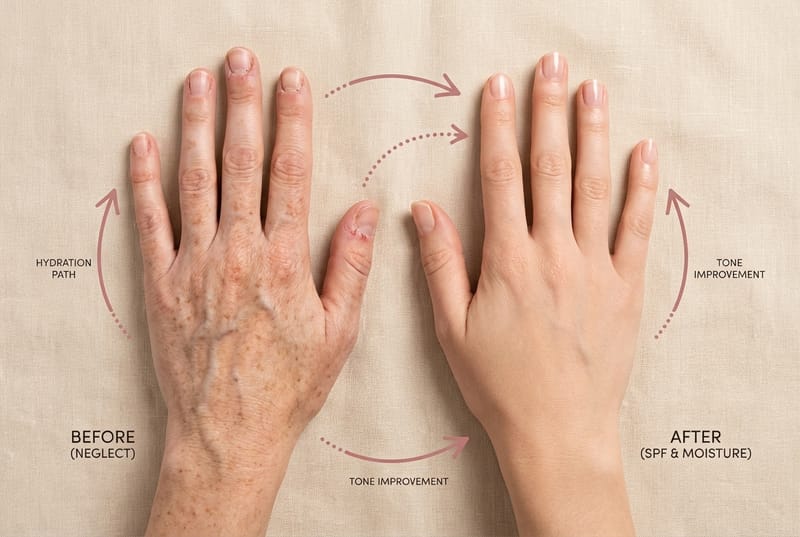
Hands are one of the first places to visibly show age because they are constantly exposed to sunlight, water, and environmental stress while often being the last to receive moisturizer or SPF. Applying broad-spectrum SPF to your hands every morning is one of the simplest upgrades you can make to your routine.
The chest and decolletage area accumulates decades of sun exposure, and many people notice uneven tone and fine lines there before they see it on the face. Extending your vitamin C serum or brightening treatment to your chest a few times a week can make a meaningful difference over time.
- Apply SPF to the backs of your hands and chest every morning alongside your face routine
- Bring your evening serum or treatment down to the neck and decolletage at least a few nights per week
- Keep a hand cream near the sink so moisturizing after washing becomes automatic
Sleep, Stress, and Your Skin
Sleep is when your skin does its most active repair work. Growth hormone release peaks during deep sleep, driving cell turnover and collagen synthesis. Consistently getting less than seven hours elevates cortisol, which breaks down collagen and impairs the skin barrier. If you are doing everything right with skincare but skimping on sleep, you are working against yourself.
Chronic stress has a similar effect through the same cortisol pathway. Even small stress reduction habits, like a short breathing practice or a ten-minute walk, can lower baseline cortisol and give your skin a better environment for repair.
Nutrition and Movement
What you eat and how much you move directly affects your skin's resilience. Skin cells need a steady supply of nutrients to regenerate properly, and certain dietary patterns create systemic inflammation that accelerates aging.
- Fatty fish, walnuts, and flaxseed provide omega-3 fatty acids that support the skin barrier and reduce inflammation
- Colorful vegetables and berries deliver antioxidants that neutralize free radicals from UV and pollution
- Foods rich in vitamin C, such as citrus and bell peppers, are cofactors in collagen synthesis
- Staying well hydrated throughout the day supports the skin's natural moisture balance from within
Regular exercise improves circulation, delivering oxygen and nutrients to skin cells more efficiently. Face yoga fits naturally into this broader picture, combining targeted muscle work with the circulation benefits of consistent physical activity. These lifestyle factors do not replace a good skincare routine, but they multiply its effects.