Face Yoga
Face Yoga for Every Concern
A practical map connecting common facial concerns to the exercises and muscle groups that address them most effectively.
One of the most practical questions in face yoga is: which exercises should I focus on for my specific concerns? While a balanced routine that works the entire face is always the foundation, knowing which muscles and movements target your personal priorities lets you allocate your practice time where it will make the biggest visible difference.
Forehead Lines
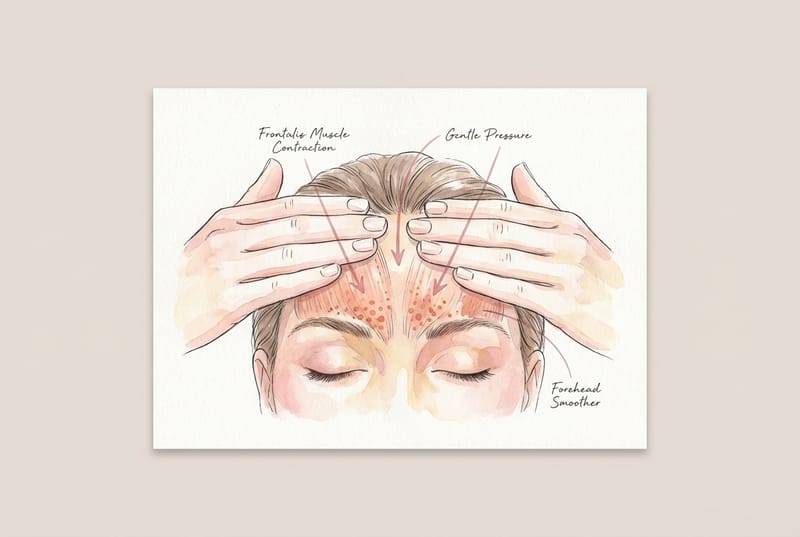
Horizontal forehead lines are caused by chronic overuse of the frontalis muscle. Every time you raise your eyebrows, whether from expression, surprise, or habit, the frontalis contracts and creases the skin above. Face yoga addresses this in two ways: strengthening the muscle so it holds the brow without constant contraction, and actively releasing the tension patterns that create the lines.
- The Forehead Smoother exercise trains you to hold the skin still while the muscle works underneath, retraining the contraction pattern.
- Gentle forehead massage with flat palms helps release the tension that accumulates throughout the day.
Crow's Feet and Eye Area
The fine lines that radiate from the outer corners of the eyes result from repeated squinting and smiling combined with the natural thinning of the skin in this area. Strengthening the orbicularis oculi improves the muscle's ability to support the skin around the eyes, while release work addresses the squinting habits that deepen these lines.
- Targeted exercises involve gentle resistance against the squinting motion, building tone without reinforcing the creasing pattern.
- Eye circles and gentle tapping around the orbital bone improve circulation and reduce puffiness that accentuates lines.
Nasolabial Folds
The lines running from the sides of the nose to the corners of the mouth deepen when the cheek muscles lose tone and volume. The midface flattens, and gravity pulls the tissue downward, making the folds more pronounced. Face yoga lifts the cheeks from underneath by strengthening the zygomaticus muscles, which directly reduces the depth of these folds over time.
Sagging Jawline
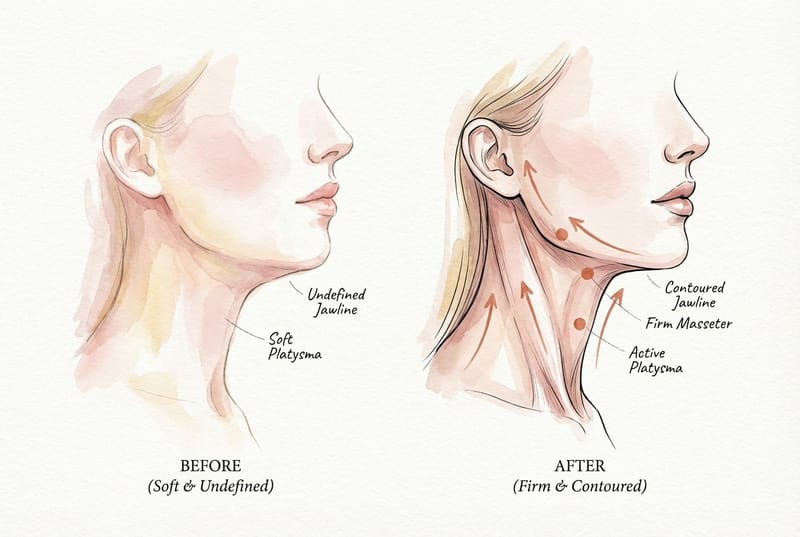
A soft or undefined jawline results from weakened platysma and jaw muscles combined with loss of skin elasticity. The exercises that make the most difference here work the muscles along the jaw and neck to create a firmer foundation for the skin above.
- Jaw-jutting exercises strengthen the muscles that define the angle of the jaw.
- Neck tilts and platysma stretches tone the muscles that support the jaw-to-neck transition.
- Masseter release work prevents the bulky, square-jaw appearance that chronic clenching can create.
Under-Eye Puffiness
Morning puffiness beneath the eyes is primarily a lymphatic issue rather than a muscle issue. However, face yoga helps by improving circulation and encouraging lymphatic drainage in the eye area. Gentle tapping, light sweeping motions toward the ears, and exercises that engage the orbicularis oculi all support fluid movement away from the under-eye area.
Lip Lines
Vertical lines around the mouth form when the orbicularis oris weakens and loses its ability to keep the skin smooth. Exercises that involve controlled pursing, resistance against lip movements, and gentle stretching of the mouth area help maintain tone and reduce the appearance of these lines. Consistent practice also improves blood flow to the lips, which supports their natural fullness.
Neck Lines and Bands
Horizontal neck lines and vertical bands are primarily a platysma issue. This broad, thin muscle tends to weaken and separate into visible bands over time. Targeted neck exercises that engage the platysma help restore its tone and smooth the appearance of the neck. This area requires the most patience but produces some of the most striking long-term results.
Yasmine sessions are designed to target all of these areas across a balanced weekly program, with options to emphasize the zones that matter most to you. The app's guided approach means you never have to remember which exercises go with which concern.